
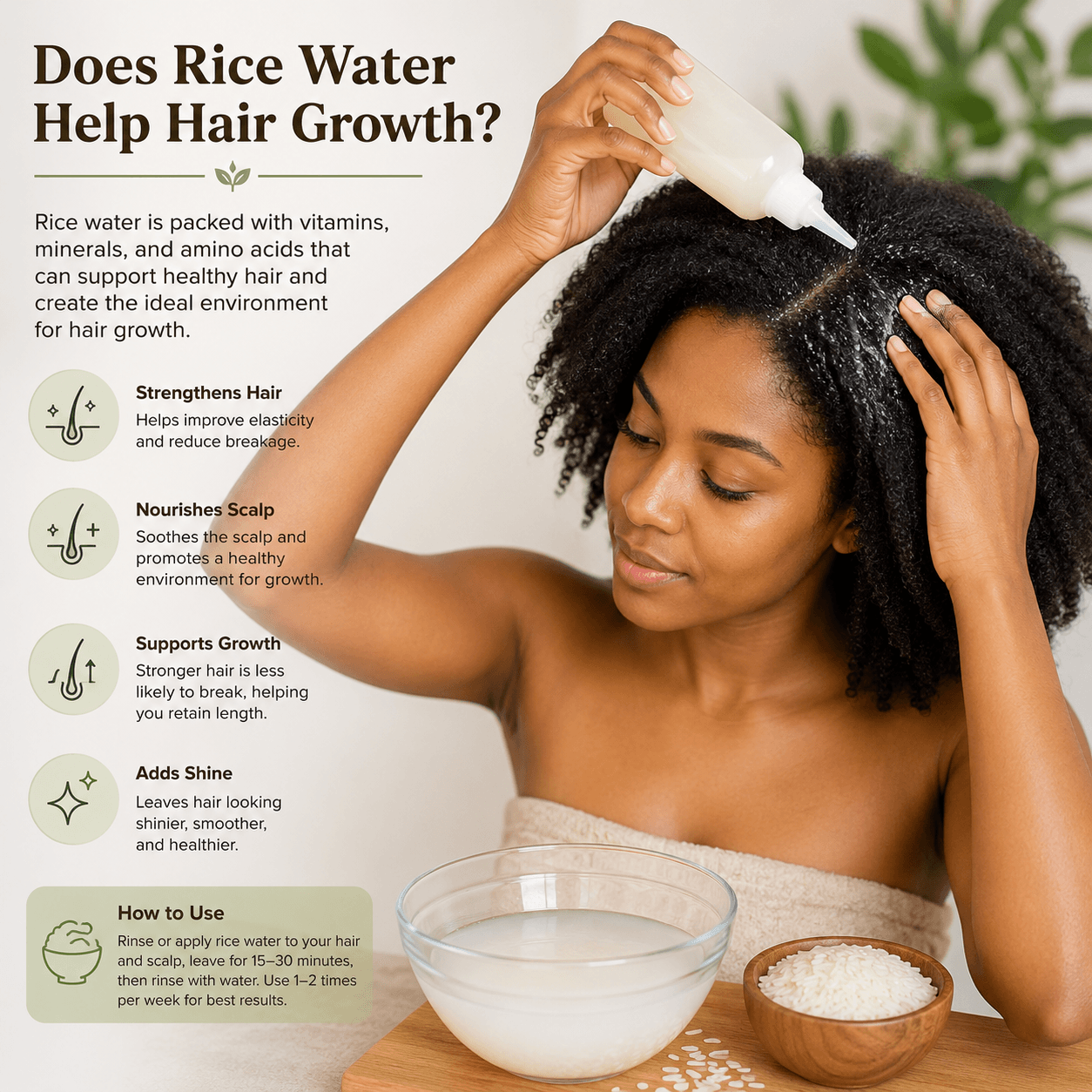
Does rice water help hair growth, or is it just another TikTok trend? If you’ve spent any time on social media lately, you’ve probably seen it. Women pouring cloudy white liquid onto their hair, claiming it transformed their growth in weeks. The comments are full of people asking the same question you might be asking right now.
I get this question constantly. Moreover, I understand why people are skeptical. We’ve all fallen for “miracle” hair products before, only to be disappointed.
So today, we’re answering the real question: does rice water help hair growth, or does it simply make hair look healthier temporarily? No exaggerated claims, no dramatic before-and-after photos with questionable lighting. Instead, I’m giving you the honest, evidence-based truth about rice water, what it actually does, what the science says, and how to use it properly if you decide to try it.
By the end of this article, you’ll know exactly whether rice water deserves a spot in your hair routine. Furthermore, you’ll know how to prepare and use it correctly for the best possible results.
Let’s get into it.
What Exactly is Rice Water?
Before discussing whether it works, let’s understand what we’re actually talking about.
Rice water is simply the starchy, cloudy liquid left behind after rinsing or soaking rice. Additionally, it’s been used for centuries in Asian countries, most famously by the Yao women of Huangluo Village in China, who are known for their exceptionally long hair and traditional rice water rituals.
When rice is rinsed or soaked, several beneficial compounds leach into the water. Specifically, these include:
Inositol – A carbohydrate that’s been shown to repair damaged hair from the inside out and reduce surface friction.
Amino acids – The building blocks of protein, which is what hair is primarily made of.
Vitamins B and E – Antioxidants that support scalp health.
Minerals – Including small amounts of zinc, magnesium, and iron.
Starch – Which coats the hair shaft and creates that smooth, shiny feeling many people notice immediately after use.
Does Rice Water Help Hair Growth? What Science Actually Says
Here’s where I need to be completely transparent with you.
Direct scientific studies answering whether rice water helps hair growth are extremely limited. In fact, most of what circulates online is based on anecdotal evidence and traditional practice rather than controlled clinical trials.
However, that doesn’t mean there’s nothing to it. Let’s look at what research does support.
What research DOES confirm:
A study published in the Journal of Cosmetic Science found that inositol, one of rice water’s main components, penetrates damaged hair and reduces surface friction. Consequently, this makes hair more manageable and may reduce breakage over time.
Additionally, research on rice bran extract published on PubMed shows it has antioxidant properties that protect hair from environmental damage. Therefore, regular use may help preserve hair health and prevent further deterioration.
Furthermore, the amino acids in rice water are similar to the proteins that make up your hair structure. As a result, applying them topically may temporarily strengthen the hair shaft, similar to how protein treatments work.
What research does NOT confirm:
There is no clinical evidence that rice water directly stimulates new hair growth or activates dormant hair follicles. Moreover, the famous Yao women’s long hair is likely influenced by genetics, overall hair care practices, and minimal manipulation, not rice water alone.
The honest bottom line: Rice water appears to strengthen and protect existing hair rather than create new growth from follicles. This distinction is crucial for setting realistic expectations.
How Rice Water Helps Hair Growth (The Real Benefits)
Now let’s talk about the genuine, observable benefits.
It Strengthens Hair and Reduces Breakage
This is rice water’s most significant and most believable benefit.
The amino acids and inositol in rice water temporarily fill in gaps along damaged hair strands. Consequently, hair feels stronger and smoother immediately after use. Furthermore, with consistent use, this reduced friction means less breakage during combing, styling, and daily wear.
For Nigerian hair, which is often prone to breakage due to dryness and manipulation, this benefit alone can make hair appear to “grow” because you’re retaining more length. Many people mistake length retention for accelerated growth, when really, it’s simply less hair falling off.
It Adds Shine and Smoothness
The starch content in rice water coats each strand, creating a smoothing effect. Additionally, this gives hair a glossy, healthy appearance almost immediately.
However, this effect is temporary and washes out. Therefore, you’d need to use rice water regularly to maintain this shine.
It May Improve Scalp Health
The vitamins and antioxidants in rice water can support a healthy scalp environment. Moreover, a clean, balanced scalp is essential for optimal hair growth, even if rice water itself isn’t directly stimulating follicles.
It Detangles Hair
Many users report that rice water makes detangling significantly easier. Specifically, the starch creates slip, allowing your fingers or comb to glide through hair with less resistance. Consequently, this reduces mechanical damage during detangling sessions.
What Rice Water CANNOT Do (The Honest Part)
Now that we know rice water has some genuine benefits, let’s address whether rice water helps hair growth in the way most people expect. This is where most articles stop being honest. Let’s not do that here.
It cannot regrow hair on bald or severely thinning areas. If your hair loss is due to genetics, medical conditions, or permanently damaged follicles, rice water won’t reverse that. In those cases, professional medical advice is necessary.
It cannot deliver dramatic growth in days or weeks. The viral videos showing inches of growth in 30 days are not realistic representations of typical results. Hair grows at roughly the same rate (about 1-1.5cm per month) regardless of rice water use.
It cannot replace protein treatments entirely. While rice water provides some protein-like benefits, it’s much weaker than dedicated protein treatments. Therefore, it works best as a supplement, not a replacement.
It cannot work if your hair is severely protein-overloaded. Some hair types, particularly very porous or fine hair, can become stiff, dry, or brittle from too much protein. Consequently, overusing rice water can actually backfire for these hair types.
It cannot fix underlying health issues. If hair loss is related to nutritional deficiencies, hormonal imbalances, or stress, rice water addresses none of these root causes.
How to Make Rice Water (3 Methods)
Making rice water is simple and affordable. Here are three popular methods, each with slightly different results.
Method 1: Soaking Method (Mildest)
This is the gentlest method and a great starting point.
Step 1: Rinse 1/2 cup of rice (any type) to remove dirt and debris.
Step 2: Place the rinsed rice in a bowl and add 2-3 cups of water.
Step 3: Let it soak for 30 minutes to 1 hour at room temperature.
Step 4: Strain the water into a clean container, separating it from the rice.
Result: A mild, slightly cloudy liquid ready for immediate use.
Method 2: Fermentation Method (Most Potent)
This method is more popular because fermentation increases the nutrient concentration and adds additional beneficial compounds.
Step 1: Follow steps 1-4 from the soaking method above.
Step 2: Instead of using immediately, leave the strained rice water at room temperature for 24-48 hours.
Step 3: You’ll notice it becomes slightly sour-smelling and may develop small bubbles. This indicates fermentation is occurring.
Step 4: Once fermented to your liking, dilute with equal parts clean water before use (fermented rice water is potent and can be too strong undiluted).
Step 5: Store in the refrigerator for up to one week.
Why fermentation matters: The fermentation process increases antioxidant levels and creates additional beneficial acids. However, it also makes the rice water more potent, which is why dilution is recommended, especially for sensitive scalps.
Method 3: Boiling Method (Quick and Concentrated)
This method is fastest if you’re short on time.
Step 1: Add 1/2 cup of rice to a pot with double the usual amount of water you’d use for cooking.
Step 2: Boil for about 10-15 minutes until the water turns cloudy and slightly thick.
Step 3: Strain the rice water into a clean container and let it cool completely.
Result: A more concentrated rice water, ready to use once cooled.
Note: This method extracts more starch, which can leave hair feeling slightly stiffer than the other methods. Therefore, it’s best for those wanting maximum shine and detangling benefits.
How to Use Rice Water Correctly
Once you have your rice water, here’s how to apply it for best results.
As a Pre-Shampoo Treatment
Step 1: Apply rice water to clean, damp hair before shampooing.
Step 2: Focus on your scalp and massage gently for 3-5 minutes.
Step 3: Leave on for 10-15 minutes.
Step 4: Rinse thoroughly with water before shampooing as normal.
As a Post-Wash Rinse
Step 1: After shampooing and conditioning, pour rice water over your hair as a final rinse.
Step 2: Massage gently into your scalp and through your hair.
Step 3: Leave on for 5-10 minutes.
Step 4: Rinse with cool water, or for stronger protein benefits, leave a small amount in without rinsing.
As a Leave-In Treatment (For Dry Hair Types)
Step 1: Dilute rice water with equal parts water if using the fermented version.
Step 2: Spray onto damp hair after washing.
Step 3: Follow immediately with your regular leave-in conditioner or oil to seal in moisture.
Important: Rice water alone can be drying for very dry or coily hair types because of its protein content. Therefore, always follow with a moisturizing product, such as a leave-in cream or Sweet Almond Oil, to balance the protein with moisture.
Frequency Recommendations
For most hair types, once a week is sufficient. Additionally, those with fine or low-porosity hair should start with once every two weeks to avoid protein overload. Meanwhile, those with very porous, damaged hair may benefit from twice weekly use, always followed by deep moisture.
Rice Water for Different Hair Types
Not all hair responds to rice water the same way. Here’s what to expect based on your hair type.
For Natural Hair (4C, 4B, 4A)
Natural hair, especially highly textured types, can be sensitive to protein. Consequently, start with once every two weeks and always follow with deep conditioning or oils. If you notice your hair feels stiff, dry, or straw-like after use, reduce frequency or dilute further.
For Relaxed Hair
Relaxed hair often benefits well from rice water’s strengthening properties since chemically treated hair tends to be more porous and protein-hungry. However, balance is still key. Always follow with moisture.
For Low-Porosity Hair
Low-porosity hair can struggle to absorb rice water’s nutrients and may end up with product sitting on top of strands rather than penetrating. Therefore, use the fermentation method, apply with heat (warm rice water slightly), and limit use to once every two weeks.
For High-Porosity or Damaged Hair
This hair type often benefits the most from rice water because the protein helps temporarily fill gaps in the damaged cuticle. Consequently, you may notice the most dramatic improvement in smoothness and reduced breakage with this hair type.
Realistic Results Timeline
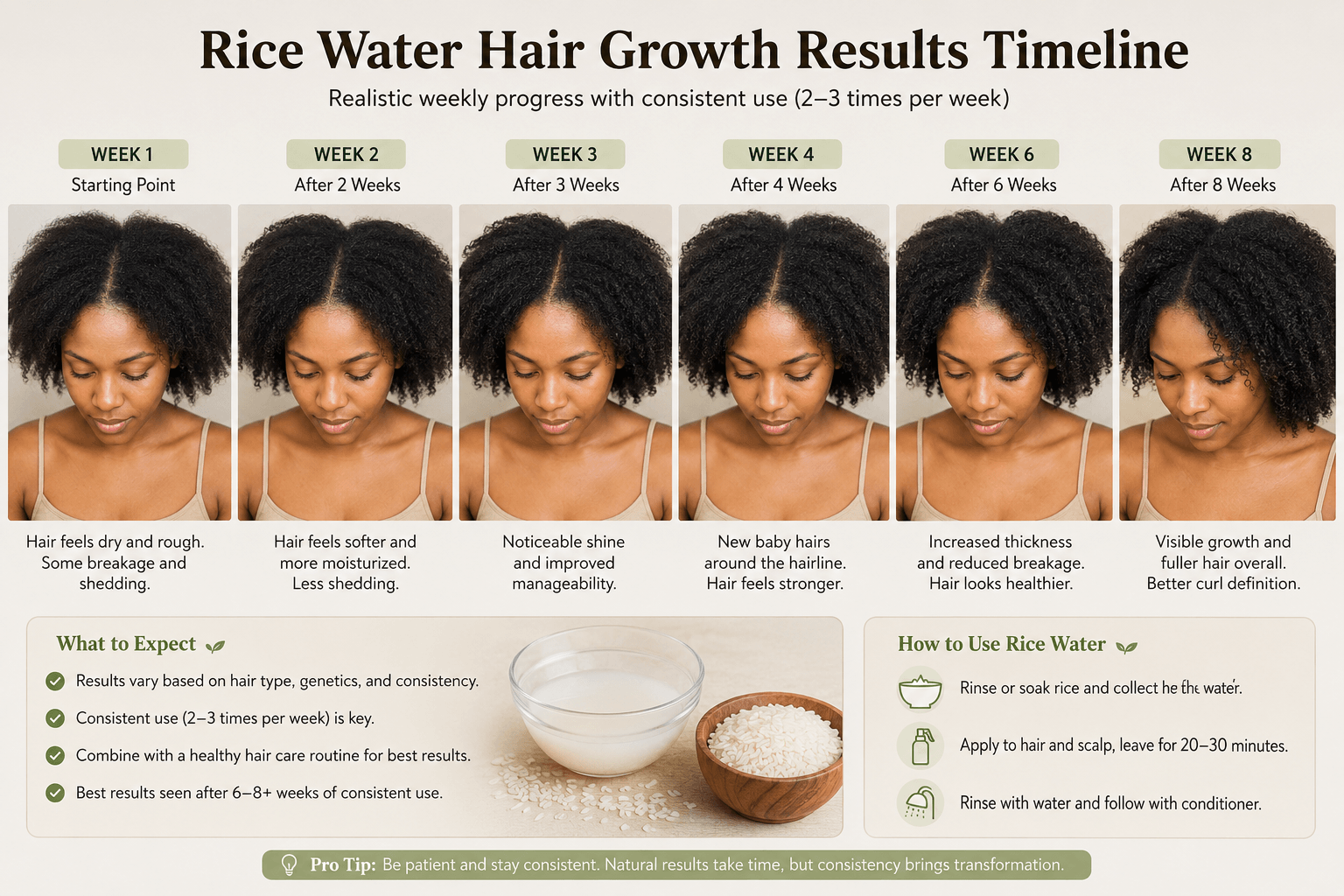
Here’s what to honestly expect if you commit to using rice water consistently.
Week 1-2:
Hair feels smoother and more manageable immediately after each use. Additionally, detangling becomes noticeably easier. Don’t expect any visible growth changes yet.
Week 3-4:
If breakage was an issue, you should notice less hair shedding during washing and styling. Moreover, hair appears slightly shinier overall.
Week 5-8:
Length retention becomes more apparent because less hair is breaking off. Consequently, your hair may appear to be “growing faster” simply because you’re keeping more of what grows naturally.
Week 9-12:
If you’ve been consistent, your hair should feel noticeably stronger and healthier overall. Furthermore, any improvements in scalp health from reduced inflammation may contribute to a better growth environment.
Important: True new hair growth from follicles still occurs at the same biological rate (1-1.5cm monthly) regardless of rice water use. What changes is how much of that growth you actually retain.
Common Mistakes People Make With Rice Water
Mistake 1: Using it too frequently
More isn’t better with protein treatments. Overuse can lead to protein overload, making hair stiff, dry, and more prone to breakage, ironically the opposite of the intended goal.
Mistake 2: Not following with moisture
Rice water is protein-based. Therefore, skipping a moisturizing step afterward, like a conditioner or natural oil, can leave hair feeling dry and brittle.
Mistake 3: Using fermented rice water undiluted
Fermented rice water is potent and slightly acidic. Consequently, using it undiluted, especially on sensitive scalps, can cause irritation or excessive dryness.
Mistake 4: Expecting follicle stimulation
As discussed, rice water doesn’t create new hair growth from dormant follicles. Setting this expectation leads to disappointment regardless of how consistently you use it.
Mistake 5: Ignoring your hair’s protein-moisture balance
Every hair type has a unique balance of protein and moisture it needs. Therefore, pay attention to how your hair responds and adjust frequency accordingly.
Mistake 6: Not storing it properly
Rice water, especially fermented versions, can spoil quickly. Always store in the refrigerator and discard if it develops an unpleasant odor or mold.
Final Verdict: Does Rice Water Help Hair Growth?
After everything we’ve covered, here’s my straightforward answer.
So, does rice water help hair growth? Based on the evidence, it supports the conditions for healthy growth rather than directly stimulating new follicles. It won’t activate dormant follicles or make your hair grow faster than its natural rate. Moreover, it won’t transform short hair into waist-length hair in a month, despite what viral videos suggest.
However, what rice water genuinely does is:
- Strengthen hair strands and reduce breakage
- Add temporary shine and smoothness
- Make detangling easier and gentler
- Support overall hair health when balanced with moisture
For Nigerian women dealing with breakage, dryness, and length retention struggles, rice water can be a valuable, affordable addition to your routine. Furthermore, when used correctly, balanced with moisture, and combined with a healthy overall hair care routine, the strengthening benefits are real and noticeable.
The key takeaway is this: rice water helps you keep the hair you grow. It doesn’t make you grow more hair than your body naturally would.
Your Action Plan: Try It the Right Way
If you’re still wondering does rice water help hair growth enough to try it yourself, here’s how to start correctly.
First, start with the soaking method if you’re new to rice water. This gives you a gentle introduction without overwhelming your hair.
Second, use it once a week initially, and pay attention to how your hair responds over the following days.
Third, always follow with a moisturizing product. Specifically, Sweet Almond Oil or Coconut Oil work wonderfully to seal in the benefits while preventing dryness.
Fourth, combine rice water with proven growth-supporting practices like scalp massages with Vegetable Glycerine for added moisture, or castor oil for circulation benefits.
Finally, be patient and realistic. Track length retention and breakage reduction rather than expecting dramatic overnight transformations.
Want to maximize your hair care routine? Pair rice water with these essentials:
- Sweet Almond Oil – Perfect for sealing moisture after rice water treatments
- Coconut Oil – Deeply penetrates to balance protein treatments
- Vegetable Glycerine – Adds extra slip and moisture for detangling
Have you tried rice water for your hair? What results did you notice? Share your honest experience in the comments below, your story could help someone else on their hair journey!