
Aloe Vera for Hair: Does It Really Work? (Honest Review)
Aloe vera for hair is everywhere right now. TikTok videos showing women slathering green gel onto their hair and claiming miraculous growth in weeks have racked up millions of views. Moreover, every other Nigerian beauty page on Instagram seems to be promoting aloe vera as the ultimate hair solution.
But does it actually work, or is this just another trend that will fade as quickly as it arrived?
As Nigeria’s leading cosmetic raw materials supplier at Sophix Natural, we’ve worked with aloe vera extensively across countless hair and skin formulations. Furthermore, we’ve seen firsthand what this ingredient genuinely does, what it doesn’t do, and how to use it correctly for maximum benefit.
Today, I’m giving you the honest, science-backed truth about aloe vera hair benefits. No exaggerated claims, no pressure to buy anything. Instead, just real information that helps you make the best decision for your hair. Additionally, by the end of this article, you’ll know exactly how to use aloe vera correctly if you decide to try it.
Let’s get into it.
What Exactly is Aloe Vera?
Before discussing whether aloe vera hair benefits are real, let’s understand what we’re actually working with.
Aloe vera is a succulent plant that grows abundantly across Africa, including Nigeria. Consequently, it’s one of the most accessible natural ingredients available to us locally. The thick, gel-like substance inside the leaves contains over 75 active compounds including vitamins, minerals, enzymes, and amino acids.
Key compounds in aloe vera gel:
Vitamins A, C, and E: Powerful antioxidants that protect hair from environmental damage and support scalp health.
Vitamin B12 and Folic Acid: Essential nutrients that support healthy hair growth at the follicle level.
Proteolytic enzymes: These enzymes repair dead skin cells on the scalp, clearing the way for healthier hair growth.
Amino acids: The building blocks of keratin, which is the primary protein your hair is made of.
Minerals: Including zinc, magnesium, and selenium, all of which are essential for hair health and growth.
Salicylic acid: A natural exfoliant that keeps the scalp clean and free from buildup that can block follicles.
According to research published on PubMed, aloe vera has demonstrated significant anti-inflammatory, antimicrobial, and wound-healing properties that directly benefit scalp health. Consequently, a healthier scalp creates better conditions for hair growth.
What Does Science Actually Say About Aloe Vera Hair Benefits?
Here’s where honesty is absolutely essential.
Direct scientific research specifically on aloe vera hair growth in humans is limited. In fact, most evidence is either anecdotal (personal stories and experiences) or based on studies of aloe vera’s individual compounds rather than the whole plant on hair specifically.
However, that doesn’t mean there’s nothing meaningful to say. Let’s look at what research genuinely supports.
What research DOES confirm:
A study published in the Journal of Chemical and Pharmaceutical Research found that aloe vera significantly improved scalp health by reducing inflammation and bacterial growth. Consequently, a healthier scalp environment is more conducive to hair growth.
Additionally, research confirms that the proteolytic enzymes in aloe vera repair damaged scalp cells. Therefore, follicles that were partially blocked or damaged function more effectively after consistent aloe vera treatment.
Furthermore, aloe vera’s high water content and polysaccharides provide exceptional moisture to both the scalp and hair shaft. As a result, hair becomes more manageable, less prone to breakage, and appears healthier overall.
What research does NOT confirm:
There is no clinical evidence proving that aloe vera directly stimulates new hair follicles or makes hair grow faster than its natural biological rate. Moreover, the dramatic growth transformations shown in viral videos are not supported by scientific evidence.
The honest bottom line: Aloe vera improves the CONDITIONS for healthy hair growth and reduces breakage, rather than directly accelerating the growth rate from follicles.
Real Aloe Vera Hair Benefits (What It Genuinely Does)
Benefit 1: How Aloe Vera Hair Conditioning Works
This is aloe vera’s most immediately noticeable and scientifically supported hair benefit.
The polysaccharides in aloe vera bind moisture to the hair shaft, providing deep, lasting hydration. Consequently, dry, brittle hair becomes noticeably softer and more manageable after just a few applications. Furthermore, aloe vera’s molecular structure allows it to penetrate the hair cortex rather than just coating the surface.
For Nigerian hair, which is naturally dry and prone to moisture loss, this deep conditioning benefit is genuinely valuable. Additionally, well-moisturized hair is significantly less likely to break, which means you retain more length over time.
Best for: Dry, brittle hair, natural hair, relaxed hair between treatments
Benefit 2: Reduces Scalp Inflammation and Dandruff
Many Nigerian women deal with scalp issues including dandruff, itchiness, and inflammation from product buildup, heat styling, or tight hairstyles. Aloe vera addresses all of these effectively.
The salicylic acid in aloe vera gently exfoliates the scalp, removing dead skin cells and product buildup that cause dandruff and itchiness. Additionally, its anti-inflammatory compounds calm an irritated scalp, reducing the redness and discomfort associated with scalp conditions.
Furthermore, aloe vera’s antimicrobial properties fight the fungal and bacterial overgrowth that contributes to dandruff and scalp infections. Consequently, consistent use leads to a cleaner, healthier, more comfortable scalp.
Best for: Dandruff, itchy scalp, scalp inflammation, product buildup
Benefit 3: Strengthens Hair and Reduces Breakage
Aloe vera hair strengthening is one of its most meaningful benefits for length retention.
The amino acids in aloe vera provide building blocks for keratin, the protein that makes up your hair structure. Additionally, aloe vera’s enzymes help repair minor damage to the hair cuticle, smoothing it and making hair more resistant to mechanical damage from combing and styling.
Furthermore, aloe vera improves hair elasticity, meaning strands can stretch slightly without breaking. Consequently, hair that would previously snap during detangling becomes more flexible and resilient, leading to significantly less breakage.
Best for: Weak, breakage-prone hair, transitioning hair, chemically treated hair
Benefit 4: Benefit 4: How Aloe Vera Hair Treatment Supports Growth
This is the most important distinction to understand about aloe vera hair benefits.
Aloe vera doesn’t directly stimulate hair follicles to produce more hair. However, it creates the optimal scalp environment for your existing follicles to function at their best. Specifically, it:
- Clears blocked follicles through gentle exfoliation
- Reduces inflammation that can impair follicle function
- Improves blood circulation to the scalp
- Maintains optimal scalp pH balance
- Eliminates scalp infections that can slow growth
As a result, follicles that were underperforming due to these issues begin functioning better. Consequently, hair that was growing slowly due to scalp problems may grow more consistently with regular aloe vera treatment.
Best for: Slow-growing hair, thinning edges, scalp conditions that impair growth
Benefit 5: Detangles and Reduces Frizz
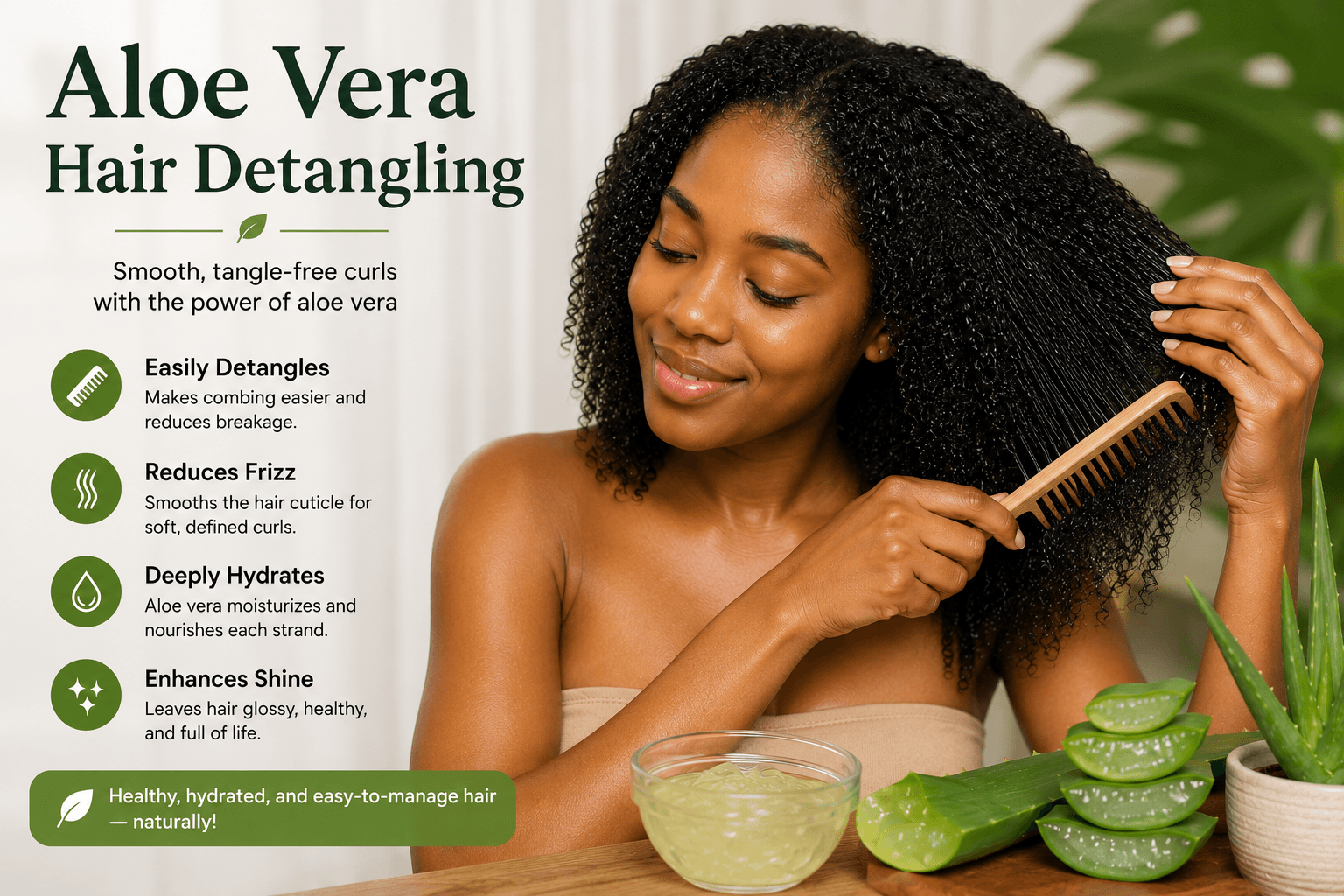
This practical benefit makes aloe vera particularly popular among Nigerian women with natural, coily hair.
Aloe vera’s gel-like consistency provides excellent slip, making fingers and combs glide through tangled hair with significantly less resistance. Consequently, detangling sessions become less painful, less time-consuming, and cause dramatically less breakage.
Additionally, aloe vera smooths the hair cuticle, which directly reduces frizz and defines curl patterns. Therefore, natural hair looks more polished and defined after aloe vera application without the stiffness associated with many commercial styling products.
Best for: Natural hair, coily hair types, frizzy hair, long detangling sessions
What Aloe Vera CANNOT Do for Hair (The Honest Part)
This section is where I earn your complete trust by telling you what most beauty bloggers won’t.
It cannot regrow hair on completely bald areas. If hair follicles are permanently damaged or inactive, aloe vera cannot revive them. In those cases, medical intervention is necessary.
It cannot make your hair grow faster than its biological rate. Hair grows approximately 1-1.5cm per month regardless of what you apply topically. Aloe vera helps you retain the hair you grow, not produce more of it.
It cannot replace protein treatments. Aloe vera provides some amino acids, but it’s not strong enough to replace dedicated protein treatments for severely damaged hair. Therefore, use it as a complement, not a replacement.
It cannot work without consistency. One or two applications won’t produce meaningful results. Furthermore, you need at least 8-12 weeks of consistent use before making any judgments about effectiveness.
It cannot fix severe hair loss from medical causes. If hair loss is related to hormonal imbalances, nutritional deficiencies, or medical conditions, aloe vera addresses none of these root causes. Consequently, see a doctor for medically-driven hair loss.
How to Use Aloe Vera for Hair Correctly (3 Methods)
Method 1: Fresh Aloe Vera Gel (Most Potent)
Using fresh aloe vera directly from the plant gives you the most potent, nutrient-rich version.
Step 1: Cut a thick, mature aloe vera leaf from the plant. Let it stand upright for 10-15 minutes to drain the yellow latex (this can irritate the scalp).
Step 2: Wash the leaf thoroughly. Then, slice it open lengthwise and scoop out the clear gel using a spoon.
Step 3: Blend the gel briefly for a smoother consistency. Alternatively, use it as-is if you prefer.
Step 4: Apply directly to your scalp and hair length. Massage gently into your scalp for 3-5 minutes.
Step 5: Leave on for 30-60 minutes. Alternatively, leave overnight for deeper treatment.
Step 6: Rinse thoroughly with cool water. Follow with your regular conditioner.
Storage: Fresh aloe vera gel lasts 1-2 weeks in the refrigerator. Additionally, you can freeze it in ice cube trays for longer storage.
Method 2: Aloe Vera as a Leave-In Treatment
This method works particularly well for natural and coily hair types.
Step 1: After washing and conditioning your hair, don’t rinse out the conditioner completely. Leave hair damp.
Step 2: Mix equal parts aloe vera gel and water in a spray bottle. Additionally, add a few drops of your favorite essential oil for scent and extra benefits.
Step 3: Spray the mixture evenly throughout damp hair, focusing on the length and ends.
Step 4: Follow immediately with a light oil like Sweet Almond Oil to seal in the moisture that aloe vera has attracted to the hair.
Step 5: Style as normal. The aloe vera provides hold and definition without stiffness.
Frequency: Use every wash day or whenever hair needs refreshing between wash days.
Method 3: Aloe Vera Scalp Treatment (Best for Growth Support)
This method specifically targets scalp health to support the best possible growth environment.
Step 1: Part your hair into 4-6 sections and clip each one separately.
Step 2: Using a dropper bottle or your fingertips, apply aloe vera gel directly to your scalp along each part.
Step 3: Massage thoroughly for 5-10 minutes using circular motions. This step is crucial because the massage itself boosts circulation alongside the aloe vera’s benefits.
Step 4: Leave on for at least 1 hour. However, overnight application gives better results.
Step 5: Shampoo and condition as normal.
Frequency: 2-3 times per week for scalp concerns. Once weekly for maintenance.
Aloe Vera Hair Benefits for Different Hair Types
For Natural Hair (4C, 4B, 4A)
Natural hair benefits enormously from aloe vera’s moisturizing and detangling properties. Specifically, highly textured hair that struggles with dryness and tangles responds beautifully to regular aloe vera treatment.
Use aloe vera as a leave-in treatment after every wash. Additionally, mix with Coconut Oil for extra moisture in a classic LOC (Liquid, Oil, Cream) method. The aloe vera provides the liquid layer, coconut oil provides the oil layer, and your regular cream provides the final seal.
For Relaxed Hair
Relaxed hair is chemically processed and therefore more vulnerable to damage and breakage. Consequently, aloe vera’s strengthening and conditioning benefits are particularly valuable.
Focus on using aloe vera between relaxer touch-ups to strengthen the vulnerable new growth area. Furthermore, use it as a weekly deep conditioning treatment mixed with your regular conditioner for enhanced results.
For Transitioning Hair
The line where natural new growth meets relaxed hair is the most fragile point on transitioning hair. Therefore, regular aloe vera application to this area helps reinforce and protect it, reducing the breakage that makes transitioning so challenging.
For Locs
Aloe vera is excellent for loc maintenance because it provides moisture without leaving the heavy buildup that many products create in locs. Specifically, apply diluted aloe vera spray to your scalp between retwists for ongoing scalp health and moisture.
For Low-Porosity Hair
Low-porosity hair struggles to absorb products because the cuticle lies flat and resists penetration. Therefore, apply aloe vera with gentle heat (warm towel or hair steamer) to help it penetrate more effectively. Additionally, the slightly acidic pH of aloe vera helps temporarily open the cuticle for better absorption.
Best Combinations for Aloe Vera Hair Treatment
Aloe vera becomes even more powerful when combined strategically with complementary ingredients.
Aloe Vera + Coconut Oil (Classic Growth Combination)
Mix equal parts aloe vera gel and Coconut Oil for a powerful moisture and strengthening treatment. The aloe vera provides water-based hydration and scalp benefits. Meanwhile, coconut oil penetrates the hair shaft for deep strengthening. Consequently, this combination addresses both scalp health and hair strength simultaneously.
How to use: Apply to scalp and hair length. Leave for 30 minutes. Shampoo and condition as normal.
Aloe Vera + Sweet Almond Oil (Lightweight Daily Treatment)
Combine aloe vera gel with Sweet Almond Oil for a lightweight daily treatment that doesn’t weigh hair down. Sweet almond oil is significantly lighter than coconut oil. Therefore, this combination suits fine hair or those who find coconut oil too heavy.
How to use: Mix 3 parts aloe vera with 1 part sweet almond oil. Apply as a leave-in treatment to damp hair after washing.
Aloe Vera + Vegetable Glycerine (Maximum Moisture for Dry Hair)
Add a small amount of Vegetable Glycerine to your aloe vera gel for dramatically enhanced moisture. Both aloe vera and glycerine are humectants that attract water to hair. Consequently, this combination provides exceptional moisture for very dry or highly porous hair types.
How to use: Mix 4 parts aloe vera with 1 part glycerine. Apply to damp hair as a leave-in treatment. Follow with a light oil to seal everything in.
Aloe Vera + Rosemary Essential Oil (Scalp Stimulation)
Add 10-15 drops of rosemary essential oil to 100ml of aloe vera gel for a powerful scalp treatment. Rosemary has been clinically shown to promote hair growth, as confirmed by Healthline. Furthermore, combining it with aloe vera’s scalp-healing properties creates a comprehensive growth-supporting treatment.
How to use: Apply directly to scalp. Massage for 5-10 minutes. Leave for 1 hour before washing out.
Realistic Results Timeline
Here’s what to honestly expect if you commit to consistent aloe vera hair treatment.
Week 1-2:
Hair feels softer and more manageable immediately after each use. Additionally, scalp feels cleaner and less itchy. Don’t expect any visible growth changes at this early stage.
Week 3-4:
Detangling becomes noticeably easier and less painful. Moreover, if scalp issues like dandruff or itchiness were present, these should be improving significantly.
Week 5-8:
Breakage reduces meaningfully. Consequently, hair appears to be growing faster because you’re retaining more length. Additionally, curl definition improves for natural hair types.
Week 9-12:
Significant improvement in overall hair health, strength, and appearance. Furthermore, any scalp conditions that were impeding growth should be substantially resolved.
Beyond 12 weeks:
Continued maintenance and improvement. At this point, you’ve established the optimal scalp environment. Consequently, your hair is growing in the healthiest conditions possible.
Common Mistakes People Make With Aloe Vera Hair Treatment
Mistake 1: Using it once and giving up
Aloe vera builds benefits gradually. Therefore, commit to at least 8-12 weeks of consistent use before making any judgments about effectiveness.
Mistake 2: Not following with an oil
Aloe vera is water-based and will evaporate without an oil to seal it in. Always follow aloe vera treatments with a light oil like sweet almond oil to lock in the moisture it attracts.
Mistake 3: Using the yellow latex from the leaf
The yellow substance that drains from a cut aloe vera leaf can irritate the scalp. Therefore, always let the leaf drain completely before scooping out the clear gel.
Mistake 4: Expecting it to replace deep conditioning
Aloe vera is excellent but not a complete protein or moisture treatment on its own. Furthermore, continue your regular deep conditioning routine alongside aloe vera for comprehensive hair care.
Mistake 5: Using too much
More is not better with aloe vera. Using excessive amounts can leave hair feeling stiff or sticky. Start with a small amount and add more only if needed.
Mistake 6: Inconsistent application
Using aloe vera occasionally produces minimal results. Consequently, establish a consistent routine and stick to it for at least 3 months.
Final Verdict: Does Aloe Vera Really Work for Hair?
After everything we’ve covered, here’s my completely honest answer.
Yes, aloe vera works for hair, but not as a miraculous growth accelerator. The viral claims of dramatic growth in weeks are not realistic for most people.
However, what aloe vera genuinely delivers is:
- Deep moisture and conditioning that lasts
- Significant reduction in breakage and shedding
- Healthier, cleaner scalp environment
- Better detangling and less manipulation damage
- Improved hair strength and elasticity
- Support for optimal growth conditions
For Nigerian women dealing with dry hair, scalp issues, breakage, and length retention challenges, aloe vera is a genuinely valuable, affordable addition to any hair care routine. Furthermore, when used correctly and consistently alongside other proven ingredients, the results are real and meaningful.
The key understanding is this: aloe vera helps you grow and KEEP healthy hair. It doesn’t override your biology or produce miracles overnight.
Your Action Plan: Start This Weekend
Now that you know the honest truth about aloe vera hair benefits, here’s exactly what to do.
First, decide which method suits your hair type and concern (scalp treatment, leave-in, or direct application).
Second, source quality aloe vera gel or grow your own plant (widely available in Nigerian markets).
Third, commit to using it consistently 2-3 times per week for 12 weeks minimum.
Fourth, combine with complementary oils for enhanced results.
Finally, take progress photos every 2 weeks to track real improvement objectively.
Ready to maximize your aloe vera results? Pair it with these quality ingredients:
- Sweet Almond Oil – Perfect lightweight oil to seal in aloe vera moisture
- Coconut Oil – Deeply penetrates alongside aloe vera for maximum strength
- Vegetable Glycerine – Combines with aloe vera for maximum moisture for dry hair
Have you tried aloe vera on your hair? What results did you notice? Share your honest experience in the comments below. Your story could help someone else in our community of 5,000+ Nigerian beauty enthusiasts make the best decision for their hair!