How to make body scrub at home is one of the most searched skincare questions online right now, and honestly, it’s easy to understand why. Walk into any beauty store in Lagos, Abuja, or Port Harcourt and you’ll find body scrubs selling for ₦2,500, ₦4,000, sometimes even ₦6,000 for a small jar. Meanwhile, the main ingredients are things sitting right in your kitchen.
Here’s the truth nobody tells you: body scrubs are the easiest, most affordable DIY beauty product you can make. Moreover, homemade scrubs often work better than commercial ones because you’re using fresh, pure ingredients without synthetic fillers or preservatives that dilute the good stuff.
Today, I’m sharing five tried-and-tested body scrub recipes using natural ingredients that work beautifully for Nigerian skin. Furthermore, each recipe costs between ₦200 and ₦500 to make, giving you results that rival products costing ten times more.
Whether you’re making scrubs for personal use, gifting, or starting a beauty business, these recipes are your starting point. Let’s get into it.
Before we jump into recipes, let’s understand what actually goes into a great body scrub. This knowledge will help you customize recipes confidently and troubleshoot if something doesn’t feel right.
Every good body scrub has two essential components working together.
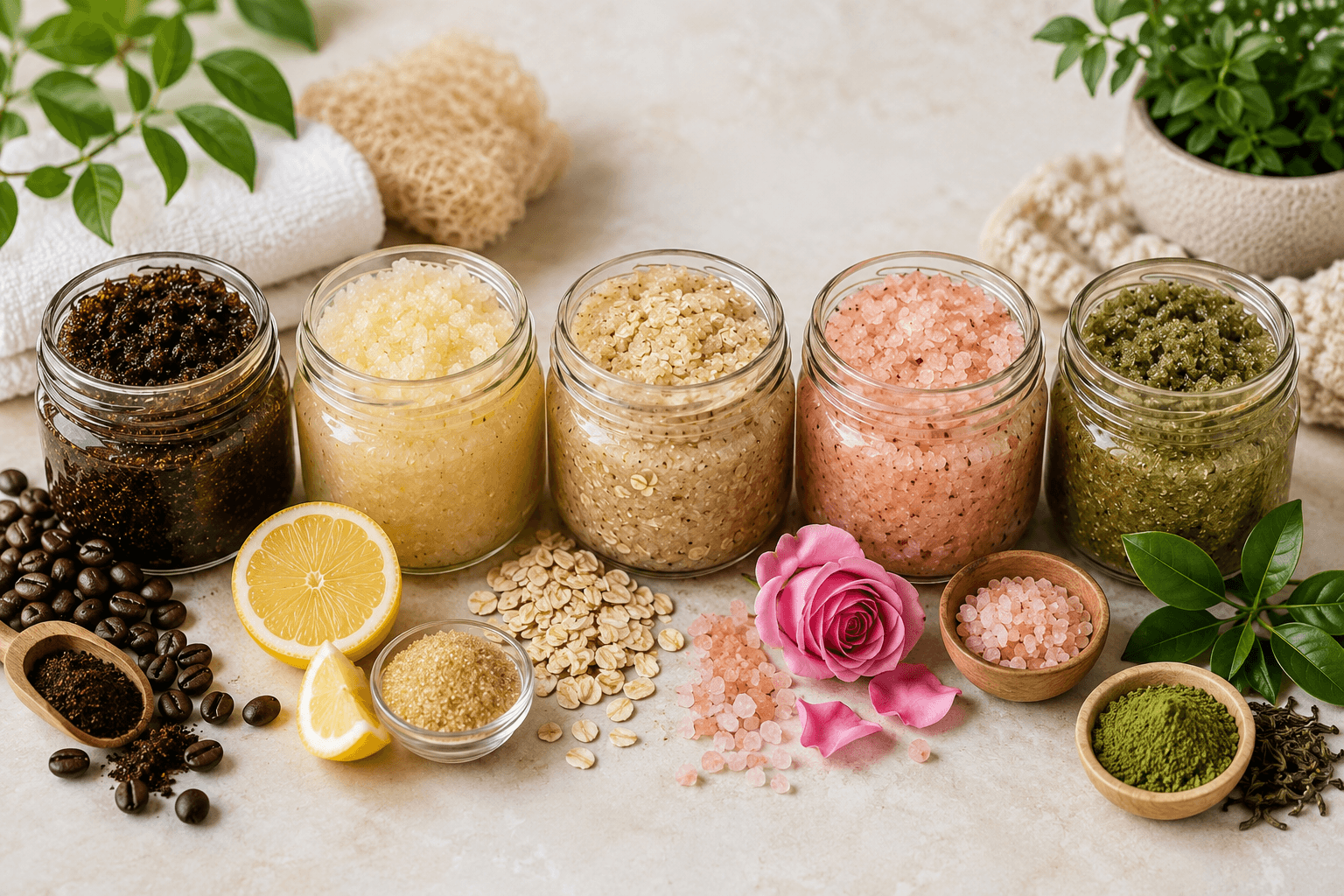
This is the gritty ingredient that physically removes dead skin cells, unclogs pores, and reveals fresher skin underneath. Common natural exfoliants include sugar, salt, coffee grounds, oatmeal, and rice flour.
Sugar dissolves as you scrub, making it gentle enough for most skin types. Additionally, it contains natural glycolic acid that chemically exfoliates while you’re physically scrubbing.
Salt is more abrasive than sugar. Therefore, it’s better suited for body use (not face) and particularly effective for rough areas like elbows, knees, and heels.
Coffee grounds provide medium exfoliation and contain caffeine, which temporarily tightens skin and reduces the appearance of cellulite. Furthermore, they smell absolutely amazing.
Oatmeal is the gentlest option, ideal for sensitive or irritated skin. Moreover, oatmeal has natural anti-inflammatory properties that soothe while it exfoliates.
This is what makes a scrub feel luxurious rather than just scratchy. The oil base moisturizes your skin during exfoliation, prevents the scrub from being too harsh, and leaves skin feeling soft and smooth after rinsing.
Different oils provide different benefits. Specifically, heavier oils like shea butter provide intense moisture, while lighter oils like sweet almond oil absorb quickly without greasiness.
These take your scrub from basic to brilliant:
Now that you understand the building blocks, let’s make some scrubs.
This is where everyone should start. It’s the simplest recipe with the fewest ingredients, and it works beautifully.
Why this recipe works for Nigerian skin:
Sugar exfoliates gently while coconut oil provides deep moisture. Together, they leave skin noticeably softer and brighter after just one use. Additionally, the natural coconut scent is universally loved.
Ingredients (makes one 200ml jar):
Total cost: Approximately ₦250-₦350
Method:
Step 1: If your coconut oil is solid, warm it gently until just melted. Then, let it cool slightly before mixing. You want it liquid but not hot.
Step 2: Combine sugar and melted coconut oil in a clean bowl. Stir well until everything is evenly mixed. The consistency should be like wet sand, thick enough to hold together but loose enough to scoop easily.
Step 3: Add vanilla and vitamin E if using. Stir again thoroughly.
Step 4: Transfer to a clean, dry jar. Close the lid tightly.
How to use:
In the shower or bath, scoop a small amount onto damp skin. Then, massage in circular motions for 30-60 seconds, focusing on dry or rough areas. Rinse thoroughly with warm water. Finally, pat dry and enjoy noticeably softer skin immediately.
Shelf life: 2-3 months at room temperature. However, keep away from water to prevent spoiling.
Selling price suggestion: ₦1,500-₦2,000 per 200ml jar
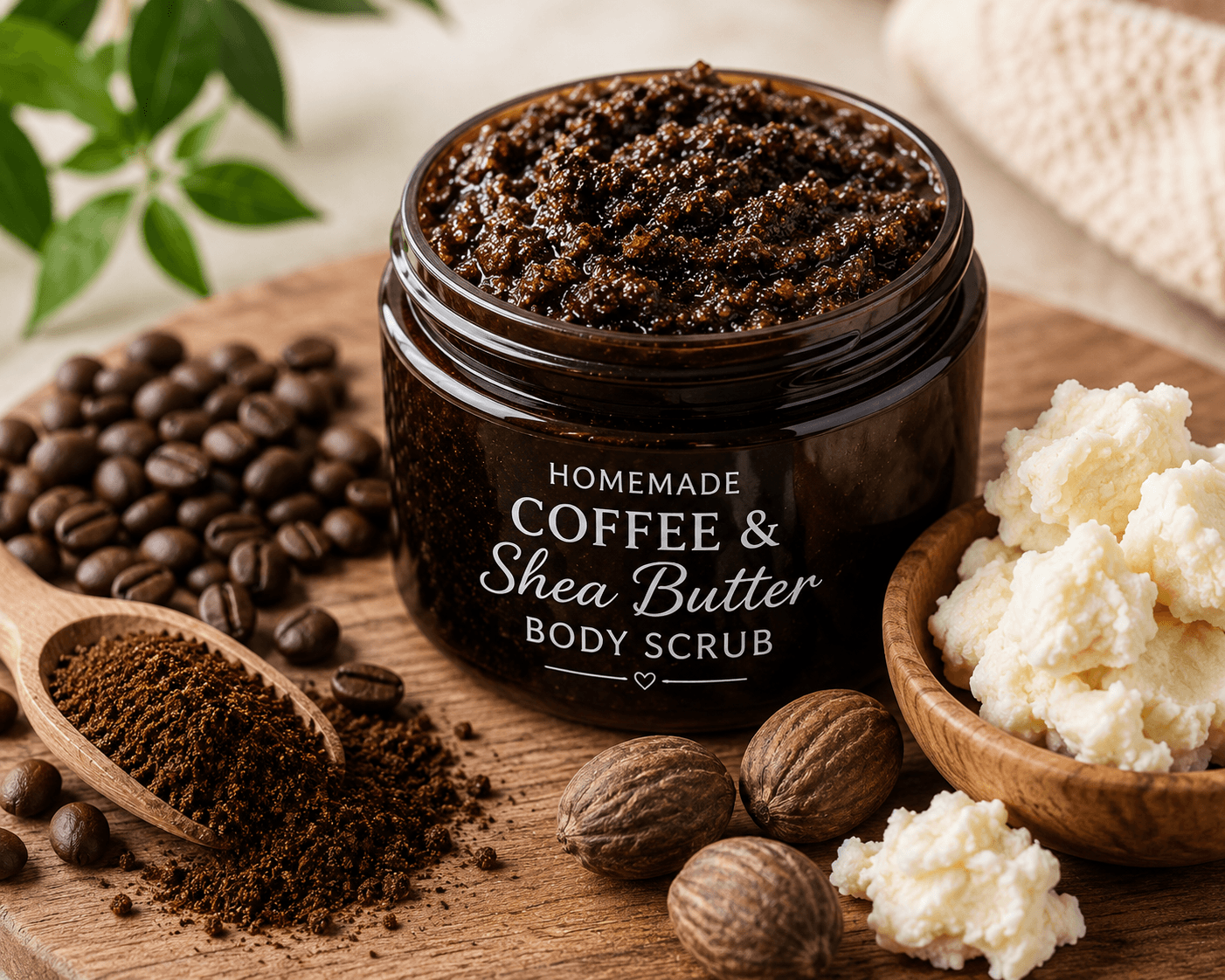
This is the most popular recipe among our customers, and it’s easy to understand why. The coffee scent alone makes you feel like you’re in a spa, and the results on skin are genuinely impressive.
Why this recipe works for Nigerian skin:
Coffee temporarily tightens skin and boosts circulation, giving you an immediate glow. Meanwhile, shea butter provides the deep, lasting moisture our skin needs in any climate.
Ingredients (makes one 200ml jar):
Total cost: Approximately ₦350-₦450
Method:
Step 1: Soften your shea butter at room temperature until workable. If it’s very hard, place the container near (not on) a warm stove briefly.
Step 2: Melt coconut oil until liquid. Then, combine with softened shea butter in a bowl and stir until smooth and blended.
Step 3: Add coffee grounds, brown sugar, and cinnamon. Mix thoroughly until all ingredients are evenly distributed throughout the mixture.
Step 4: Transfer to a clean, dry jar.
How to use:
Apply to damp skin before or during your shower. Massage in circular motions for 1-2 minutes, focusing on areas with cellulite (thighs, buttocks, upper arms). Rinse well because coffee grounds can be messy. Pat dry and notice the immediate tightening and brightening effect.
Pro tip: Use this scrub 2-3 times per week for best results on cellulite. Consistency matters more than how hard you scrub.
Shelf life: 3-4 months when stored properly away from water and sunlight.
Selling price suggestion: ₦2,000-₦2,500 per 200ml jar (coffee scrubs command premium prices!)
This is your heavy-duty option for seriously rough skin on elbows, knees, feet, and heels. Salt is more abrasive than sugar, which makes it more effective for stubborn rough patches that gentler scrubs can’t budge.
Why this recipe works for Nigerian skin:
Our skin faces dust, harmattan dryness, and rough textures that build up over time, particularly on high-friction areas. This salt scrub cuts through that buildup effectively while sweet almond oil replenishes lost moisture immediately.
Ingredients (makes one 200ml jar):
Total cost: Approximately ₦400-₦500
Method:
Step 1: Combine salt and sweet almond oil in a clean bowl. Stir until thoroughly mixed.
Step 2: Add vegetable glycerine and stir again. This adds extra moisture and helps the scrub glide more smoothly on skin.
Step 3: Add lemon essential oil and vitamin E. Mix well to distribute evenly.
Step 4: Transfer to a clean jar with a tight-fitting lid.
How to use:
Use on body only, not face (salt is too abrasive for facial skin). Apply to damp skin and massage firmly in circular motions, focusing especially on elbows, knees, heels, and any rough patches. Rinse thoroughly. Follow with your regular body cream or lotion for best results.
Important note: Avoid using this scrub on freshly shaved skin or any broken skin, as the salt will sting.
Shelf life: 6-12 months (salt is a natural preservative, so this scrub lasts longer than sugar versions).
Selling price suggestion: ₦1,800-₦2,200 per 200ml jar
If your skin is sensitive, reactive, or prone to irritation, this is your recipe. Oatmeal is the gentlest exfoliant available and has been used for centuries to soothe irritated, inflamed skin. Additionally, honey adds antibacterial properties and deep moisture.
Why this recipe works for Nigerian skin:
Many Nigerians deal with sensitive skin triggered by harsh weather, product reactions, or skin conditions. This scrub exfoliates without aggravating sensitivity, leaving even the most reactive skin calm and smooth.
Ingredients (makes one 200ml jar):
Total cost: Approximately ₦300-₦400
Method:
Step 1: Blend 100g of rolled oats in a blender or food processor until it becomes a fine powder (like flour). This is your gentle exfoliant base.
Step 2: Warm honey slightly (place the jar in warm water for 2-3 minutes) until it’s runny and easier to mix. Then, combine with coconut oil in a bowl.
Step 3: Add oat powder and whole oats to the honey and oil mixture. Stir well until everything comes together into a paste-like consistency.
Step 4: Add lavender essential oil. Mix thoroughly. Transfer to a clean jar.
How to use:
Apply gently to damp skin using soft, circular motions. Don’t press too hard because the oatmeal exfoliates gently and doesn’t need force. Leave on for 1-2 minutes as a mini mask before rinsing. The oatmeal will feel slightly slimy as it activates, which is normal.
Shelf life: 2-3 weeks only because of the honey and lack of preservatives. Therefore, make small batches frequently rather than large batches.
Pro tip: For a longer shelf life, replace honey with Vegetable Glycerine and add a proper preservative. This extends shelf life to 2-3 months.
Selling price suggestion: ₦1,500-₦2,000 per 100ml jar (position as a luxury sensitive skin treatment)
This is your glow-getter recipe. Turmeric has been used across Africa and Asia for centuries to brighten skin, fade dark spots, and even out skin tone. Combined with coconut oil and sugar, it makes one of the most effective brightening scrubs you can make at home.
Why this recipe works for Nigerian skin:
Hyperpigmentation and uneven skin tone are among the most common skincare concerns for melanin-rich skin. This scrub addresses both concerns naturally and affordably, which is why it’s becoming increasingly popular among Nigerian beauty enthusiasts.
Ingredients (makes one 200ml jar):
Total cost: Approximately ₦250-₦350
Method:
Step 1: Melt coconut oil until liquid and let cool slightly.
Step 2: Combine sugar, turmeric powder, and cooled coconut oil in a bowl. Stir thoroughly until the turmeric is fully distributed with no yellow clumps visible.
Step 3: Add honey and lemon essential oil. Stir again until smooth.
Step 4: Transfer to a clean jar.
How to use:
Apply to damp skin and massage gently in circular motions for 60 seconds. Pay special attention to dark spots, elbows, knees, and uneven areas. Leave on skin for an extra 2 minutes before rinsing to allow turmeric to work. Rinse thoroughly with warm water.
Important warnings:
Turmeric stains fabric easily. Therefore, be careful around towels, clothing, and your shower walls. Rinse your skin extremely well.
Additionally, turmeric can temporarily leave a slight yellow tint on very fair or light skin, which washes off after your next shower. Start with less turmeric (1/2 teaspoon) if you’re concerned.
Shelf life: 2-3 months at room temperature, away from direct sunlight.
Selling price suggestion: ₦1,800-₦2,500 per 200ml jar (brightening products command premium prices in the Nigerian market!)
Making the scrub is only half the journey. Using it correctly determines whether you get good results or irritated skin.
Always apply scrub to damp skin, never dry skin. Wet skin allows the scrub to glide smoothly rather than dragging and potentially causing micro-tears.
Additionally, shower or bathe first for 2-3 minutes before scrubbing. The warm water softens your skin and opens your pores, making exfoliation more effective and less harsh.
Use gentle circular motions and let the exfoliant do the work. Pressing harder doesn’t improve results. In fact, it can cause irritation and broken capillaries, particularly on sensitive areas.
Spend about 30-60 seconds on each body area. Furthermore, give extra attention to rough areas like elbows, knees, and heels, where dead skin accumulates fastest.
Rinse thoroughly with warm water to remove all scrub residue. Then, pat dry with a clean towel rather than rubbing aggressively (your skin is temporarily more sensitive after exfoliation).
Apply your body cream or lotion immediately while skin is still slightly damp. This seals in moisture and maximizes the scrub’s softening effect.
Most skin types benefit from scrubbing 2-3 times per week. However, sensitive skin should start with once per week and increase gradually based on how skin responds.
Over-exfoliating causes redness, sensitivity, and even increased breakouts. Therefore, more isn’t better with scrubbing.
Beautiful packaging transforms homemade scrubs into professional products.
Best containers:
Labels should include:
Pricing your scrubs:
Most customers expect to pay ₦1,500-₦3,000 for a quality handmade body scrub. Premium ingredients and beautiful packaging justify the higher end of this range. Additionally, gift sets (3 different scrubs in a box) can sell for ₦5,000-₦8,000, making them excellent holiday or birthday gifts.
Store all scrubs in cool, dry places away from direct sunlight and heat. This is particularly important in Nigeria where temperatures can accelerate spoilage.
Always use a clean, dry spoon or spatula to scoop product rather than wet hands. Water contamination is the fastest way to spoil a natural scrub without preservatives.
Additionally, label every jar with the date you made it. This helps you track freshness and ensures you use older batches first if you make multiple jars.
You now have five proven body scrub recipes covering every skin type, concern, and budget. From the simple beginner-friendly sugar scrub to the brightening turmeric recipe, there’s something here for everyone.
Start with Recipe 1 (sugar and coconut oil) if you’re completely new to DIY beauty. It’s foolproof, affordable, and delivers immediate results. Then, experiment with other recipes as your confidence grows.
This weekend’s action steps:
First, choose the recipe that matches your biggest skin concern. Second, gather your ingredients (most are already in your kitchen or readily available). Third, set aside 15 minutes to make your first batch. Fourth, use it in your next shower and feel the difference immediately. Finally, share your results because people will notice your skin!
Ready to make your first body scrub? Get your quality ingredients here:
Which recipe are you trying first? Drop your answer in the comments below! We’d love to see your scrub creations and hear about your results!