
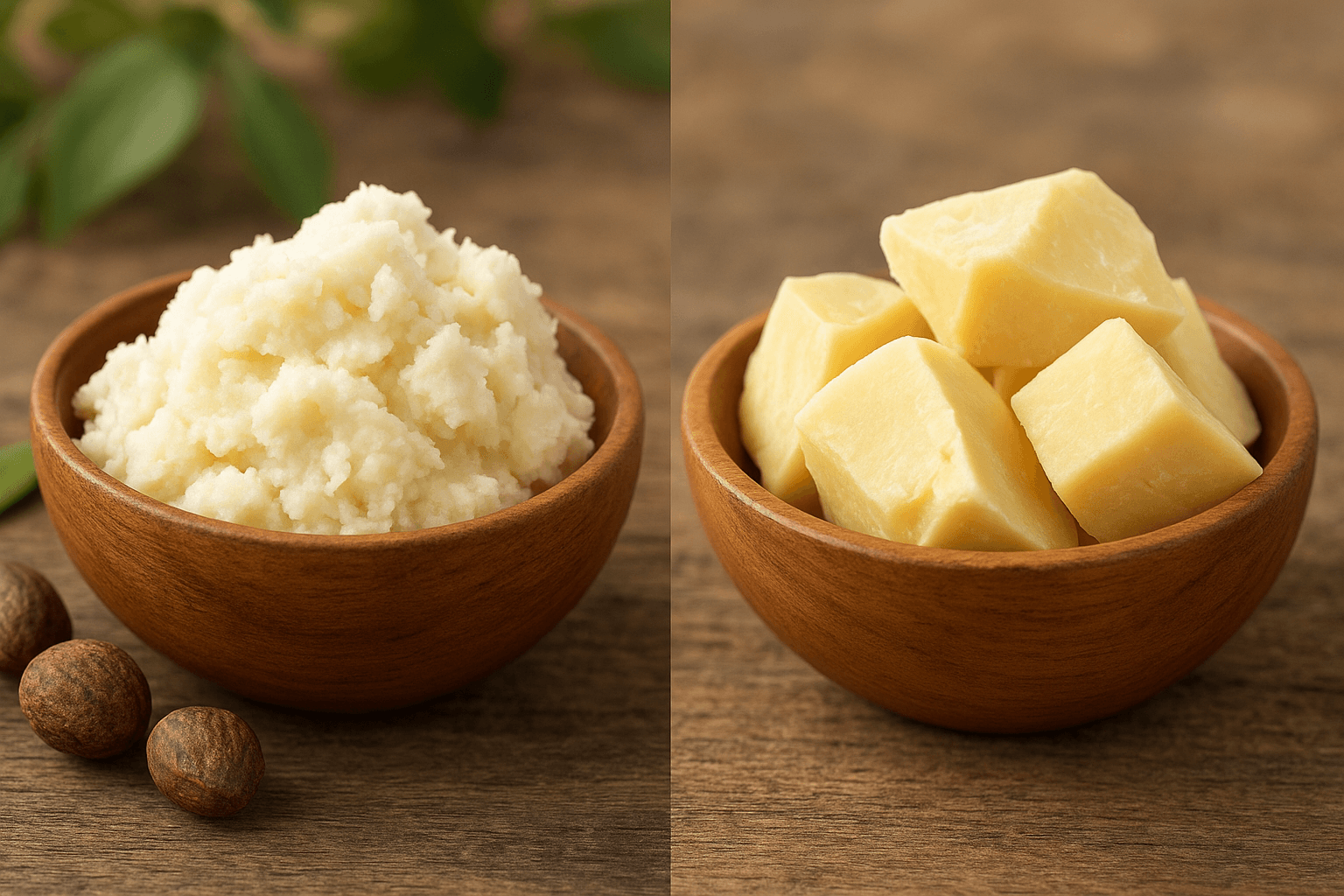
If you’ve ever stood in a store (or scrolled online) staring at shea butter and cocoa butter wondering which one to buy, you’re not alone. This is literally one of the most debated topics in Nigerian skincare circles.
I’ve seen heated arguments in beauty WhatsApp groups. “Shea butter is superior!” one person insists. “No, cocoa butter is better for dark skin!” another counters. Meanwhile, your grandmother swears by ori (shea butter), but your friend’s glowing skin comes from cocoa butter.
So who’s right?
Here’s the truth: both are amazing natural butters with incredible benefits for your skin. However, they work differently, feel different, and suit different purposes. Understanding these differences helps you choose what’s actually best for YOUR skin, not just what’s trending.
Today, we’re settling this debate once and for all. We’ll compare everything texture, absorption, benefits, smell, price, and performance on African skin. By the end, you’ll know exactly which butter deserves a permanent spot in your skincare routine.
Let’s start with what many Nigerians call “ori” or “kadanya” in Hausa.
Shea butter comes from the nuts of the shea tree called VITELLARIA PARADOXA , which grows naturally across West Africa from Nigeria to Ghana, Burkina Faso, and Mali. In fact, Nigeria is one of the largest producers of shea butter in the world.
For centuries, African women have used shea butter for everything: moisturizing skin, treating wounds, protecting against harsh sun, conditioning hair, and even cooking in some regions.
What makes shea butter special:
First and foremost, it’s incredibly rich in fatty acids particularly oleic acid and stearic acid. These fats deeply penetrate your skin and lock in moisture for hours. Additionally, shea butter contains vitamins A, E, and F, which repair skin damage and fight signs of aging.
Moreover, it has natural anti-inflammatory properties. Therefore, it’s excellent for soothing irritated skin, eczema, and even reducing stretch marks. Furthermore, shea butter provides mild sun protection (about SPF 6), which is helpful, though not enough to replace proper sunscreen.
Types of shea butter you’ll find:
Most Nigerian women prefer unrefined shea butter because it’s closer to what our grandmothers used, and honestly, it works better.
Now let’s talk about cocoa butter, the other heavyweight champion.
Cocoa butter comes from cocoa beans yes, the same beans used to make chocolate. Native to Central and South America, cocoa trees are now grown in West Africa too, particularly in Ghana and Côte d’Ivoire.
Unlike shea butter’s long history in African traditional medicine, cocoa butter became popular more recently through commercial beauty products. Nevertheless, it has earned its reputation as a powerful moisturizer.
What makes cocoa butter special:
Cocoa butter is extremely rich and occlusive, meaning it creates a protective barrier on your skin that locks moisture in. As a result, it’s particularly effective for very dry skin, cracked heels, and preventing moisture loss in harsh weather.
Additionally, it’s packed with antioxidants specifically polyphenols that fight free radicals and slow down aging. Many people also use it to fade scars and stretch marks, though scientific evidence on this is mixed.
One thing everyone agrees on: cocoa butter smells absolutely divine. That natural chocolate scent is a major reason people love it.
Types of cocoa butter:
Now let’s compare them side by side on what actually matters.
Shea Butter: Soft and creamy at room temperature. Furthermore, it melts quickly on contact with warm skin. The texture is smooth but can feel slightly greasy initially, though it absorbs within 10-15 minutes.
Cocoa Butter: Much harder and more solid at room temperature, especially in air-conditioned spaces. Therefore, you need to warm it between your hands before applying. Once melted, it’s quite thick and takes longer to absorb sometimes 20-30 minutes.
Winner for Nigerian Climate: Shea butter wins here. In our hot weather, you want something that spreads easily without too much effort. Cocoa butter’s hardness can be frustrating when you’re in a hurry.
Shea Butter: Absorbs relatively quickly usually within 10-20 minutes. Moreover, it doesn’t leave a heavy film on your skin, making it suitable for daytime use.
Cocoa Butter: Takes significantly longer to absorb often 30+ minutes. As a result, it leaves a protective layer on your skin that lasts for hours. This can feel too heavy for some people, especially in humid weather.
Winner: Depends on your needs. For everyday use, shea butter’s faster absorption is more practical. However, for intensive overnight treatment or extremely dry skin, cocoa butter’s slow absorption and lasting protection work better.
Shea Butter: Has a distinct, earthy, nutty smell that some people love and others find too strong. The scent is natural and fades within 30-60 minutes after application.
Cocoa Butter: Smells like chocolate sweet, rich, and delicious. Most people absolutely love this scent. Similarly, it fades after application but lingers longer than shea butter.
Winner: Cocoa butter, hands down. That chocolate scent is universally appealing. Nevertheless, if you’re sensitive to smells or prefer unscented products, refined versions of both work fine.
Shea Butter: Provides deep, long-lasting moisture. In addition, it contains natural emollients that soften and smooth skin. It works particularly well for normal to dry skin.
Cocoa Butter: Offers extremely intensive moisturization. Furthermore, its occlusive properties mean it seals in hydration more effectively than shea butter. Ideal for very dry, cracked, or damaged skin.
Winner: Cocoa butter for extreme dryness. However, for everyday moisture, shea butter is perfectly adequate and less heavy.
Shea Butter:
Cocoa Butter:
Winner for African Skin: Shea butter edges ahead because it addresses hyperpigmentation concerns common in melanin-rich skin. Additionally, it’s less likely to cause breakouts, making it safer for facial use.
Shea Butter: Generally more affordable in Nigeria since we produce it locally. Raw, unrefined SHEA BUTTER typically costs less than imported cocoa butter. Furthermore, it’s widely available in markets, from local vendors, and online.
Cocoa Butter: Usually more expensive, especially quality unrefined versions. While West Africa produces cocoa, most cocoa butter is processed elsewhere and imported back. Therefore, prices are higher.
Winner: Shea butter for budget-conscious buyers. You get excellent quality at better prices.
Shea Butter is Best For:
Cocoa Butter is Best For:
Let’s make this practical. Here’s what works for different skin types:
Dry Skin: Both work beautifully. However, cocoa butter provides more intensive moisture for severely dry skin. For moderate dryness, shea butter is perfect and less heavy.
Oily/Combination Skin: Shea butter is your better choice. It’s lighter and won’t make your skin feel greasy. Additionally, it’s non-comedogenic, so it won’t clog your pores. Avoid cocoa butter on your face if you’re oily.
Sensitive Skin: Shea butter wins. Its anti-inflammatory properties soothe sensitive skin better. Moreover, it’s less likely to cause reactions.
Acne-Prone Skin: Definitely shea butter. Cocoa butter can be too heavy and may clog pores, potentially causing more breakouts. Shea butter, on the other hand, is gentler and non-comedogenic.
Mature Skin: Both are excellent. Shea butter’s vitamins help with anti-aging, while cocoa butter’s antioxidants fight free radicals. You could even use both cocoa butter on your body, shea butter on your face.
Normal Skin: Lucky you! Both will work well. Choose based on texture preference and scent.
Absolutely! In fact, many people mix shea butter and cocoa butter to get the best of both worlds.
How to combine them:
Mix equal parts melted shea butter and cocoa butter. Then, add a light carrier oil like SWEET ALMOND OIL or jojoba oil (about 10-20% of total mixture). Finally, whip everything together until fluffy.
This combination gives you:
Many successful Nigerian skincare brands use this exact combination in their body butters. Therefore, you can definitely benefit from both.
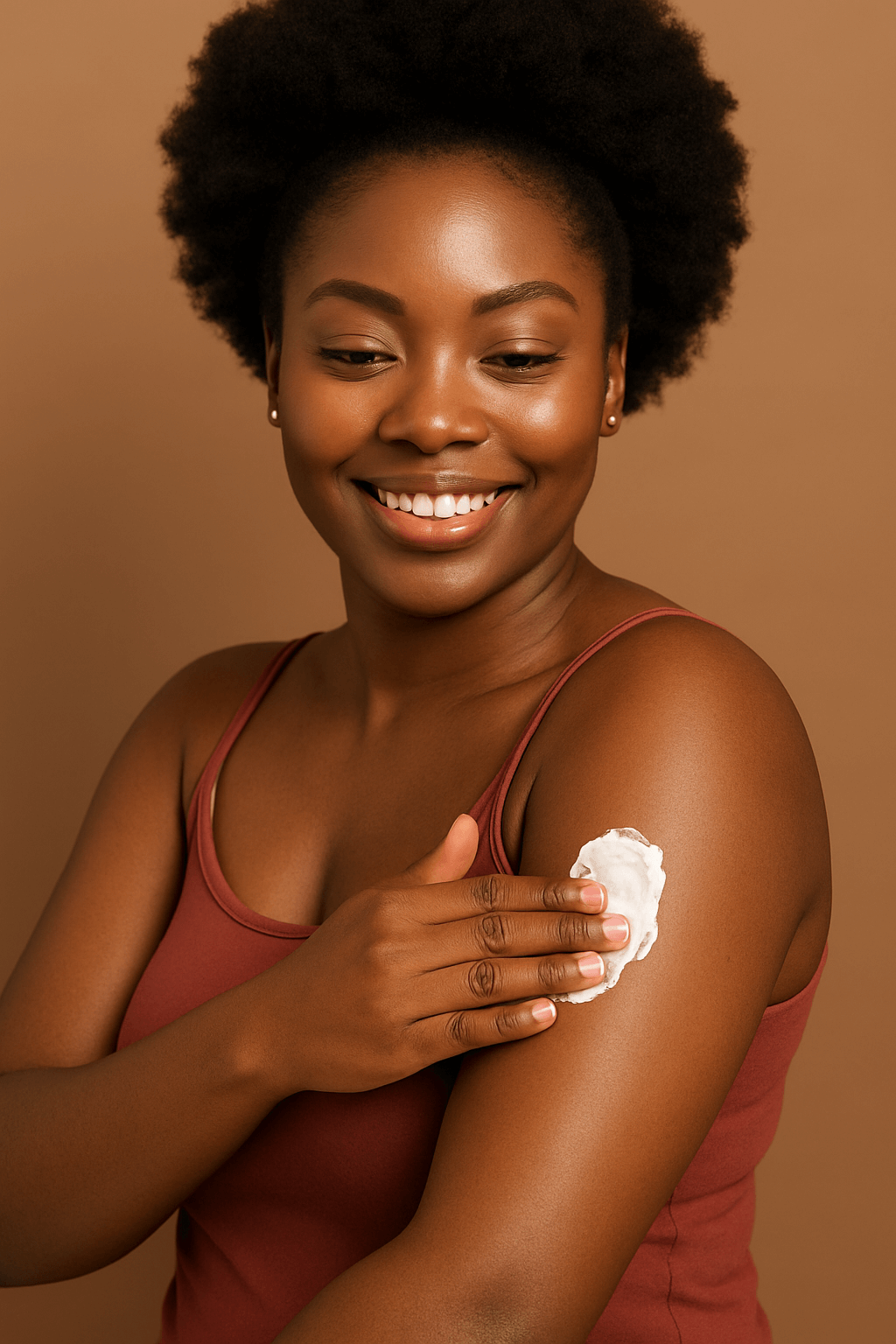
Here’s what I want you to understand: this isn’t actually a competition with a clear winner.
Both shea butter and cocoa butter are incredible natural ingredients that have served people for centuries. Moreover, both will improve your skin significantly compared to many commercial lotions filled with harsh chemicals.
The “better” choice depends entirely on:
My honest recommendation?
Try both. Seriously. Get a small amount of quality shea butter and cocoa butter. Use them for two weeks each and see how your skin responds. Your skin will tell you what it prefers.
Many people (myself included) keep both in their routine:
Before you rush to buy either butter, avoid these common mistakes:
Mistake 1: Buying Low-Quality Products Not all shea butter or cocoa butter is created equal. Poor quality, highly refined versions have lost most beneficial properties. Therefore, look for raw, unrefined options whenever possible.
Mistake 2: Expecting Overnight Miracles Natural ingredients work gradually. Consequently, you need consistent use over weeks or months to see significant results. Don’t give up after three days.
Mistake 3: Using Cocoa Butter on Acne-Prone Face This is a recipe for breakouts. Instead, save cocoa butter for your body and use shea butter on your face.
Mistake 4: Not Patch Testing Even natural ingredients can cause reactions in some people. Therefore, always test on a small area first, especially if you have sensitive skin.
Mistake 5: Storing Improperly Both butters can go rancid if exposed to heat, light, and air. Store in cool, dark places in airtight containers. They’ll last 12-24 months when stored properly.
If I absolutely had to choose one:
For face and everyday use: Shea butter wins. It’s lighter, absorbs faster, doesn’t clog pores, and addresses hyperpigmentation a major concern for African skin.
For intensive body treatment: Cocoa butter wins. It provides unmatched moisture-locking power and smells amazing.
For overall value: Shea butter wins. It’s more affordable, versatile, and culturally significant in Nigeria. Plus, you’re supporting local production.
But honestly? You don’t have to choose. Both deserve a place in your skincare routine, used strategically for different purposes.
Now that you understand both butters, here’s what to do:
First, identify your primary skin concern. Is it dryness, dark spots, aging, or something else? This guides your choice.
Next, start with one butter and use it consistently for at least three weeks. Track how your skin responds—does it feel softer? Look brighter? Any breakouts?
Then, if you want, try the other one and compare results.
Finally, consider creating your own custom blend or using both strategically one for face, another for body.
The most important thing? Choose quality ingredients. Whether it’s natural shea butter or premium cocoa butter, quality makes all the difference between mediocre results and genuinely transformed skin.
What’s your experience with shea butter or cocoa butter? Which one does your skin love more? Drop a comment below and share your story we’d love to hear what works for you!