
By now you’ve probably seen it on TikTok. Someone applies rosemary oil to their scalp every day for 90 days and documents their hair transformation. The comments are flooded with Nigerian women asking the same question: does rosemary oil actually grow hair, or is this just another trend?
Here’s what makes rosemary oil different from every other hair growth trend we’ve covered.
There’s actual clinical evidence behind it.
As Nigeria’s leading cosmetic raw materials supplier at Sophix Natural, we’ve worked extensively with rosemary essential oil across professional hair formulations. Furthermore, we’ve watched Nigerian women incorporate it into their routines with genuinely impressive results. Today, I’m giving you the complete, honest guide to using rosemary oil for hair growth the right way.
Additionally, by the end of this article, you’ll understand exactly what rosemary oil can achieve for Nigerian hair, what it cannot do, and precisely how to use it correctly for maximum results.
Let’s get into it.
What Exactly is Rosemary Oil?
Before discussing results, let’s understand what we’re actually talking about.
Rosemary oil is an essential oil extracted from the leaves and flowering tops of Rosmarinus officinalis, a Mediterranean herb. Specifically, the extraction happens through steam distillation, which concentrates the plant’s active compounds into a highly potent liquid.
The key active compound responsible for rosemary oil’s hair benefits is rosmarinic acid, alongside 1,8-cineole, camphor, and alpha-pinene. Specifically, these compounds work synergistically to stimulate circulation, reduce inflammation, and interact directly with hair follicle cells.
Important distinction: Rosemary essential oil is NOT the same as rosemary-infused carrier oil. Specifically:
Rosemary essential oil: Highly concentrated, must always be diluted before skin or scalp contact, what the clinical research studied.
Rosemary-infused oil: Carrier oil (like coconut or almond oil) that has been soaked with rosemary leaves. Significantly less potent but still beneficial and gentler for beginners.
Both have value, but they work differently. Consequently, understanding which you’re using helps set appropriate expectations.
The Science: What Research Actually Says About Rosemary Oil Hair Growth
This is the section that separates rosemary oil from most trending hair products. Specifically, there is genuine clinical evidence rather than just anecdotal TikTok stories.
The landmark 2015 study:
A randomized comparative trial published in the journal SKINmed compared 2% minoxidil (the active ingredient in Rogaine, the most popular hair loss treatment worldwide) against rosemary oil for treating androgenetic alopecia (pattern hair loss).
After 6 months, both groups showed significant hair count increases. Specifically, rosemary oil produced comparable results to 2% minoxidil. Furthermore, the rosemary oil group experienced significantly less scalp itching than the minoxidil group, demonstrating better tolerability. According to PubMed, this was a genuinely significant finding because minoxidil is a pharmaceutical treatment while rosemary oil is a natural alternative.
What this means practically:
Rosemary oil is not just a trend. It has clinical evidence supporting its effectiveness for hair growth in cases of pattern hair loss. However, it’s important to understand what the study specifically found and what it did not claim.
What research DOES confirm:
According to the National Institutes of Health, rosemary oil improves hair count in androgenetic alopecia (pattern hair loss) over 6 months. Additionally, it stimulates circulation to the scalp, which supports follicle function. Furthermore, it has anti-inflammatory properties that reduce scalp inflammation known to impair follicle function.
What research does NOT confirm:
The study specifically examined androgenetic alopecia, not general hair growth in healthy individuals. Moreover, there are no large clinical trials proving rosemary oil makes healthy hair grow faster than its natural biological rate. Consequently, expectations must be calibrated to what the evidence actually supports.
The honest bottom line: Rosemary oil is genuinely effective for improving the scalp environment for hair growth, particularly for those experiencing pattern hair loss or thinning. For healthy hair, it creates optimal conditions for existing follicles to function at their best.
What Rosemary Oil Actually Does for Nigerian Hair
Benefit 1: Stimulates Scalp Blood Circulation
This is rosemary oil’s most well-documented and consistently proven benefit.
The active compounds in rosemary oil, particularly 1,8-cineole, dilate blood vessels in the scalp. Consequently, blood flow to hair follicles increases significantly after application. Furthermore, better circulation delivers more oxygen, nutrients, and growth factors to each follicle, supporting stronger, healthier hair production.
Additionally, the familiar tingling sensation you feel when applying rosemary oil to your scalp is not just sensation. It’s a physical indicator of increased blood flow. Consequently, this tingling confirms the oil is working as intended.
Benefit 2: Blocks DHT (The Hair Loss Hormone)
This mechanism is particularly relevant for Nigerian men and women experiencing hair thinning.
Dihydrotestosterone (DHT) is a hormone derived from testosterone that binds to hair follicle receptors and causes them to shrink progressively. Consequently, affected follicles produce thinner, shorter hair until they stop producing hair entirely. This process is called androgenetic alopecia (pattern hair loss).
Rosemary oil contains compounds that inhibit the enzyme (5-alpha reductase) responsible for converting testosterone to DHT. Furthermore, it appears to compete with DHT for follicle receptor binding sites. Consequently, regular rosemary oil application may slow or reduce DHT-related hair thinning over time.
Benefit 3: Reduces Scalp Inflammation
Chronic scalp inflammation is one of the most overlooked causes of slow hair growth and hair loss in Nigeria.
Tight hairstyles, product buildup, fungal infections, and even stress all contribute to scalp inflammation that impairs follicle function. Specifically, rosemary oil’s rosmarinic acid has demonstrated powerful anti-inflammatory activity in multiple studies. As a result, regular application calms an inflamed scalp and creates a healthier environment for growth.
Benefit 4: Antimicrobial Scalp Protection
Scalp infections from fungi and bacteria are more common in Nigeria than most people realize. Specifically, our hot, humid climate creates ideal conditions for Malassezia (dandruff-causing fungus) and bacterial overgrowth that can clog follicles and impair growth.
Rosemary oil has broad antimicrobial activity against these common scalp pathogens. Consequently, regular use keeps the scalp microbiome balanced, preventing the infections that silently damage follicles over time.
Benefit 5: Strengthens Hair and Reduces Breakage
Beyond direct scalp benefits, rosemary oil strengthens existing hair strands.
The antioxidants in rosemary oil protect hair proteins from oxidative damage caused by sun exposure, pollution, and chemical treatments. Additionally, improved scalp circulation means each hair strand grows from a better-nourished follicle. Consequently, new growth is thicker, stronger, and more resistant to breakage than before treatment.
What Rosemary Oil CANNOT Do (The Honest Part)
It cannot regrow hair on completely bald areas. If follicles are permanently damaged or have been inactive for many years, rosemary oil cannot revive them. In those cases, medical intervention is required.
It cannot produce results in days or weeks. The clinical study showing meaningful results required 6 months of consistent daily application. Furthermore, expecting dramatic change in 30 days leads to premature disappointment and abandonment of a genuinely effective treatment.
It cannot work without a carrier oil. Pure rosemary essential oil applied directly to the scalp causes irritation and chemical burns. Therefore, always dilute properly before application. This is non-negotiable.
It cannot replace medical treatment for serious hair loss. If you’re experiencing rapid, significant hair loss, see a dermatologist. Rosemary oil supports hair health but is not a substitute for proper medical diagnosis and treatment.
It cannot overcome poor diet and lifestyle. Hair grows from the inside out. Consequently, rosemary oil applied externally cannot compensate for severe nutritional deficiencies, chronic stress, or hormonal imbalances that are causing hair loss internally.
How to Use Rosemary Oil for Hair Growth Correctly (4 Methods)
Method 1: Rosemary Oil Scalp Massage (Most Effective)
This is the method closest to what the clinical study used. Consequently, it’s the most evidence-backed application approach.
What you need:
- 5-6 drops rosemary essential oil
- 2 tablespoons carrier oil (Coconut Oil or Sweet Almond Oil)
Step 1: Mix rosemary essential oil into your carrier oil. The dilution ratio should be 2-3% rosemary essential oil. Specifically, this means 5-6 drops per 2 tablespoons of carrier oil. Never exceed this concentration for scalp application.
Step 2: Part your hair into sections. Apply the mixture directly to your scalp along each part using a dropper bottle or your fingertips.
Step 3: Massage thoroughly for 5-10 minutes using firm circular motions. This massage is as important as the oil itself. Specifically, the mechanical stimulation from massage independently increases blood flow alongside rosemary’s circulation-boosting compounds. Consequently, the combination produces more benefit than either alone.
Step 4: Leave on for at least 2 hours. Alternatively, leave overnight under a satin bonnet for maximum benefit. Then, shampoo out thoroughly the following morning.
Frequency: Apply 2-3 times per week consistently for a minimum of 3-6 months. Consistency is the single most important factor determining results.
Method 2: Rosemary Oil Leave-In Scalp Spray (Daily Use)
This method allows daily application without the heaviness of oil treatments. Specifically, it’s excellent for people who don’t want greasy hair during the day.
What you need:
- 100ml distilled water
- 10 drops rosemary essential oil
- 1 teaspoon Vegetable Glycerine
- Small spray bottle
Step 1: Combine all ingredients in the spray bottle. Shake vigorously for 30 seconds to distribute the essential oil throughout the water. Specifically, add a small amount of alcohol (like witch hazel) to help the oil disperse more evenly in water.
Step 2: Shake before every use because oil and water naturally separate.
Step 3: Spray directly onto the scalp, parting hair to reach the skin directly.
Step 4: Massage gently for 2-3 minutes to distribute. Leave in without rinsing.
Frequency: Daily application is appropriate with this diluted formula. Consequently, the lower concentration is safe for everyday use.
Method 3: Adding Rosemary Oil to Your Existing Products
The simplest method for beginners. Specifically, this requires no additional routine steps.
To shampoo: Add 3-4 drops of rosemary essential oil per 30ml of shampoo. Mix well before applying.
To conditioner: Add 3-4 drops per 30ml of conditioner. Apply as normal and leave for the recommended processing time.
To hair growth oil blend: Add 15 drops of rosemary essential oil per 100ml of your hair growth oil blend.
To hair mask: Add 8-10 drops to your hair mask recipe before applying.
Why this works: Even brief scalp contact during shampoo and conditioning allows rosemary compounds to interact with follicles. Furthermore, consistent daily exposure through product addition accumulates significant benefits over time.
Method 4: DIY Rosemary Oil Infusion (Budget-Friendly)
This method creates a rosemary-infused carrier oil without needing to purchase rosemary essential oil separately.
What you need:
- 200ml Coconut Oil or Sweet Almond Oil
- 4-5 large fresh rosemary sprigs (or 3 tablespoons dried rosemary)
- Glass jar with lid
- Double boiler
Cold infusion method (4-6 weeks, most potent):
Step 1: Place rosemary sprigs or dried rosemary in a clean glass jar. Ensure the rosemary is completely dry to prevent mold growth.
Step 2: Pour carrier oil over the rosemary until completely submerged.
Step 3: Close the jar tightly. Store in a warm, sunny windowsill for 4-6 weeks, shaking daily.
Step 4: Strain out the rosemary using a fine mesh strainer or cheesecloth. Transfer the infused oil to a dark glass bottle.
Warm infusion method (3-4 hours, quicker):
Step 1: Place rosemary and carrier oil in a double boiler over very low heat (below 60°C).
Step 2: Allow to infuse for 3-4 hours, keeping the temperature consistently low. Specifically, higher temperatures destroy beneficial compounds.
Step 3: Strain and bottle as above.
Shelf life: 6-12 months when stored in a dark glass bottle away from heat and sunlight.
The Best Rosemary Oil Combinations for Nigerian Hair
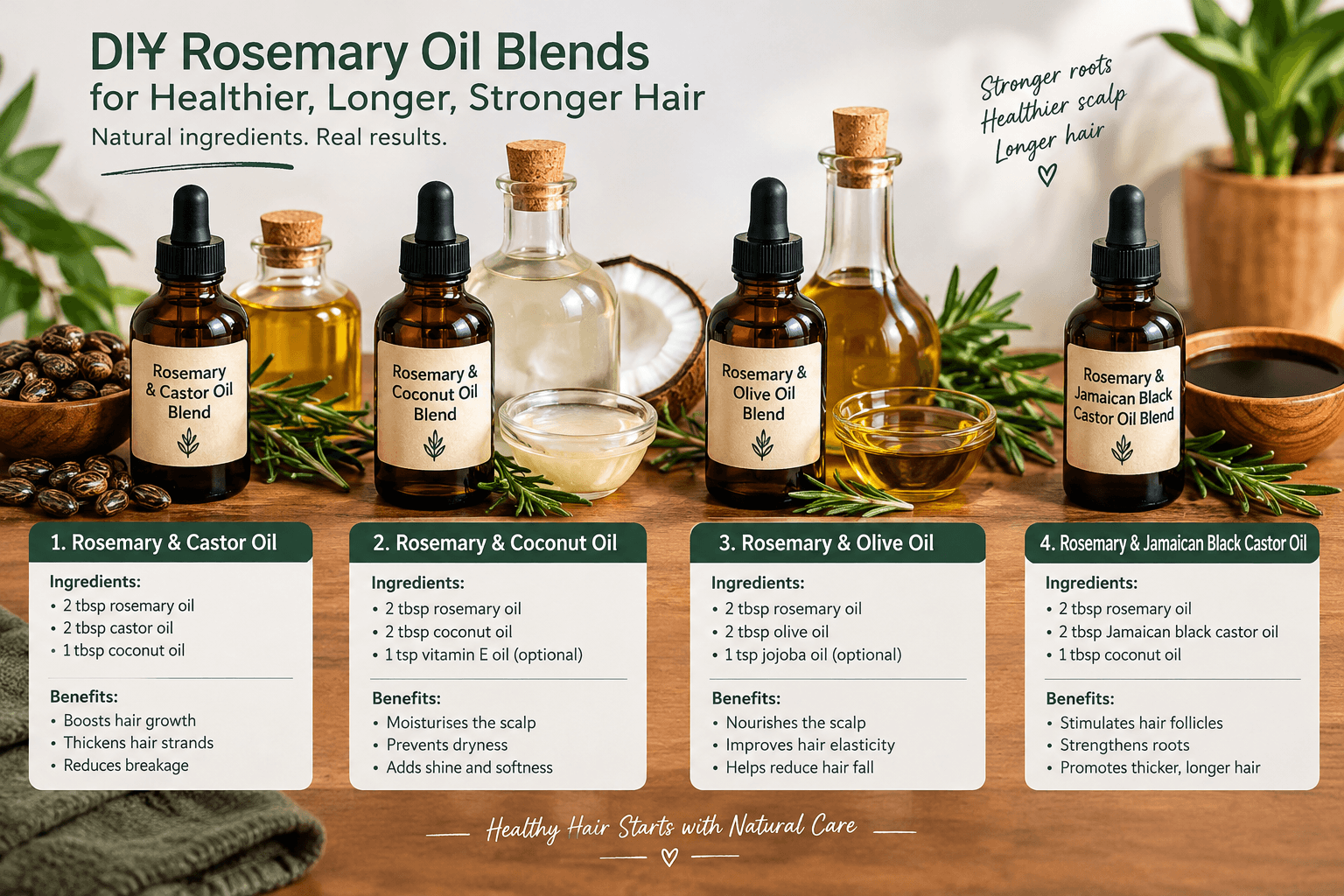
Rosemary oil works significantly better when combined with complementary ingredients. Here are the most effective combinations for Nigerian hair specifically.
Rosemary Oil + Castor Oil (Ultimate Growth Combination)
This is the most powerful combination for maximum hair growth support.
Recipe:
- Castor oil – 50ml
- Coconut Oil – 30ml
- Sweet Almond Oil – 15ml
- Rosemary essential oil – 15 drops
- Peppermint essential oil – 8 drops
Combine all oils in a dark glass bottle. Shake well before each use. Apply to scalp 2-3 times weekly using Method 1 (scalp massage).
Why this works: Castor oil’s ricinoleic acid improves blood circulation independently of rosemary’s mechanism. Consequently, combining them produces a synergistic circulation effect stronger than either ingredient alone. Furthermore, peppermint adds a third circulation-boosting compound through its menthol content.
Rosemary Oil + Coconut Oil (Daily Treatment)
The simplest, most accessible combination for everyday Nigerian women.
Recipe:
- Coconut Oil – 100ml (melted)
- Rosemary essential oil – 20 drops
Combine in a glass jar. The coconut oil will solidify at room temperature, creating a convenient solid treatment that melts on contact with your warm hands. Apply to scalp and massage before washing.
Rosemary Oil + Sweet Almond Oil (Lightweight Daily Spray)
For women who want daily rosemary treatment without heaviness.
Recipe:
- Sweet Almond Oil – 50ml
- Distilled water – 50ml
- Rosemary essential oil – 10 drops
- Vegetable Glycerine – 1 teaspoon
- Witch hazel – 1 tablespoon (helps oil and water combine)
Combine in a spray bottle. Shake before each use. Spray directly onto scalp daily.
Rosemary Oil for Different Nigerian Hair Types
For Natural Hair (4C, 4B, 4A)
Natural hair benefits enormously from rosemary oil’s scalp benefits. Specifically, use Method 1 (scalp massage) 2-3 times weekly. Apply to sections of parted hair, focusing on the scalp only rather than hair length.
Best combination: Rosemary + castor oil blend for maximum growth support. Additionally, add to your weekly hair mask for comprehensive treatment.
For Relaxed Hair
Rosemary oil is excellent for relaxed hair because the scalp often becomes stressed from chemical processing. Specifically, use Method 3 (adding to existing products) as the simplest starting point. Additionally, use the leave-in scalp spray daily for consistent exposure without additional steps.
Focus areas: Pay particular attention to the hairline and edges where relaxed hair most commonly thins.
For Thinning Hair and Edges
This is where rosemary oil has the strongest clinical backing. Specifically, use Method 1 (direct scalp massage) daily on thinning areas. Furthermore, use a dedicated applicator bottle to deliver oil precisely to affected areas without disturbing surrounding healthy hair.
Patience is essential: Thinning hair responds to rosemary oil, but the clinical study required 6 months for significant results. Consequently, commit fully before evaluating whether it’s working.
For Locs
Add rosemary oil to your scalp oil or spray for consistent delivery between retwists. Specifically, focus on the scalp rather than the locs themselves. Furthermore, rosemary oil won’t cause buildup in locs when properly diluted in a light carrier oil.
For Low-Porosity Hair
Low-porosity hair benefits most from rosemary oil’s scalp-focused application because the scalp itself doesn’t have porosity concerns. Consequently, focus application entirely on the scalp rather than the hair length. Apply with heat to improve carrier oil penetration if using Method 1.
Realistic Results Timeline
Setting honest expectations prevents the disappointment that causes most people to quit before results appear.
Weeks 1-2:
Your scalp feels more stimulated and tingling during application. Additionally, scalp itchiness (if present) should begin reducing. No visible hair growth changes at this stage, which is completely normal.
Weeks 3-4:
Scalp health noticeably improves. Dandruff and flakiness reduce if they were present. Moreover, you may notice baby hairs appearing along your hairline, particularly in previously thin areas. This is a genuinely encouraging sign.
Weeks 5-8:
Existing hair appears stronger and breaks less during styling. Consequently, hair retains more length even before significant new growth is visible. Furthermore, overall scalp health is dramatically improved.
Weeks 9-16:
Visible new growth in previously thin or slow-growing areas. Additionally, overall hair density appears improved because follicles are functioning more efficiently. Specifically, hair that was growing in thin and weak now grows in stronger and thicker.
Months 4-6:
This is when the most dramatic results become apparent, consistent with the clinical study timeline. Moreover, significant improvement in hair density and coverage is visible in before-and-after photos. Furthermore, areas that were thinning show meaningful recovery.
Beyond 6 months:
Continued improvement and maintenance. Specifically, reducing application to once or twice weekly maintains results achieved during the intensive phase.
Critical reminder: Take photos every 2 weeks from the same angle in the same lighting. Day-to-day changes are invisible to the naked eye. Consequently, photos are the only reliable way to track real progress over this timeline.
Common Mistakes That Prevent Results
Mistake 1: Using undiluted rosemary essential oil directly on the scalp
This is the most dangerous mistake. Undiluted essential oils cause chemical burns, irritation, and can actually damage the follicles you’re trying to heal. Always dilute to 2-3% maximum.
Mistake 2: Inconsistent application
Using rosemary oil once a week for two weeks then stopping produces no meaningful results. Specifically, the clinical study required daily application for 6 months. Furthermore, consistency compounds benefits over time. Therefore, missing weeks significantly sets back progress.
Mistake 3: Expecting results in 30 days
This is the most common reason people give up. Moreover, the viral 90-day TikTok transformations you see often involve people with specific types of hair loss that respond faster. For general hair growth improvement, 4-6 months is the realistic timeframe.
Mistake 4: Applying to hair length instead of scalp
Rosemary oil’s growth benefits come from scalp interaction, not hair strand contact. Consequently, applying it through your hair length rather than directly to the scalp dramatically reduces its effectiveness.
Mistake 5: Using too little
Being too conservative with application means insufficient contact with follicles. Specifically, part your hair thoroughly and apply enough to visibly wet the scalp surface in each section.
Mistake 6: Buying poor quality essential oil
Synthetic “rosemary fragrance oils” or heavily adulterated essential oils don’t contain the therapeutic compounds that produce hair growth results. Therefore, always purchase 100% pure rosemary essential oil from a reliable supplier.
Mistake 7: Not massaging
Simply applying the oil without massaging eliminates one of the most important mechanisms of benefit. Specifically, the massage independently stimulates circulation and the combination of massage plus rosemary compounds is significantly more effective than either alone.
Final Verdict: Is Rosemary Oil Worth It for Nigerian Hair?
After everything we’ve covered, here’s my completely honest answer.
Yes, rosemary oil is genuinely worth incorporating into your hair care routine. However, the level of benefit you experience depends significantly on what’s causing your hair concerns.
You’ll see the most dramatic results if:
- You have androgenetic alopecia (pattern hair loss) – this is what the clinical study specifically addressed
- Your hair is thinning at the temples, crown, or edges
- Your slow growth is related to scalp inflammation or circulation issues
You’ll see meaningful but more modest results if:
- You have generally slow-growing healthy hair
- You want to optimize an already decent hair routine
- You’re focused on hair health and strength rather than treating hair loss
In all cases, rosemary oil:
- Improves scalp health meaningfully
- Reduces inflammation that impairs growth
- Strengthens existing hair strands
- Creates a better growing environment for all follicle types
For Nigerian women specifically, where tight styling, chemical processing, and chronic dryness all stress the scalp over time, rosemary oil addresses real, common issues. Consequently, most Nigerian women who use it consistently for 3-6 months notice genuine improvement in hair density and health.
Your Action Plan: Start Tonight
You now have everything needed to begin a properly informed, evidence-based rosemary oil hair growth protocol.
First, decide which application method suits your lifestyle. Method 1 (scalp massage) produces best results but requires the most time. Method 3 (adding to existing products) requires no extra steps but is less potent.
Second, choose your combination. The rosemary and castor oil blend is the most powerful option for growth. The rosemary and coconut oil combination is the most convenient everyday option.
Third, commit to a 6-month minimum protocol. Mark your calendar. Take photos today before you start.
Fourth, apply consistently 2-3 times weekly without exception. Set phone reminders if needed because consistency is everything with this treatment.
Finally, manage your expectations realistically. Rosemary oil is not a miracle that works in 30 days. It’s a genuinely effective, evidence-backed natural treatment that requires patience and consistency to deliver its real benefits.
Ready to start? Get your quality ingredients:
- Coconut Oil – Best carrier oil for rosemary oil scalp massage
- Sweet Almond Oil – Lightweight carrier for daily scalp spray
- Vegetable Glycerine – Add to scalp spray for moisture retention
Have you tried rosemary oil for hair growth? How long have you been using it and what results have you noticed? Share your honest experience in the comments below. Our community of 5,000+ Nigerian beauty enthusiasts would love to hear from you!