
Glycerine for Skin: 7 Amazing Benefits Every Nigerian Should Know
That small, cheap bottle of glycerine sitting in your bathroom drawer or on your dressing table? It’s one of the most powerful skincare ingredients you own, and chances are you’re not using it to its full potential.
Glycerine for skin has been a staple in Nigerian households for generations. Your mother probably mixed it with rose water. Your aunt swore by it for soft hands. And now, international skincare brands are paying premium prices to include it in their most expensive serums and moisturizers.
But here’s what’s interesting: the same vegetable glycerine available at affordable prices in Nigeria is chemically identical to what those luxury brands use. Moreover, when you understand how to use glycerine for skin correctly, you can achieve results that rival products costing ten times more.
As Nigeria’s leading cosmetic raw materials supplier serving over 5,000 beauty entrepreneurs, we’ve worked extensively with glycerine across hundreds of formulations. Furthermore, we’ve seen firsthand why it remains one of the most requested ingredients from both professional formulators and everyday skincare enthusiasts.
Today, I’m sharing 7 proven glycerine for skin benefits, exactly how to use it correctly, and the honest truth about what it can and cannot do for your skin. Additionally, I’ll show you the best combinations that make glycerine even more powerful.
Let’s get into it.
What Exactly is Glycerine?
Before exploring glycerine for skin benefits, let’s understand what we’re actually talking about.
Glycerine (also spelled glycerin) is a naturally occurring compound found in all plant and animal fats. Specifically, vegetable glycerine is derived from plant oils like palm oil, coconut oil, and soybean oil through a process called hydrolysis.
The result is a clear, thick, slightly sweet liquid that has remarkable properties for skin. According to research published on PubMed, glycerine is one of the most effective humectants known to science, meaning it attracts and retains moisture from the environment to your skin.
What makes glycerine uniquely effective:
It’s a humectant, which means it actively pulls moisture from the air around you and delivers it to your skin. Consequently, your skin stays hydrated throughout the day rather than just immediately after application.
Additionally, glycerine is:
- Non-comedogenic (doesn’t clog pores)
- Suitable for all skin types including sensitive skin
- Completely natural when derived from vegetable sources
- Affordable and widely available in Nigeria
- Compatible with virtually every other skincare ingredient
Furthermore, glycerine has been extensively studied and used in skincare for over 200 years. Therefore, it’s one of the most well-understood and proven ingredients in the entire beauty industry.
Why Glycerine Works So Well for African Skin
Nigerian and African skin has unique characteristics that make glycerine particularly valuable.
Melanin-rich skin tends to lose moisture faster than lighter skin tones. Consequently, dryness, ashiness, and dehydration are more common concerns for Nigerian women. Moreover, our climate alternates between intense harmattan dryness and humid rainy seasons, both of which stress the skin barrier in different ways.
Glycerine addresses all of these challenges simultaneously. Specifically, during harmattan, it attracts moisture from deeper skin layers and seals it on the surface. During humid seasons, it draws moisture from the humid air directly to your skin.
Additionally, African skin is more prone to post-inflammatory hyperpigmentation (dark spots after any skin irritation). Glycerine’s gentle, non-irritating nature means it hydrates effectively without triggering the inflammation that causes these dark spots.
7 Proven Glycerine for Skin Benefits
Benefit 1: Intense, Long-Lasting Hydration
This is glycerine for skin’s most celebrated and scientifically proven benefit.
As a humectant, glycerine attracts water molecules from both the environment and deeper skin layers, delivering them to the skin’s surface. As a result, skin stays visibly hydrated for hours after application, not just immediately after moisturizing.
Research published in the International Journal of Cosmetic Science found that glycerine was significantly more effective at improving skin hydration than many other common moisturizing ingredients. Furthermore, the study showed that glycerine continued improving skin hydration with repeated use over time, building cumulative moisturizing benefits.
For Nigerian skin dealing with harmattan dryness, air conditioning, and sun exposure, this sustained hydration is genuinely life-changing. Moreover, unlike heavy oils that just sit on top of skin, glycerine penetrates and works from within.
Best for: Dry to very dry skin, harmattan season protection, dehydrated skin of any type
How to use: Mix a few drops of glycerine with your regular moisturizer or apply diluted glycerine (mixed with water or rose water) directly to clean skin before moisturizing.
Benefit 2: Heals Dry, Cracked, and Damaged Skin
Beyond basic moisturization, glycerine actively heals damaged skin in ways that regular moisturizers simply cannot.
Glycerine has been shown to accelerate skin barrier repair by promoting the synthesis of ceramides, the fatty molecules that hold skin cells together and prevent moisture loss. Consequently, damaged skin heals faster and becomes more resilient against future damage.
Additionally, glycerine softens and loosens dead skin cells, making them easier to remove naturally without harsh scrubbing. Therefore, rough, flaky skin gradually becomes smoother and softer with consistent glycerine use.
For Nigerian women dealing with severely cracked heels, rough elbows, and extremely dry patches, glycerine offers meaningful healing rather than just temporary coverage.
Best for: Cracked heels, rough elbows and knees, severely dry patches, skin barrier repair
How to use: Apply undiluted or slightly diluted glycerine directly to problem areas before bed. Cover with cotton socks for heels. Leave overnight for intensive healing.
Benefit 3: How Glycerine for Skin Fades Dark Spots
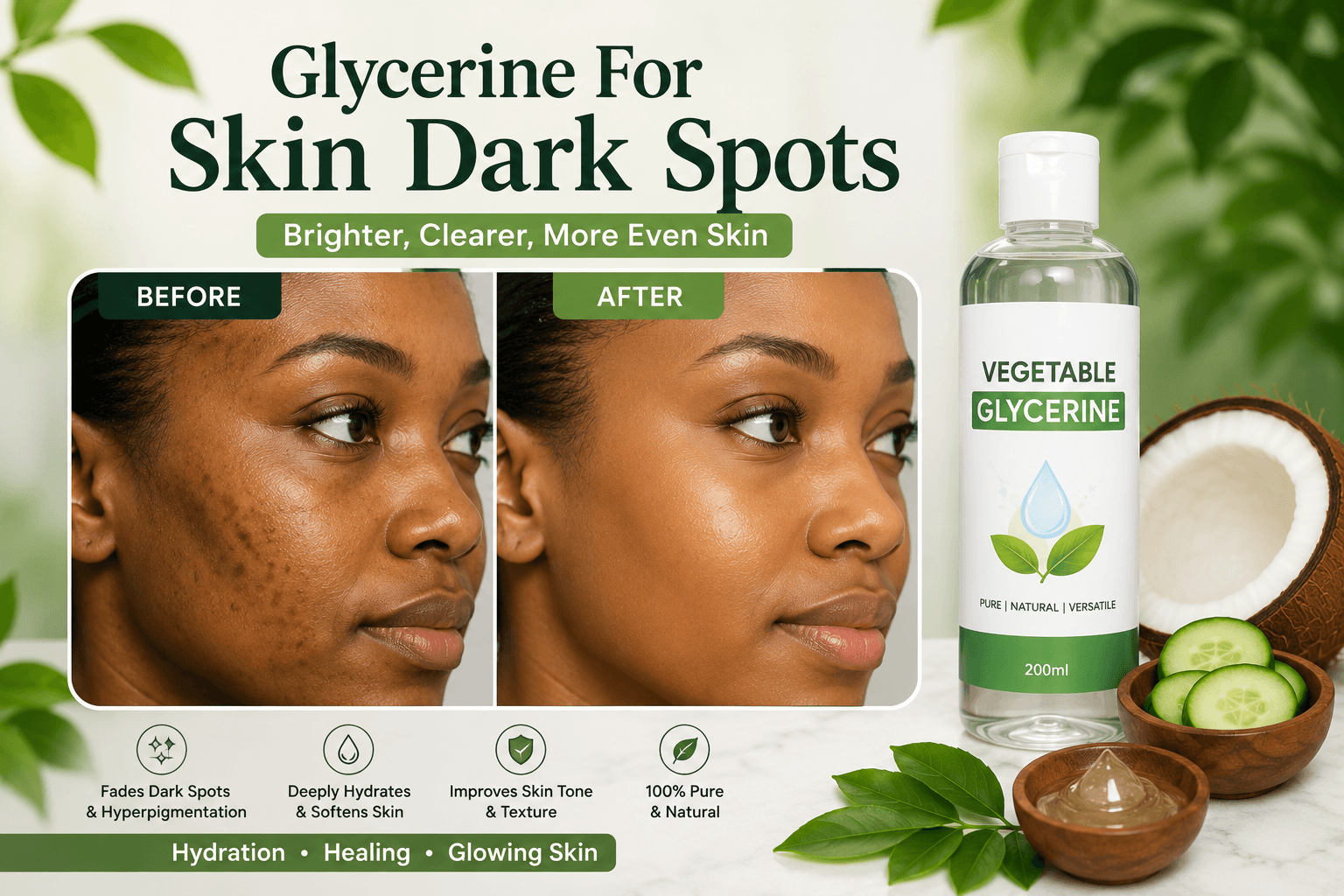
This glycerine for skin benefit is particularly relevant for Nigerian women dealing with hyperpigmentation.
Glycerine promotes faster skin cell turnover, which gradually replaces pigmented skin cells with fresh, more evenly toned ones. Additionally, its deep hydration creates optimal conditions for skin renewal, making the natural fading process more effective.
Furthermore, well-hydrated skin reflects light more evenly, which immediately makes skin appear more radiant and even-toned even before actual pigmentation fades. Consequently, many women notice an immediate improvement in their skin’s overall appearance when they start using glycerine consistently.
Best for: Post-acne dark spots, uneven skin tone, general brightening, gradual hyperpigmentation treatment
How to use: Mix glycerine with a brightening ingredient like lemon juice or vitamin C serum. Apply to clean skin morning and evening. Be patient because results build gradually over 6-8 weeks.
Benefit 4: Anti-Aging Properties
Glycerine provides meaningful anti-aging benefits that many people overlook when thinking about this humble ingredient.
Dehydration is one of the primary causes of visible aging. Specifically, when skin lacks moisture, fine lines become more pronounced, skin looks dull, and the overall texture appears rougher. Glycerine addresses all of these concerns simultaneously through its powerful humectant action.
Moreover, glycerine has been shown to improve skin elasticity, helping skin bounce back more effectively and appear firmer over time. As skin ages and natural moisture factors decline, supplementing with glycerine helps maintain the hydration levels associated with younger-looking skin.
Additionally, glycerine’s ability to promote skin cell turnover means older, damaged cells are replaced more quickly. Consequently, skin maintains a fresher, more youthful appearance with consistent use.
Best for: Fine lines, loss of radiance, mature skin, prevention of premature aging
How to use: Add 2-3 drops of glycerine to your nightly moisturizer or serum. Apply to face and neck using upward motions. Use consistently every night for cumulative anti-aging benefits.
Benefit 5: Soothes Irritated and Sensitive Skin
For Nigerian women with sensitive, reactive, or irritation-prone skin, glycerine is genuinely one of the safest and most effective soothing ingredients available.
Unlike many active skincare ingredients that can trigger sensitivity, glycerine is exceptionally gentle and well-tolerated by virtually all skin types. Furthermore, it creates a protective layer on skin that shields against environmental irritants like dust, pollution, and harsh weather.
Additionally, glycerine’s moisture-attracting properties help calm inflamed skin by restoring optimal hydration levels. Consequently, the redness, tightness, and discomfort associated with irritated skin reduce significantly with glycerine application.
For conditions like eczema, heat rash, and contact dermatitis, glycerine provides meaningful relief without the risks associated with steroid creams or harsh treatments.
Best for: Sensitive skin, eczema, heat rash, skin reactions, general skin irritation
How to use: Dilute glycerine with equal parts water or aloe vera gel. Apply gently to irritated areas using clean fingertips. Repeat 2-3 times daily for ongoing relief.
Benefit 6: Balances Oily and Acne-Prone Skin
This benefit surprises most people because glycerine seems like it would make oily skin worse. In reality, the opposite is true.
When oily skin is dehydrated, it produces even more sebum (oil) to compensate for the lack of moisture. Consequently, many people with oily skin are actually dehydrated underneath. Glycerine provides lightweight, oil-free hydration that satisfies the skin’s moisture needs without adding more oil.
Furthermore, glycerine is non-comedogenic, meaning it doesn’t clog pores. Therefore, it hydrates oily and acne-prone skin without triggering breakouts. Additionally, by balancing skin’s moisture levels, glycerine can actually reduce excessive oil production over time.
Best for: Oily skin, combination skin, acne-prone skin, large pores
How to use: Use glycerine as a lightweight moisturizer by mixing a few drops with water and applying to clean skin. Skip heavy oils and creams if you’re oily, and let glycerine provide your primary hydration instead.
Benefit 7: How Glycerine for Skin Boosts Other Ingredients
This final glycerine for skin benefit is one that professional formulators have known for years but rarely share publicly.
Glycerine significantly enhances the penetration and effectiveness of other skincare ingredients applied alongside it. Specifically, when glycerine draws moisture into the skin, it opens up the skin’s absorption channels. Consequently, other beneficial ingredients applied at the same time penetrate more deeply and work more effectively.
This is why virtually every professional skincare formulation includes glycerine as a base ingredient. It’s not just there for its own benefits; it makes everything else work better simultaneously.
Additionally, glycerine helps stabilize many active ingredients, extending their effectiveness in formulations. Therefore, your serums, moisturizers, and treatments all perform better when glycerine is part of the routine.
Best for: Anyone using active ingredients like vitamin C, niacinamide, retinoids, or AHAs
How to use: Apply glycerine as a base layer before your active serums. Alternatively, mix a drop of glycerine directly into your serum before applying. Either method enhances ingredient absorption significantly.
How to Use Glycerine for Skin Correctly
Knowing the benefits is only half the equation. Here’s exactly how to use glycerine correctly for maximum results.
Never Use Pure Glycerine Undiluted on Your Face
This is the most important rule. Pure, undiluted glycerine is too concentrated for facial use and can actually draw moisture OUT of deeper skin layers when the air around you is very dry (like during harmattan).
Always dilute glycerine before applying to your face:
- Mix 1 part glycerine with 3 parts water for a lightweight hydrating toner
- Mix 1 part glycerine with 3 parts rose water for a scented hydrating toner
- Add 2-3 drops to your existing moisturizer for enhanced hydration
Safe to Use Less Diluted on Body
For body use, particularly on very dry areas like heels, elbows, and knees, you can use glycerine with less dilution. Specifically, a 50/50 mix with water works well for body applications.
Layer It Correctly
Apply glycerine after cleansing but before heavier moisturizers and oils. This allows it to pull moisture into the skin, which is then sealed in by the moisturizer or oil applied on top. Consequently, you get maximum hydration from both the glycerine and your moisturizer working together.
Use Morning and Night
Glycerine is gentle enough for twice-daily use on most skin types. Furthermore, using it both morning and night builds cumulative hydration benefits faster than once-daily use.
Best Combinations for Glycerine Skincare
Glycerine becomes even more powerful when paired with the right complementary ingredients.
Glycerine + Rose Water (Classic Nigerian Combination)
This is the combination most Nigerian women already know, and it works brilliantly for good reason. Mix equal parts Vegetable Glycerine and rose water in a spray bottle. Apply to clean skin morning and evening as a hydrating toner. The rose water provides additional soothing and brightening benefits while making the glycerine easier to apply and more comfortable to wear.
Best for: All skin types, daily hydrating toner, quick refresh throughout the day
Glycerine + Sweet Almond Oil (Complete Moisture Solution)
Combine glycerine (humectant) with Sweet Almond Oil (emollient) for a complete moisture solution. The glycerine attracts water to skin while the sweet almond oil seals it in. Consequently, this combination provides both immediate and long-lasting hydration. Mix 1 part glycerine with 2 parts sweet almond oil and apply to body after showering.
Best for: Very dry skin, body moisturization, harmattan season protection
Glycerine + Shea Butter (Intensive Body Treatment)
Add glycerine to your whipped Natural Shea Butter for an intensified moisture treatment. Specifically, add 1 tablespoon of glycerine per 100g of whipped shea butter and mix thoroughly. The glycerine adds water-attracting benefits to shea butter’s already impressive moisturizing properties. Furthermore, it makes the shea butter slightly lighter and easier to spread.
Best for: Very dry or mature skin, intensive body treatment, harmattan protection
Glycerine + Coconut Oil (Affordable Daily Moisturizer)
Mix 1 part glycerine with 3 parts Coconut Oil for an affordable, effective daily body moisturizer. The glycerine provides water-based hydration while coconut oil provides oil-based moisture and antimicrobial benefits. Additionally, this combination is particularly effective for people who find pure coconut oil too heavy or greasy on its own.
Best for: Normal to dry skin, daily body moisturizer, budget-friendly routine
What Glycerine for Skin CANNOT Do (The Honest Part)
Being honest builds more trust than overpromising results.
It cannot work undiluted during very dry conditions. When environmental humidity is extremely low (like during peak harmattan), pure undiluted glycerine can draw moisture from deeper skin layers rather than the air. Therefore, always dilute and always follow with an occlusive moisturizer.
It cannot treat severe skin conditions alone. For serious conditions like severe eczema, psoriasis, or cystic acne, glycerine provides supportive benefits but doesn’t replace professional medical treatment. Consequently, see a dermatologist for persistent or severe conditions.
It cannot provide sun protection. Glycerine has no UV-filtering properties whatsoever. Therefore, never skip your broad-spectrum SPF 30+ sunscreen thinking glycerine provides any protection.
It cannot dramatically fade deep hyperpigmentation quickly. Glycerine contributes to gradual brightening over time. However, for faster results on deep dark spots, combine it with dedicated brightening actives.
It cannot replace a complete skincare routine. Glycerine is an excellent supporting ingredient but works best as part of a comprehensive routine including cleansing, treatment, moisturization, and sun protection.
Common Mistakes People Make With Glycerine
Mistake 1: Using it pure and undiluted on the face
As discussed, this can backfire during dry weather conditions. Always dilute before facial application.
Mistake 2: Not following with a moisturizer
Glycerine attracts moisture effectively but needs a moisturizer or oil on top to seal everything in. Without this step, the moisture it attracts can evaporate quickly.
Mistake 3: Buying synthetic glycerine
Some cheap glycerine products are petroleum-derived rather than vegetable-derived. Therefore, always look for vegetable glycerine specifically, which is natural and more skin-friendly.
Mistake 4: Expecting overnight results
Like all natural skincare ingredients, glycerine builds benefits gradually. Commit to consistent use for at least 4-6 weeks before evaluating results.
Mistake 5: Using it alone without complementary ingredients
Glycerine works best as part of a layered skincare routine. Furthermore, combining it with complementary ingredients dramatically enhances its effectiveness.
Your Action Plan: Start Using Glycerine Correctly Today
You now have everything you need to use glycerine for skin effectively and correctly.
If you have dry skin: Start tonight by mixing glycerine with rose water in a 1:3 ratio. Apply after cleansing and before your regular moisturizer.
If you have oily skin: Use diluted glycerine (1:4 with water) as your sole moisturizer. Skip heavy creams and let glycerine provide lightweight hydration.
If you have sensitive skin: Mix glycerine with aloe vera gel in equal parts. Apply gently to irritated areas for immediate soothing relief.
If you’re a formulator: Add 3-5% glycerine to your formulations as a standard humectant. It enhances every product it’s added to.
This week’s action steps:
First, get quality vegetable glycerine from a reliable supplier. Second, choose the dilution ratio that suits your skin type. Third, apply consistently morning and evening for 4 weeks. Fourth, combine with complementary ingredients for enhanced results. Finally, take progress photos every 2 weeks to track real improvement.
Ready to start? Get your quality ingredients:
- Vegetable Glycerine – Pure, natural, perfect for all skin types
- Sweet Almond Oil – Perfect partner for glycerine moisture boost
- Natural Shea Butter – Combine with glycerine for intensive body treatment
- Coconut Oil – Mix with glycerine for affordable daily moisturizer
Have you been using glycerine for skin already? What results have you noticed? Drop your experience in the comments below. Your story might help someone else in our community of 5,000+ Nigerian beauty enthusiasts get the most from this amazing ingredient!