
How to Fade Stretch Marks Naturally (Nigerian Guide That Works)
Stretch marks are not a flaw. They’re evidence of your body doing something remarkable, whether that’s growing a baby, gaining muscle, or simply changing shape as life progresses. Moreover, they affect virtually every Nigerian woman at some point, appearing on the stomach, thighs, breasts, arms, and hips.
But if you want to fade them, you deserve honest information about what actually works rather than expensive creams that promise miracles and deliver disappointment.
As Nigeria’s leading cosmetic raw materials supplier at Sophix Natural, we’ve worked extensively with the natural ingredients that have genuine scientific evidence behind them for stretch mark treatment. Furthermore, we’ve helped beauty entrepreneurs formulate products that deliver real, visible results for Nigerian women dealing with this extremely common concern.
Today, I’m sharing exactly what causes stretch marks, what the science says about fading them naturally, two proven recipes you can make at home, and the honest truth about realistic expectations. Additionally, I’ll link to our comprehensive guide on the 11 Natural Raw Materials for Stretch Marks Reduction for deeper ingredient knowledge.
Let’s get into it.
What Actually Causes Stretch Marks
Before we talk about how to fade stretch marks, understanding what they actually are helps set realistic expectations.
Stretch marks (medically called striae distensae) occur when the skin stretches or shrinks rapidly beyond its elastic capacity. Specifically, this rapid change tears the collagen and elastin fibers in the dermis, which is the deeper layer of skin below the surface you can see. Consequently, the skin’s structural support network breaks down in that area.
The healing process creates two distinct phases:
Phase 1: Red or Purple Stretch Marks (Striae Rubrae)
Fresh stretch marks appear red, purple, or dark brown on African skin. This coloring comes from blood vessels visible through the damaged skin layers. Additionally, they may feel slightly raised or itchy during this phase. This is actually the best time to treat them because the skin is still actively healing and responding to treatment.
Phase 2: White or Silver Stretch Marks (Striae Albae)
Over time, stretch marks fade to white, silver, or lighter than surrounding skin. At this stage, the blood vessels have contracted and scar tissue has formed. Consequently, these mature stretch marks are significantly harder to treat than fresh ones.
Common causes in Nigeria:
- Pregnancy (most common)
- Rapid weight gain or loss
- Puberty growth spurts
- Bodybuilding and rapid muscle gain
- Hormonal changes
- Certain medications (corticosteroids)
- Genetic predisposition
According to research published on PubMed, approximately 70% of adolescent girls and 40% of adolescent boys develop stretch marks during puberty. Furthermore, up to 90% of pregnant women develop stretch marks during pregnancy. Therefore, you are absolutely not alone in dealing with this concern.
Why Most Commercial Stretch Mark Treatments Fail
This section is important because understanding why products fail helps you choose what actually works.
Most commercial stretch mark creams sold in Nigerian pharmacies and beauty stores are fundamentally limited by one problem: they cannot penetrate deep enough to reach the damaged collagen and elastin in the dermis.
Specifically, the dermis where stretch marks originate is 1-4mm below the skin surface. Most topical creams only penetrate the epidermis (surface layer). Consequently, they moisturize the surface while the actual damage goes unaddressed underneath.
Additionally, many commercial products rely on fragrances and marketing claims rather than active ingredients with genuine evidence. Furthermore, products claiming to “remove” stretch marks completely are being dishonest. No topical product can completely remove mature stretch marks because they’re essentially scars.
What topical treatment CAN achieve:
- Significantly improve the appearance and texture of stretch marks
- Fade discoloration so marks become less noticeable
- Improve skin elasticity around existing marks
- Prevent new stretch marks from forming or worsening
- Speed up the natural fading process that happens over time
This is meaningful improvement that makes a real difference in how stretch marks look and how you feel about your skin.
5 Natural Ingredients That Actually Fade Stretch Marks
These five ingredients have the strongest scientific evidence for stretch mark improvement. Moreover, they all work through mechanisms that address the actual causes of stretch mark appearance.
1. Shea Butter
Shea butter is your foundation ingredient for stretch mark treatment. Specifically, it contains vitamins A and E that promote skin cell regeneration and collagen production. Additionally, its fatty acid profile deeply penetrates the skin to deliver these nutrients where they’re most needed.
Research confirms that regular application of shea butter significantly improves skin elasticity. Consequently, skin becomes more resistant to future stretching and existing marks gradually fade with consistent use. Furthermore, the cinnamic acid in unrefined shea butter has mild anti-inflammatory properties that reduce the redness of fresh stretch marks.
2. Sweet Almond Oil
Sweet almond oil is one of the most effective carrier oils for stretch mark treatment. Specifically, it’s rich in vitamin E, zinc, and fatty acids that directly support skin repair. According to research published in the Journal of Midwifery and Women’s Health, sweet almond oil significantly reduced the development of stretch marks during pregnancy when applied consistently.
Additionally, sweet almond oil has a moderate penetration depth that allows its nutrients to reach slightly deeper skin layers than many other oils. Consequently, it delivers active nutrients closer to where stretch marks originate.
3. Castor Oil
Castor oil’s ricinoleic acid content makes it particularly valuable for stretch mark treatment. Specifically, ricinoleic acid has been shown to promote tissue regeneration and reduce inflammation in the dermis. Furthermore, its thick consistency creates an occlusive barrier that keeps the skin intensely moisturized, creating optimal conditions for repair.
Additionally, castor oil improves blood circulation to the applied area. Consequently, better circulation delivers more nutrients and oxygen to damaged skin tissue, accelerating the natural healing process.
4. Coconut Oil
Coconut oil’s unique molecular structure allows it to penetrate the hair follicle canal, reaching slightly deeper into skin than most surface-applied oils. Specifically, this deeper penetration allows its vitamin E and lauric acid content to reach closer to the dermis where stretch marks exist.
Furthermore, coconut oil has proven anti-inflammatory properties that reduce the appearance of red or purple fresh stretch marks. Additionally, its skin barrier reinforcing properties improve overall skin health and elasticity over time.
5. Vegetable Glycerine
Vegetable glycerine is essential in any stretch mark treatment formula because of its exceptional humectant properties. Specifically, it draws moisture from the environment into the skin continuously, maintaining the high hydration levels needed for optimal skin repair.
Additionally, well-hydrated skin has significantly better elasticity. Consequently, maintaining skin hydration through glycerine helps prevent new stretch marks from forming during periods of rapid body change like pregnancy.
Recipe 1: Daily Fade Stretch Marks Oil Blend
This lightweight oil blend is designed for daily use, morning and evening. Furthermore, it absorbs quickly enough for daytime use under clothing without staining.
Makes: 100ml (approximately 3-4 months supply with daily use)
Ingredients:
- Castor Oil – 30ml (30%)
- Sweet Almond Oil – 40ml (40%)
- Coconut Oil (fractionated/liquid) – 20ml (20%)
- Vegetable Glycerine – 8ml (8%)
- Vitamin E Oil – 2ml (2%)
- Lavender Essential Oil – 10 drops (optional, for scent and additional skin healing)
Total cost: Approximately ₦1,500-₦2,000 for 100ml
Instructions (Simple – No Heating Required):
Step 1: Measure all oils and glycerine into a clean, dark glass bottle using a funnel.
Step 2: Add vitamin E oil and essential oil drops.
Step 3: Close the bottle and shake thoroughly for 30 seconds to combine all ingredients.
Step 4: Label with ingredients and date made.
That’s it. This recipe requires no heating, no mixing equipment, and no technical formulation knowledge. Consequently, it’s the easiest recipe we’ve shared in this entire series.
Shelf life: 6-12 months when stored in a dark glass bottle away from heat and sunlight. The vitamin E acts as a natural preservative extending the shelf life of the other oils.
How to Use the Daily Oil Blend:
Morning Application:
Apply 3-5 drops to affected areas immediately after showering while skin is still slightly damp. Massage in circular motions for 2-3 minutes. The damp skin surface helps the oil absorb rather than sitting on top. Allow 5-10 minutes before dressing.
Evening Application:
Apply 5-7 drops to affected areas before bed. Use this opportunity for a longer massage of 5 minutes minimum. The extended massage time boosts circulation to the area and enhances ingredient penetration. Furthermore, overnight application with no clothing friction allows maximum absorption time.
Massage technique matters: Use firm, circular motions that cover the entire stretch mark and 2-3cm of surrounding skin. Specifically, this massage stimulates collagen production in the dermis below. Additionally, consistent massage over weeks and months produces cumulative benefits beyond just ingredient delivery.
Recipe 2: Intensive Fade Stretch Marks Butter (For Deep Treatment)
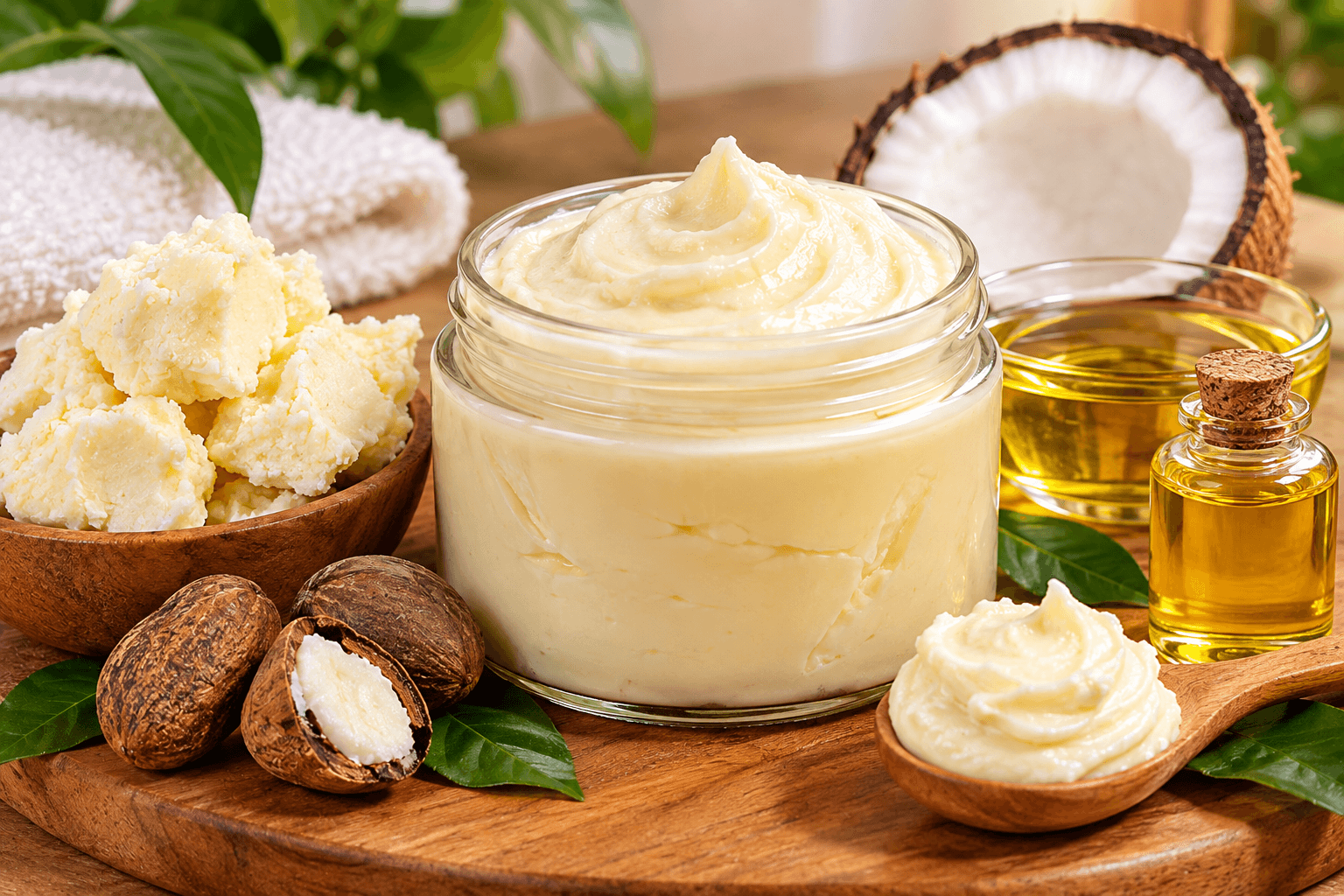
This richer butter formula is your weekly intensive treatment. Specifically, it’s applied once or twice weekly for a deeper, more concentrated treatment session. Furthermore, it creates a longer-lasting occlusive barrier that keeps active ingredients in contact with skin for extended periods.
Makes: 150g (approximately 3-4 months supply with weekly use)
Ingredients:
- Natural Shea Butter (raw, unrefined) – 80g (53%)
- Coconut Oil – 30g (20%)
- Castor Oil – 20g (13%)
- Sweet Almond Oil – 15g (10%)
- Vegetable Glycerine – 3g (2%)
- Vitamin E Oil – 2g (1.3%)
- Frankincense Essential Oil – 8 drops
- Lavender Essential Oil – 5 drops
Total cost: Approximately ₦2,500-₦3,500 for 150g
Instructions:
Step 1: Place shea butter and coconut oil in a heat-safe bowl. Melt gently using a double boiler or microwave in 20-second bursts, stirring between each burst. Heat only until just melted, not hot.
Step 2: Remove from heat immediately. Add castor oil and sweet almond oil to the melted mixture. Stir well to combine.
Step 3: Let the mixture cool until it begins to solidify around the edges (about 20-30 minutes at room temperature). Specifically, you want it firm enough to whip but not completely solid.
Step 4: Add vegetable glycerine, vitamin E, and essential oils. Stir to incorporate.
Step 5: Using a hand mixer, whip the mixture on medium-high speed for 5-8 minutes until it becomes fluffy and light. Consequently, the whipping incorporates air and creates a more spreadable, luxurious texture.
Step 6: Transfer to a clean glass jar and label.
Shelf life: 4-6 months stored in a cool, dry place.
How to Use the Intensive Butter:
Apply generously to affected areas 1-2 times per week. Use a larger amount than the daily oil blend (about a tablespoon for your stomach, or a teaspoon for smaller areas). Massage firmly for 5-10 minutes using circular and linear motions along the stretch marks.
For best results: Apply immediately after a warm shower when your pores are open and skin is at optimal temperature for absorption. Additionally, wrap the treated area in cling film for 30-60 minutes after application. This occlusion technique forces the ingredients to penetrate more deeply rather than evaporating. Consequently, you’ll notice significantly faster results compared to normal application.
Alternatively: Apply at night and sleep with it on. The overnight contact time maximizes absorption without the inconvenience of cling film during the day.
How to Use Both Recipes Together (Complete Protocol)
For maximum results, use both recipes as a complete treatment protocol. Specifically, this combination approach delivers both consistent daily maintenance and intensive weekly treatment for comprehensive results.
Daily Protocol (Every Day):
- Morning: Apply daily oil blend after shower
- Evening: Apply daily oil blend with 5-minute massage
Weekly Protocol (Once or Twice Weekly):
- After shower: Apply intensive butter with 10-minute massage
- Leave on for 30-60 minutes (or overnight)
- Continue daily oil blend on non-intensive days
Massage protocol for both: Always massage in circular motions AND linear motions along the length of the stretch mark. Furthermore, extend 2-3cm beyond the visible stretch mark into surrounding healthy skin. This broader massage area promotes circulation and collagen production in a wider zone around the marks.
Realistic Results Timeline
This section is where I’m completely honest with you because unrealistic expectations cause unnecessary disappointment.
Weeks 1-2:
Skin in the treated area feels noticeably softer and more hydrated. Additionally, if stretch marks are red or purple (fresh), you may notice slight reduction in redness from the anti-inflammatory ingredients. However, no visible size reduction at this early stage.
Weeks 3-4:
Texture of stretch marks begins to improve. Specifically, they may feel less raised or indented. Furthermore, color continues to improve for fresh red marks, and overall skin tone in the area appears more even.
Weeks 5-8:
Visible improvement in stretch mark color and texture. Specifically, red or purple marks should be significantly faded at this point. Older silver or white marks may appear slightly less prominent. Moreover, the surrounding skin looks healthier and more elastic.
Weeks 9-16:
Most significant visible improvement for fresh stretch marks. They may have faded considerably and blended better with surrounding skin tone. Additionally, older marks show meaningful but more gradual improvement. Consistency throughout this period is absolutely crucial.
Beyond 16 Weeks:
Continued gradual improvement with ongoing treatment. Specifically, fresh stretch marks treated consistently from this point forward can fade to near-invisibility over 12-18 months. Furthermore, older marks will continue improving slowly but are unlikely to disappear completely.
Most important reality check: No topical product eliminates stretch marks completely. The goal is meaningful improvement in appearance, texture, and color that makes them significantly less noticeable. Furthermore, this is a completely achievable and realistic goal with consistent, patient treatment.
Stretch Marks for Different Body Areas
Different areas of the body require slightly different application approaches.
Stomach and Abdomen
The most common area for stretch marks, particularly after pregnancy. Apply both recipes generously here because the skin surface area is large. Additionally, the stomach is easy to wrap with cling film for the occlusion technique. Furthermore, focus extra massage time on the lower abdomen where stretch marks are typically most concentrated.
Thighs and Hips
Apply daily oil blend morning and evening. Specifically, thigh stretch marks benefit from upward massage motions that support lymphatic drainage in this area. Additionally, massage toward the heart direction for improved circulation.
Breasts
Use only the daily oil blend on breast tissue because the intensive butter may be too heavy. Specifically, apply gently using light circular motions. Furthermore, avoid the nipple area when using essential oils. Consequently, dilute further or omit essential oils entirely for breast application.
Arms and Shoulders
Apply daily oil blend consistently. Specifically, upper arm stretch marks from muscle growth or weight changes respond well to circular massage combined with light upward strokes. Furthermore, this area has thinner skin that absorbs oils more readily than the stomach.
Lower Back
Apply both recipes as directed. The lower back benefits particularly from the intensive butter because the skin here is thicker and needs the heavier formulation for adequate penetration. Additionally, have someone apply and massage the lower back if self-application is difficult.
Prevention: Stop Stretch Marks Before They Form
The best stretch mark strategy is prevention. Specifically, consistent skin preparation before periods of rapid body change dramatically reduces stretch mark severity.
During Pregnancy:
Start applying the daily oil blend from your first trimester, before stretch marks appear. Specifically, begin at 12 weeks and apply morning and evening throughout pregnancy. Furthermore, pay extra attention to the lower abdomen, hips, thighs, and breasts where pregnancy stretch marks most commonly develop.
Additionally, maintain excellent hydration from within. Drink 8-10 glasses of water daily. Consequently, well-hydrated skin has significantly better elasticity and resistance to stretch mark formation.
During Weight Loss or Gain:
If you’re intentionally gaining muscle or losing weight, begin treatment prophylactically (before changes are visible). Specifically, apply the daily oil blend to common stretch mark areas throughout your body change journey. Furthermore, slow, gradual weight changes are significantly less likely to cause stretch marks than rapid changes.
During Puberty:
Teenagers experiencing growth spurts benefit enormously from preventative oil application. Specifically, applying the daily oil blend to thighs, hips, and breasts during rapid growth periods significantly reduces stretch mark severity. Additionally, teenagers’ skin responds more quickly to treatment than adult skin.
What Cannot Fade Stretch Marks (The Honest Part)
Honesty builds trust. Therefore, here’s what topical natural treatment genuinely cannot achieve.
It cannot completely remove mature white or silver stretch marks. These are essentially scars where scar tissue has replaced normal skin. Topical treatment improves their appearance meaningfully but cannot eliminate them entirely. For complete removal, medical procedures like laser therapy, microneedling, or chemical peels are required.
It cannot produce results without consistency. Using these recipes sporadically produces minimal results. Furthermore, missing weeks of treatment sets back progress significantly. Commit fully or expect partial results.
It cannot override genetics. Some people are genetically predisposed to developing stretch marks regardless of preventative measures. Consequently, if stretch marks run in your family, focus on reduction and fading rather than complete prevention.
It cannot produce overnight results. Anyone promising visible improvement in days is misleading you. Furthermore, impatience is the most common reason people give up on treatments that would have worked with more time.
It cannot replace medical treatment for severe cases. Very deep, extensive stretch marks covering large body areas respond better to professional dermatological treatment combined with topical care. Consequently, see a dermatologist if your stretch marks are severely affecting your quality of life.
Maximizing Your Results: Additional Tips
Beyond the recipes themselves, several additional practices significantly improve stretch mark fading results.
Exfoliate regularly: Gentle exfoliation 2-3 times weekly removes dead skin cells that block oil absorption. Specifically, use a gentle body scrub (like the sugar and coconut oil scrub from our body scrub guide) on stretch mark areas before applying your treatment oils. Consequently, freshly exfoliated skin absorbs ingredients 40-60% more effectively.
Stay hydrated: Drink sufficient water daily. Specifically, skin hydration from within supports the effectiveness of topical treatment from outside. Furthermore, dehydrated skin is less elastic and more prone to new stretch marks forming.
Eat skin-supporting nutrients: Vitamin C supports collagen production. Zinc supports skin repair. Protein provides the amino acids needed for collagen synthesis. Additionally, omega-3 fatty acids maintain skin elasticity from within. Consequently, a nutrient-rich diet significantly amplifies the results of your topical treatment.
Be patient with massage: The massage component of this protocol is not optional. Specifically, regular massage of the stretch mark area has been shown in research to directly stimulate collagen production in the dermis. Furthermore, the mechanical stimulation from massage may be as important as the ingredients applied.
Protect from sun: UV exposure darkens stretch marks and slows fading. Therefore, protect treated areas from direct sun exposure. Additionally, apply SPF 30+ sunscreen to visible stretch marks when exposing them to sunlight. Consequently, this prevents UV-induced melanin production that would counteract your fading efforts.
Your Action Plan: Start Your Treatment Tonight
You now have everything needed to begin a genuine, evidence-based stretch mark fading protocol.
First, assess your stretch marks honestly. Are they fresh (red/purple) or mature (white/silver)? Fresh marks will respond faster. Set your expectations based on this assessment.
Second, make your daily oil blend this weekend. It requires no equipment, takes 5 minutes, and costs approximately ₦1,500-₦2,000 for a 3-4 month supply.
Third, make your intensive butter the following weekend once you’ve established your daily routine. Introducing both simultaneously can feel overwhelming. Consequently, master the daily habit first.
Fourth, commit to a 16-week minimum protocol. Take photos every 2 weeks in the same lighting and position. The photos will show improvement your eyes might miss from daily observation.
Finally, share this guide with Nigerian women in your life dealing with stretch marks. Most are spending thousands on commercial products that don’t address the actual cause. Consequently, this honest, affordable approach will genuinely help them.
Ready to start? Get your quality ingredients:
- Natural Shea Butter – Foundation ingredient for the intensive butter
- Sweet Almond Oil – Essential component of both recipes
- Coconut Oil – Key penetrating ingredient in both recipes
- Vegetable Glycerine – Essential humectant in both recipes
Have you tried natural treatment for stretch marks before? What results did you notice? Share your experience in the comments below. Our community of 5,000+ Nigerian beauty enthusiasts would love to hear from you and learn from your journey!