
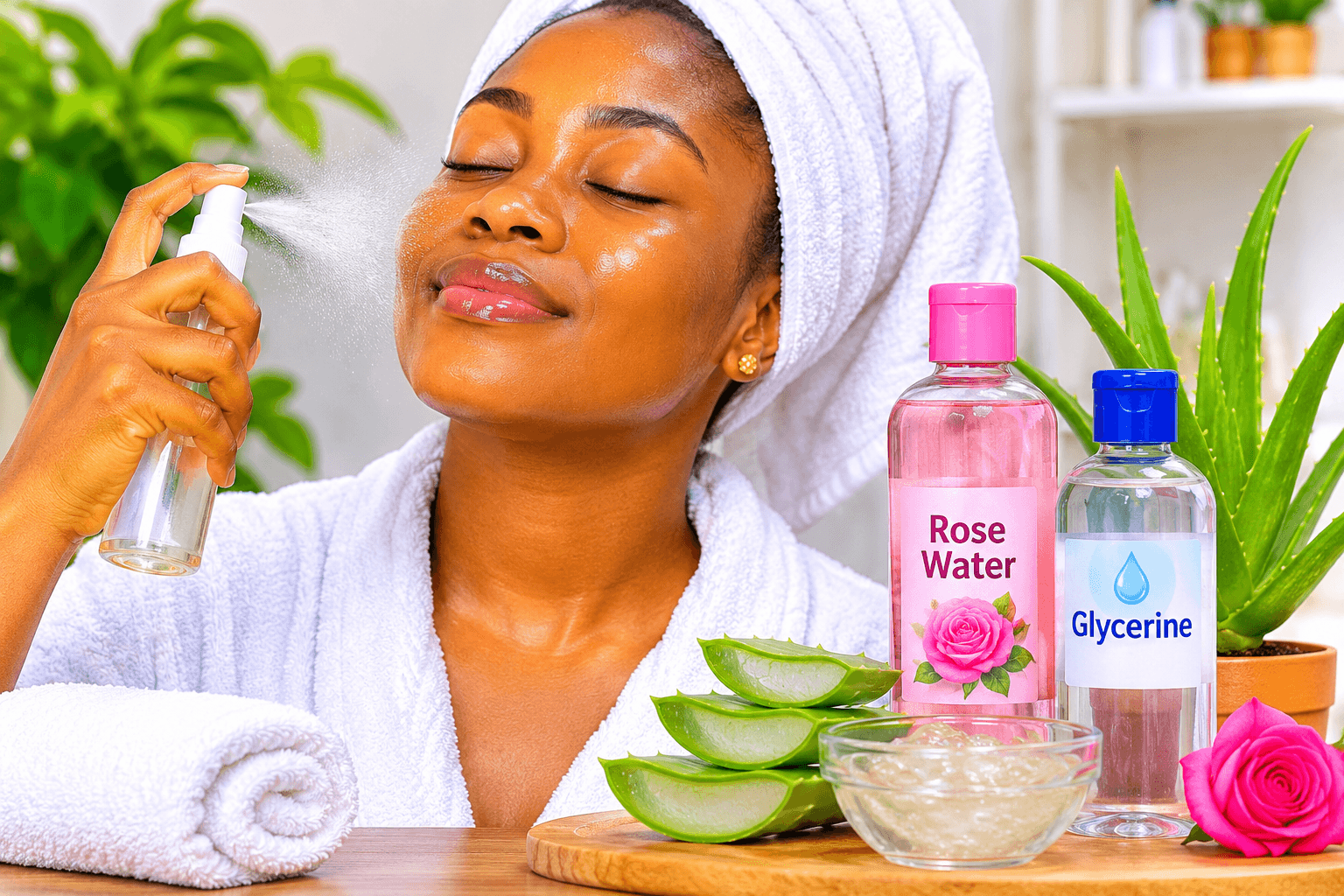
You cleanse your face, then reach straight for your moisturizer. Somewhere in between, there is a step most Nigerian women skip, and it is the one that can make everything else work better.
That step is toner. A good natural toner home recipe costs under ₦500, takes ten minutes, and gives your skin a layer of hydration that commercial toners often fail to deliver. Moreover, many store-bought toners contain alcohol and fragrance that dry out and irritate melanin-rich skin.
At Sophix Natural, we supply cosmetic raw materials to formulators and skincare lovers across Nigeria. Today, I will show you what toner really does, why it matters for African skin, and three simple recipes you can make this weekend.
Let’s get into it.
What Does a Toner Actually Do?
Toner is a water-based liquid you apply after cleansing and before moisturizer. It no longer exists to “close pores” or strip oil, as older products claimed. Instead, a modern toner has three jobs.
- It rebalances your skin. Cleansing can leave skin slightly alkaline. A toner with a pH near 5 helps return it to its natural acidity.
- It adds hydration. Water and humectants prepare the skin to absorb the products that follow.
- It delivers gentle actives. Soothing or brightening ingredients can be added in small amounts.
Therefore, a toner is not a luxury. It is a quick hydration layer that makes your moisturizer work harder.
Why Nigerian Skin Needs a Gentle Natural Toner Home Recipe
Melanin-rich skin is prone to dark marks after irritation. Because of this, harsh, alcohol-heavy toners can do more harm than good. A single stinging toner can leave a dark patch behind.
Additionally, our climate pulls skin in two directions. Harmattan dries the face, while heat and humidity encourage heavy sweating and frequent washing. A light, hydrating toner suits both seasons.
According to the American Academy of Dermatology, gentle skincare matters for people with skin of colour, because irritation can trigger lasting dark spots. Consequently, a mild homemade toner is a smart place to start.
Key Ingredients for a Natural Toner
Vegetable glycerine is a humectant that draws water into the skin. Vegetable Glycerine is affordable and gentle. Research indexed on PubMed supports glycerin’s role in improving skin hydration.
Aloe vera juice soothes and hydrates. It suits sensitive and acne-prone skin well.
Rose water adds light hydration and a pleasant scent. Choose pure rose water without added fragrance.
Distilled water forms the base. Tap water carries minerals and microbes that can spoil your toner.
Sweet almond oil is optional, and only in tiny amounts, for very dry skin. Sweet Almond Oil is light and rich in vitamin E, but oil and water separate, so shake before each use.
A preservative is essential. Any product containing water can grow bacteria and mold within days. Use a broad-spectrum preservative at the supplier’s recommended rate.
What You Need
- Distilled water
- Aloe vera juice
- Rose water
- Vegetable glycerine
- Preservative
- A clean spray bottle or dropper bottle
- 70% isopropyl alcohol, for sanitizing
- pH strips
Total cost: roughly ₦400 to ₦800 per batch, depending on what you already own.
Recipe 1: Natural Toner Home Hydrating Formula (All Skin Types)
This is your foundation recipe, gentle enough for daily use.
Makes: 100ml
Ingredients:
- Distilled water: 70ml
- Rose water: 20ml
- Aloe vera juice: 10ml
- Vegetable glycerine: 1 teaspoon
- Preservative: at the supplier’s recommended rate
Method:
- Sanitize your bottle and tools with 70% isopropyl alcohol and let them dry.
- Pour the distilled water, rose water, and aloe vera juice into the bottle.
- Add the glycerine and preservative.
- Shake gently until combined.
- Test the pH. Aim for around 5 to 5.5.
How to use: After cleansing, spray or pat onto damp skin. Follow immediately with your moisturizer or a few drops of oil.
Recipe 2: Brightening Toner for Dark Spots
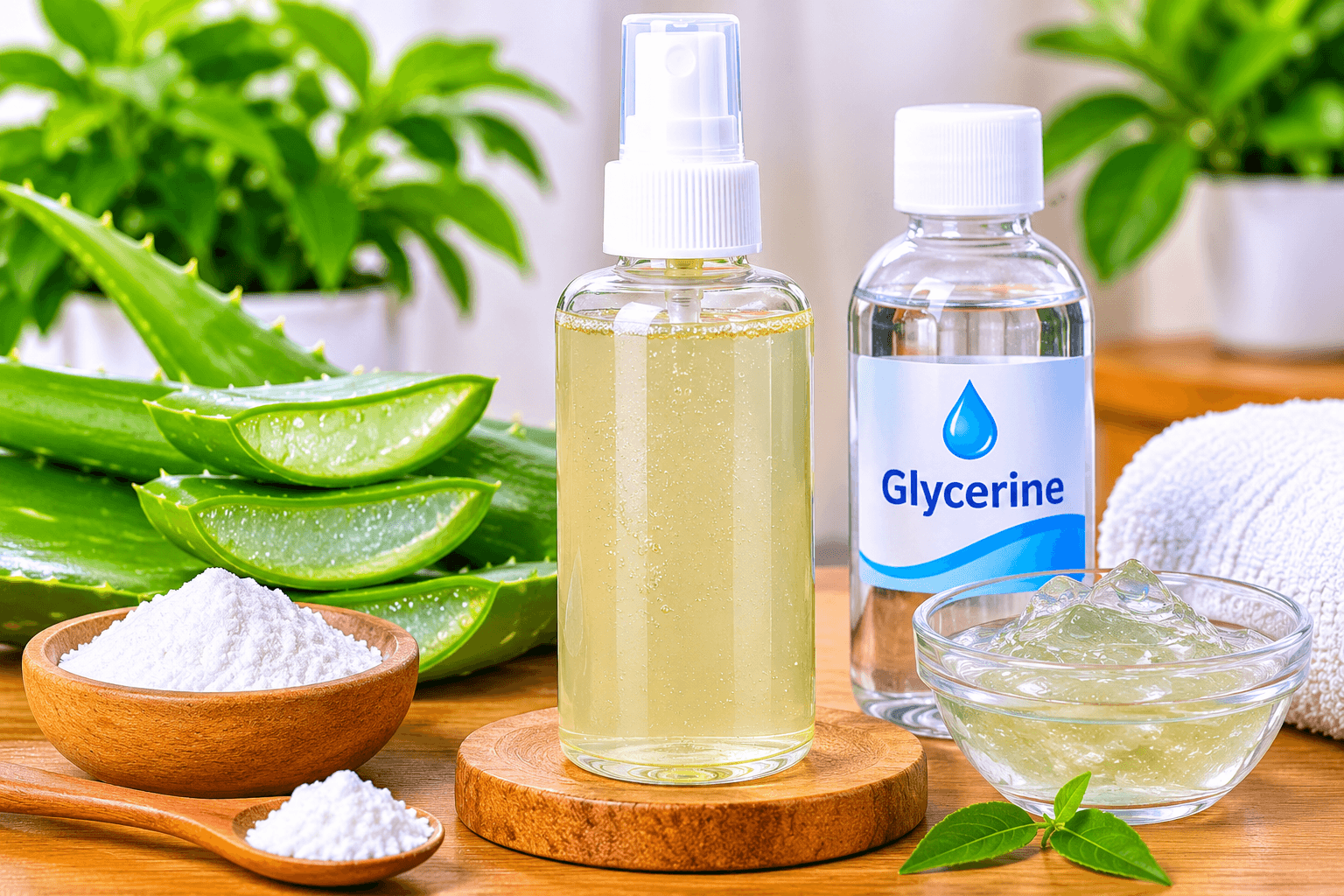
This version adds niacinamide, a gentle ingredient that helps fade dark spots over time.
Makes: 100ml
Ingredients:
- Distilled water: 78ml
- Aloe vera juice: 10ml
- Vegetable glycerine: 1 teaspoon
- Niacinamide powder: 2g (about 2%)
- Preservative: at the supplier’s recommended rate
Method:
- Sanitize all equipment.
- Dissolve the niacinamide fully in the distilled water. It dissolves easily at room temperature.
- Add the aloe vera, glycerine, and preservative.
- Shake well and test the pH. Niacinamide works best between pH 5 and 6.
How to use: Apply morning and evening to clean skin. Always follow with sunscreen in the morning, because UV exposure darkens spots and undoes your progress. Expect gradual change over 8 to 12 weeks.
For more on brightening ingredients, see our guide to natural raw materials that fade dark spots on the Sophix Natural blog.
Recipe 3: Balancing Toner for Oily and Acne-Prone Skin
Makes: 100ml
Ingredients:
- Distilled water: 80ml
- Aloe vera juice: 15ml
- Vegetable glycerine: 1/2 teaspoon
- Niacinamide powder: 2g (optional)
- Preservative: at the supplier’s recommended rate
Method: Follow the same steps as Recipe 1, and skip rose water and oils.
Why it works: Aloe soothes inflamed skin, and a small amount of glycerine hydrates without adding oil. Oily skin is often dehydrated underneath, so hydration helps calm excess shine.
How to Use a Natural Toner in Your Routine
Morning:
- Cleanse gently with lukewarm water.
- Apply your natural toner home blend to damp skin.
- Add a light moisturizer or a few drops of sweet almond oil.
- Finish with SPF 30 or higher.
Evening:
- Cleanse to remove sunscreen and dirt.
- Apply toner.
- Apply your treatment or moisturizer.
Technique: Spray or press the toner into your skin with clean hands. Rubbing with cotton pads wastes product and can irritate.
Natural Toner Home Safety Tips
Homemade toner is simple, but safety matters because it contains water.
- Always use a preservative. Without one, the toner can spoil in days.
- Make small batches. A 100ml batch is enough for several weeks.
- Use distilled water and sanitized bottles.
- Skip lemon juice, vinegar, and toothpaste. These are popular online “toner” hacks, but they can burn skin and cause dark marks.
- Patch test first. Apply a little to your inner arm for 24 hours before using it on your face.
- Stop if skin stings or turns red.
Troubleshooting Your Toner
It looks cloudy. The bottle or water may be contaminated, or the oil has separated. Discard it and make a fresh, sanitized batch.
It smells off. Discard immediately. The preservative may be missing or too low.
It stings. Your pH may be too low, or your skin barrier may be damaged. Reduce the active ingredients and patch test again.
My skin feels sticky. You used too much glycerine. Cut it by half next time.
Packaging and Selling Your Toner
Many small brands start with toner because the ingredients are cheap and the product is easy to make.
Containers: Fine-mist spray bottles (100ml) look professional and keep the product clean. Amber or frosted bottles protect light-sensitive ingredients.
Labels: Include the product name, full ingredient list, net volume, manufacturing date, batch number, and your contact details.
Pricing: Work out your cost per bottle, including packaging and labels, then price for a healthy margin. Check what similar toners sell for in your area before you decide.
Important: Selling skincare in Nigeria involves regulatory requirements. Check with NAFDAC about what applies to your products before you sell widely.
What a Toner Cannot Do
A toner will not shrink pores permanently, erase dark spots overnight, or replace sunscreen and moisturizer. It also cannot treat medical skin conditions. If you have persistent acne, eczema, or stubborn dark patches, see a dermatologist.
Your Action Plan This Weekend
First, choose the recipe that matches your skin concern.
Second, buy distilled water, aloe vera juice, glycerine, and a preservative.
Third, sanitize your bottle and make a small batch.
Fourth, patch test, then use it twice daily after cleansing.
Finally, take a photo today and again in four weeks to see the difference.
Ready to start? Get your ingredients:
- Vegetable Glycerine: your hydrating base
- Sweet Almond Oil: an optional light oil for dry skin
- Natural Shea Butter: to follow your toner with a rich night moisturizer
- Cocamidopropyl Betaine: for the gentle face wash that comes before your toner
Have you made a natural toner before? Which recipe will you try first? Tell us in the comments below.
