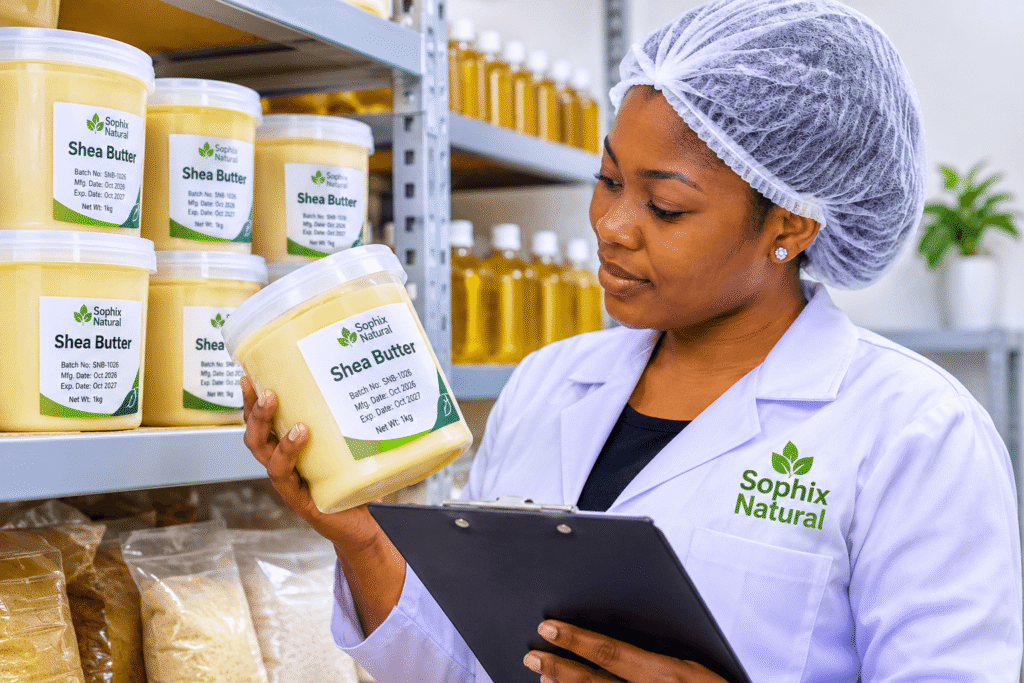
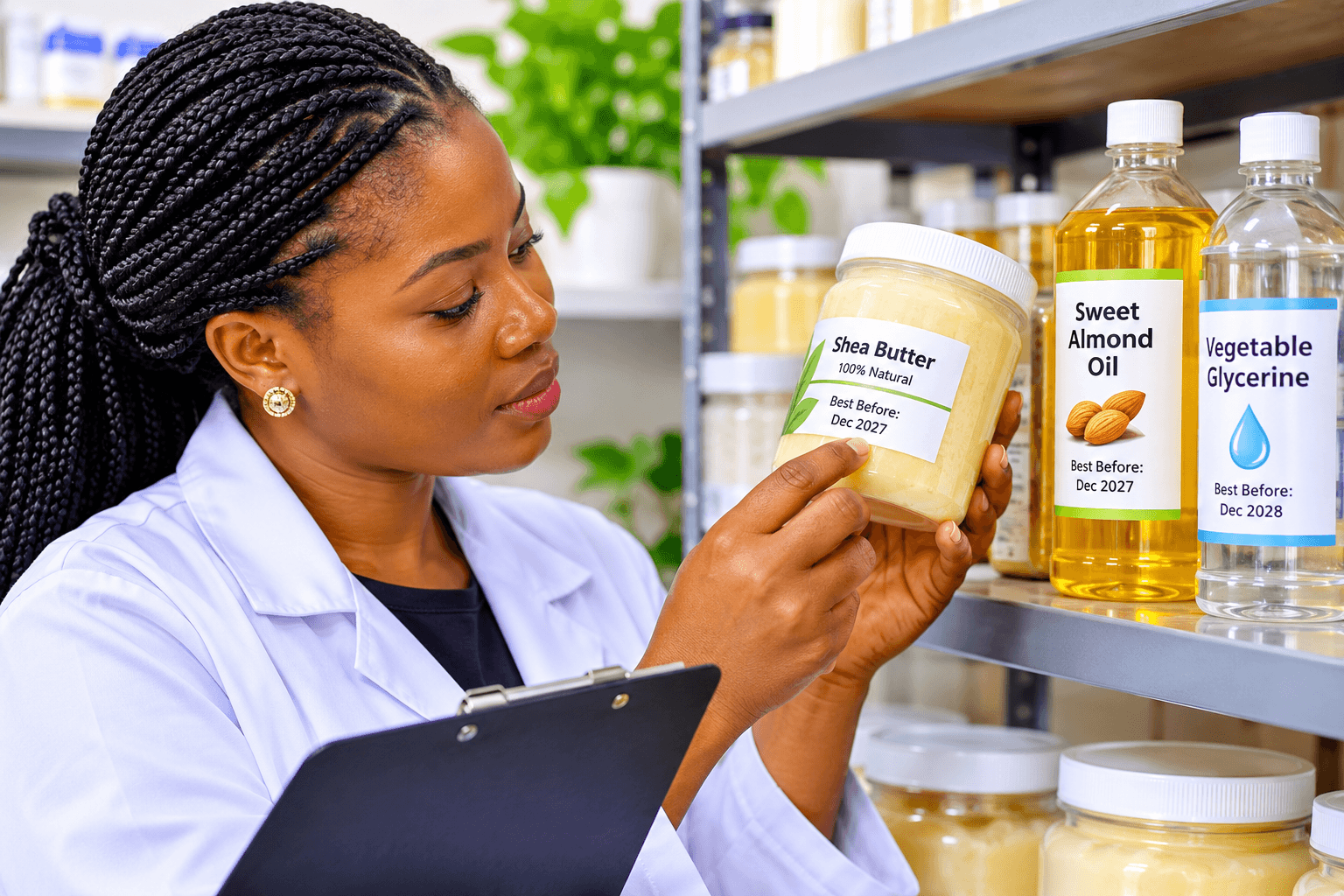
During World Quality Month, here is a question that decides whether your products stay safe: how long can you keep an ingredient before it stops being good enough to use?
Ingredient shelf life is one of the most overlooked parts of formulation. Many beginners buy in bulk, store ingredients for a year, and then wonder why their cream smells strange or their balm turns bitter. Heat, light, air, and moisture all age ingredients, and Nigerian weather speeds the process up.
At Sophix Natural, we supply cosmetic raw materials to formulators across Nigeria. Today I will explain what shelf life means, what shortens it, how to estimate it for common ingredients, and how to store your stock so it lasts.
Let’s get into it.
What Does Ingredient Shelf Life Mean?
Shelf life is the period during which an ingredient stays within its expected quality when stored properly. After that period, it may still look acceptable, but its performance, smell, or safety can change.
Two dates matter, and people often confuse them.
- Shelf life of unopened stock. This is how long a sealed, properly stored ingredient keeps its quality. Your supplier or the manufacturer’s information is the best source for this figure.
- Time after opening. Once you open a container, air and handling begin to age it. Opened stock usually has a shorter useful life.
There is also a third idea for finished products, called period after opening. Many packaged cosmetics show a small open-jar symbol with a number of months. That applies to the finished product, not to your raw materials, but the principle is the same: opening starts the clock.
Why Ingredient Shelf Life Matters More in Nigeria
Heat speeds up chemical reactions, including the ones that spoil oils and butters. Humidity adds moisture, which encourages mold and clumping. Strong sunlight breaks down sensitive ingredients. In addition, power cuts and warm storage rooms make steady temperatures hard to keep.
Using aged ingredients carries real risks. Rancid oils smell unpleasant and can irritate skin. Oxidized ingredients lose the benefits you bought them for. Contaminated water-based ingredients can grow bacteria and mold. For melanin-rich skin, irritation often leaves lasting dark marks, so protecting quality protects your customers’ skin.
The 5 Things That Shorten Ingredient Shelf Life
1. Oxygen
Oils and butters contain fats that react with oxygen over time. This reaction is called oxidation, and it produces the sharp, stale smell we call rancidity. Every time you open a container, you let in fresh air.
2. Heat
Warm storage speeds up oxidation. A shelf above a cooker or near a sunny window shortens life noticeably.
3. Light
Light, especially sunlight, breaks down oils, vitamins, and some actives. Clear bottles in bright rooms age ingredients faster than dark containers in cupboards.
4. Moisture
Water invites microbes. A single wet spoon in a jar of butter or powder can introduce contamination. Powders absorb humidity and clump, and then spoil.
5. Contamination From Handling
Fingers, used spoons, and unsanitized containers add bacteria and mold. Clean tools matter as much as good storage.
Typical Ingredient Shelf Life Ranges (Use as a Guide Only)
Real shelf life depends on the grade, the supplier’s storage, and your conditions. The ranges below are general expectations, not guarantees. Always follow the information that comes with your batch, and trust your senses over any chart.
| Ingredient type | General expectation when stored well | What usually shortens it |
|---|---|---|
| Unrefined butters such as shea | Often many months to over a year | Heat, open tubs, wet tools |
| Carrier oils such as sweet almond oil | Often several months to about a year | Air, light, heat |
| Coconut oil | Often longer than most liquid oils | Water contamination, heat |
| Glycerine | Often long when sealed | Moisture absorption, contamination |
| Water-based ingredients | Often shorter | Microbial growth |
| Preservatives and actives | Follow the supplier’s date | Heat, air, moisture |
Refined versions generally keep longer than unrefined ones, because refining removes some of the compounds that go off first. However, unrefined ingredients keep more natural character, so many formulators accept a shorter life in return.
Ingredient Shelf Life by Ingredient
Shea Butter
Natural Shea Butter is one of the more stable butters when kept sealed and cool. Watch for a sour or sharp smell, dark patches, or mold. A mild nutty scent is normal for unrefined butter. If it melts in the heat and cools unevenly, graininess can appear. That is a texture issue and not spoilage, and gentle remelting followed by steady cooling usually fixes it.
Sweet Almond Oil
Light carrier oils oxidize faster than butters because they are liquid and expose more surface to air. Sweet Almond Oil should smell faintly nutty or nearly neutral. A heavy, stale smell means oxidation, so do not use it on skin. Store it in a dark bottle with the lid closed tightly, away from heat.
Coconut Oil
Coconut Oil is high in saturated fats, which resist oxidation better than many liquid oils. It melts and solidifies with room temperature, and that is normal. Contamination from water is a bigger threat than age, so always use dry spoons.
Vegetable Glycerine
Vegetable Glycerine attracts water, so open containers absorb humidity from the air. Keep the lid closed. Cloudiness or an unusual smell means a problem.
Cocamidopropyl Betaine
Cocamidopropyl Betaine is a water-based surfactant. Check its clarity and consistency each time you use it. If thickness, colour, or smell change significantly, record the change and speak to your supplier before using it in a batch.
How to Store Raw Materials to Extend Their Shelf Life
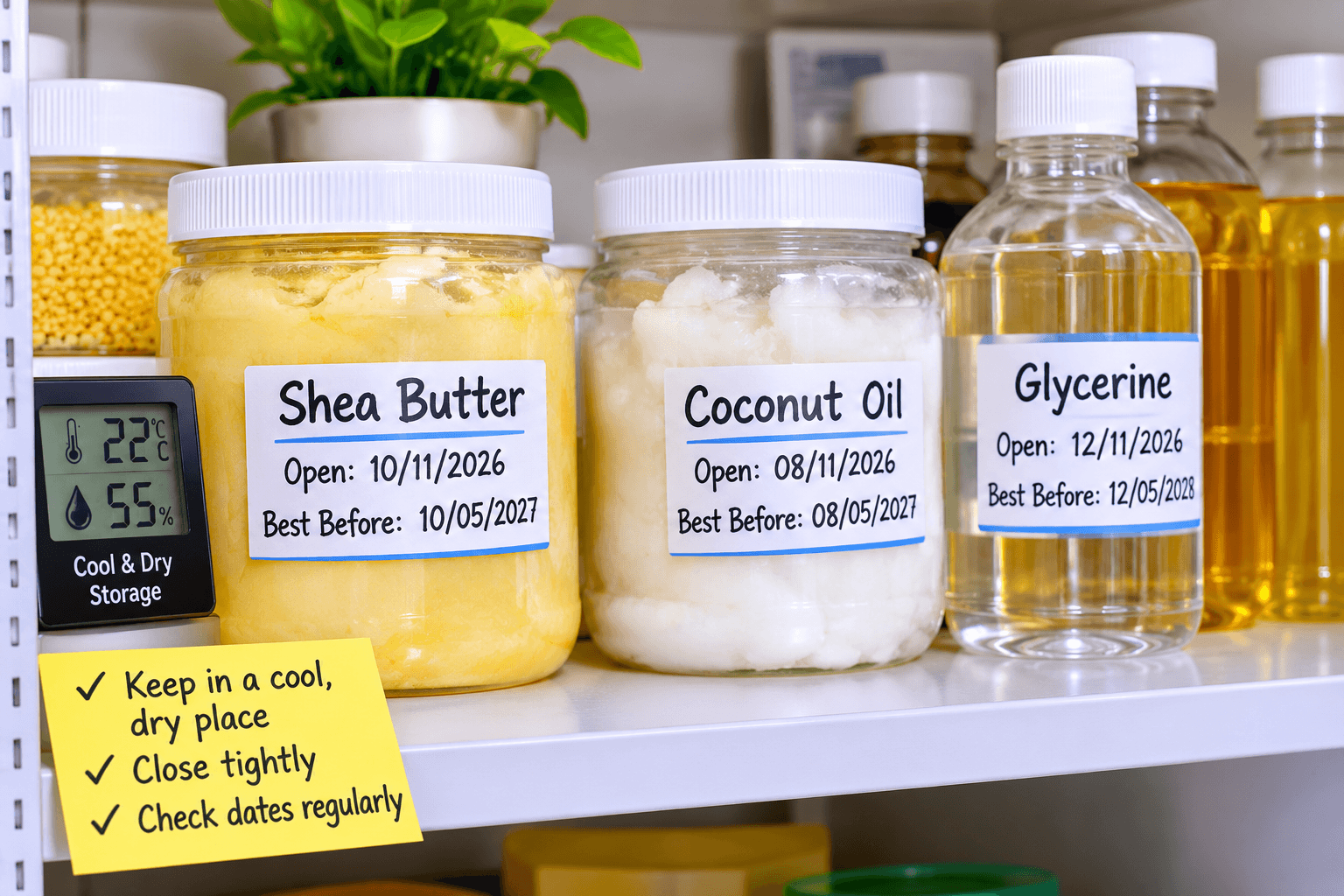
Good storage can add months to useful life. Follow these habits.
- Keep containers tightly closed. Less air means slower oxidation.
- Store in a cool, dark place. A shaded cupboard beats a shelf in the sun.
- Use dark glass or opaque containers for oils. Light is a hidden enemy.
- Use clean, dry tools every time. Never dip fingers or wet spoons into stock.
- Decant small amounts for daily use. Keep the main supply sealed and open it as little as possible.
- Label every container. Write the ingredient name, the date received, and the date opened on masking tape.
- Practise first in, first out. Use the oldest stock first.
- Separate strong smells. Essential oils and fragranced items can transfer odors.
How to Check Whether an Ingredient Is Still Good
Dates guide you, but your senses make the final call. Run the checks below before using any ingredient that has been sitting for a while.
- Smell it. Rancid, sour, soapy, or paint-like smells mean stop.
- Look at it. Check for mold, dark spots, cloudiness, separation, or new colours.
- Feel it. Unexpected stickiness, grittiness, or sliminess is a warning.
- Compare it. If you still have notes or a sample from when it was fresh, compare the two.
When in doubt, discard the ingredient. The cost of a replacement is small compared with a failed batch or an irritated customer.
How Ingredient Shelf Life Affects Your Finished Products
Your product can only be as stable as its least stable ingredient. For example, a body butter made with oil that is already oxidizing will turn rancid sooner than expected, no matter how clean your process is.
Water-containing products need extra care. A cream, toner, or shampoo needs a preservative used at the supplier’s recommended rate, and clean production. Anhydrous products such as balms and whipped butters contain no water, but they still oxidize over time. Adding an antioxidant such as vitamin E can help slow oxidation, though it is not a replacement for good ingredients and good storage.
Always test small batches. Keep a labelled sample at room temperature and check it over several weeks. Watch for changes in smell, colour, or texture before you commit to selling larger quantities.
Keep Records to Track Ingredient Shelf Life
A simple log solves most shelf life problems. For each ingredient, record:
- The ingredient name
- The supplier and batch or lot number
- The date received
- The date opened
- Storage location
- Any notes on smell, colour, or texture over time
Then, record which ingredient batches go into each product batch. If a problem appears later, you can trace it and fix the cause.
Quality, Safety, and Regulation
Managing ingredient shelf life is part of a wider responsibility for safe products. If you sell cosmetics in Nigeria, check what applies to your products on the NAFDAC website, and keep records that show how you source and store your ingredients. For general scientific background on topics such as lipid oxidation and skin irritation, you can search research summaries on PubMed.
What Our Role Is as Your Supplier
A supplier and a formulator share the responsibility of protecting product quality. At Sophix Natural, we support this responsibility by providing available product documentation, including Certificates of Analysis (COAs), Safety Data Sheets (SDS/MSDS) and technical information to help you understand the ingredients you purchase. Where available, our documentation includes batch or lot details, recommended storage conditions and safe handling precautions. We also provide ingredient usage guides and formulation support to help you make informed decisions when working with our raw materials.
If an ingredient you receive from us looks or smells wrong, contact us on 0706 111 1838 with your batch details and a photo so we can look into it.
What Shelf Life Guidelines Cannot Do
No chart can predict exactly how long your ingredient will last. Conditions, grades, and handling differ too much. Shelf life guidelines cannot make a bad ingredient safe, replace testing for a product you sell commercially, or substitute for the supplier’s own information. Use ranges as a starting point, and let smell, appearance, and records guide your decisions.
Your Action Plan for World Quality Month
First, go through every ingredient you own and note the date you received it.
Second, run the smell and look checks, and discard anything rancid, moldy, or unidentifiable.
Third, move oils and butters away from heat and sunlight into a cool, dark cupboard.
Fourth, label each container with the receipt date and the date opened.
Finally, buy quantities you can realistically use, and rotate stock so the oldest ingredient goes first.
Ready to restock with fresh ingredients? Explore these:
- Natural Shea Butter: for creams, balms, and body butters
- Sweet Almond Oil: a light carrier oil for skin and hair
- Vegetable Glycerine: a humectant for toners, lotions, and hair care
- Coconut Oil: a versatile oil for body care and hair treatments
How do you store your raw materials, and how do you decide when to throw something away? Share your routine in the comments below.