November is World Quality Month, and in cosmetics, quality is not a slogan. It decides whether your cream stays stable, whether your customers’ skin stays calm, and whether your brand survives its first year.
Quality raw materials are the foundation of every product you make. A perfect formula made with poor ingredients still produces a poor product. As a result, the most important decision a beginner formulator makes is often not the recipe. It is the supplier.
At Sophix Natural, we supply cosmetic raw materials to formulators and skincare brands across Nigeria and the world. For World Quality Month, we want to explain what quality really means, how you can check it yourself, and what you should expect from any supplier, including us.
Let’s get into it.
What Do Quality Raw Materials Actually Mean?
Quality is not a single feature. Instead, it is a combination of five things.
- Identity. The ingredient is exactly what the label says it is.
- Purity. It is free from contamination, adulteration, and unwanted additives.
- Consistency. Batch after batch behaves the same way in your formula.
- Freshness and stability. It has been stored properly and is within its shelf life.
- Traceability. You can find out where it came from and which batch you received.
If an ingredient fails on any of these, your finished product pays the price. Therefore, always judge a supplier on all five, not just on price.
Why Quality Raw Materials Matter More in Nigeria
Several local realities make quality even more important here.
Heat and humidity speed up spoilage. Butters can go rancid, oils can oxidize, and powders can clump or grow mold when stored badly. Additionally, the market contains diluted, mislabelled, and old-stock products sold at suspiciously low prices. Buyers who cannot test ingredients often only discover the problem after a batch fails.
The cost of a bad ingredient is also higher than it looks. A failed batch wastes your other ingredients, your packaging, and your time. Worse, a contaminated product can irritate a customer’s skin, and melanin-rich skin often shows that irritation as lasting dark marks. For this reason, cheap ingredients can become the most expensive purchase you make.
7 Signs of Quality Raw Materials
You can check many of these yourself before you ever use an ingredient.
1. Clear and Complete Labelling
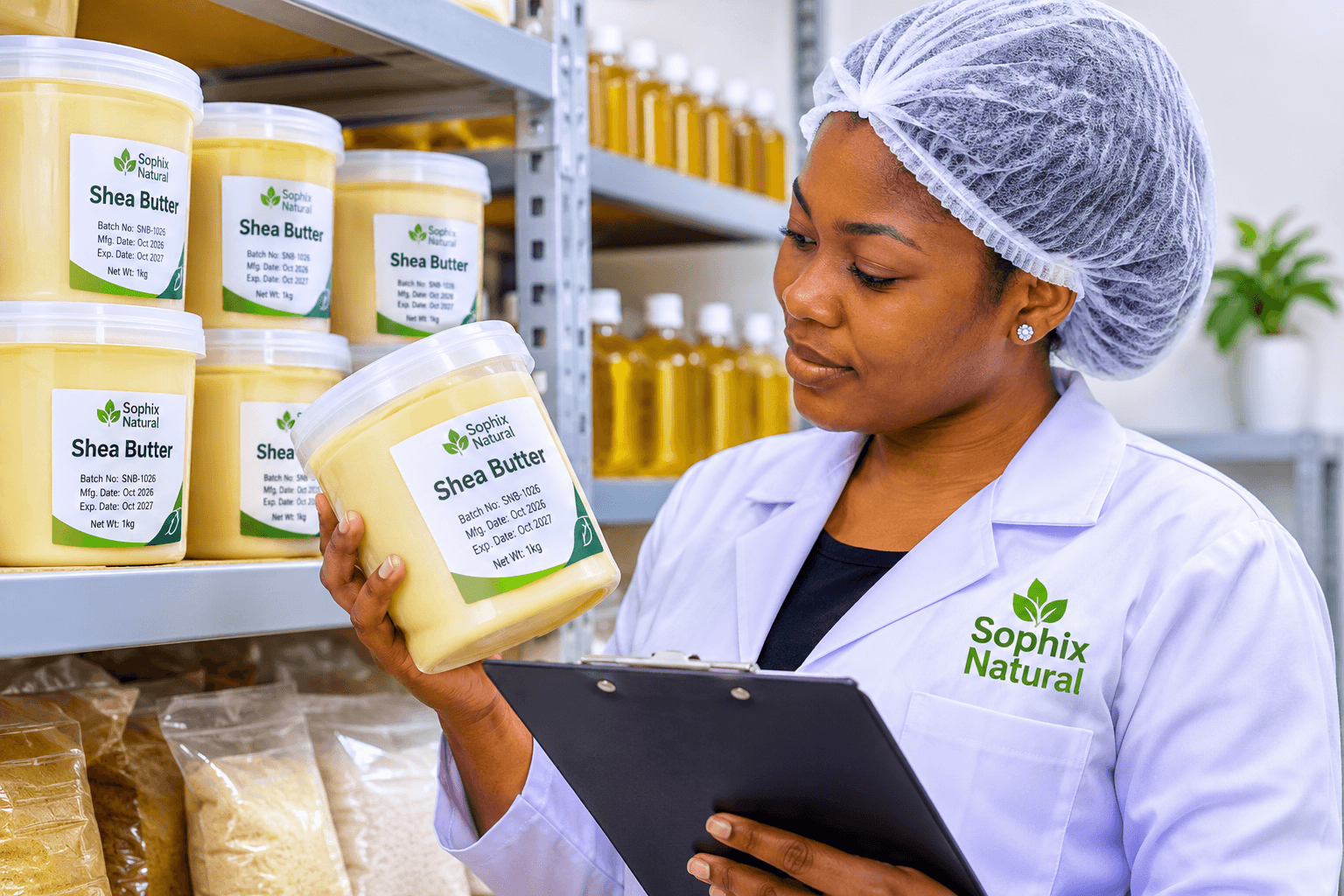
A good label shows the product name, the INCI (international cosmetic ingredient) name, a batch or lot number, and a date. If a container has only a handwritten name and nothing else, you cannot trace it when something goes wrong.
2. A Certificate of Analysis (COA) for Ingredients That Need One
A COA is a document that reports test results for a specific batch, such as purity or specifications. Ask whether one is available for the ingredient you are buying. Not every simple ingredient will have one, but a supplier should be able to explain what documentation exists and what it covers.
3. Safety Data and Usage Guidance
Reliable suppliers can tell you the recommended usage rate and handling needs of an ingredient. For example, preservatives and actives have recommended usage ranges, and using them wrongly can make a product unsafe or ineffective.
4. Sensible Packaging
Oils should sit in sealed, opaque or dark containers. Powders should be dry and tightly closed. Butters should not be stored in open buckets in the sun. Packaging tells you how the supplier treats the product before it reaches you.
5. The Smell, Colour, and Texture Test
Your senses catch many problems. Fresh unrefined shea butter has a mild nutty smell. A sharp, sour, or paint-like odor suggests rancidity. Oils should not smell stale. Liquids should not be cloudy unless that is normal for the ingredient. If something looks or smells wrong, do not use it.
6. A Fair Price
Quality has a cost. If one seller’s price is far below everyone else’s, ask why. Possible reasons include dilution, old stock, or poor storage. Fair pricing does not guarantee quality, but extreme discounts are a warning sign.
7. A Supplier Who Answers Technical Questions
A supplier should be able to explain what an ingredient is, how it behaves, and how to store it. If questions get vague answers or silence, treat that as information.
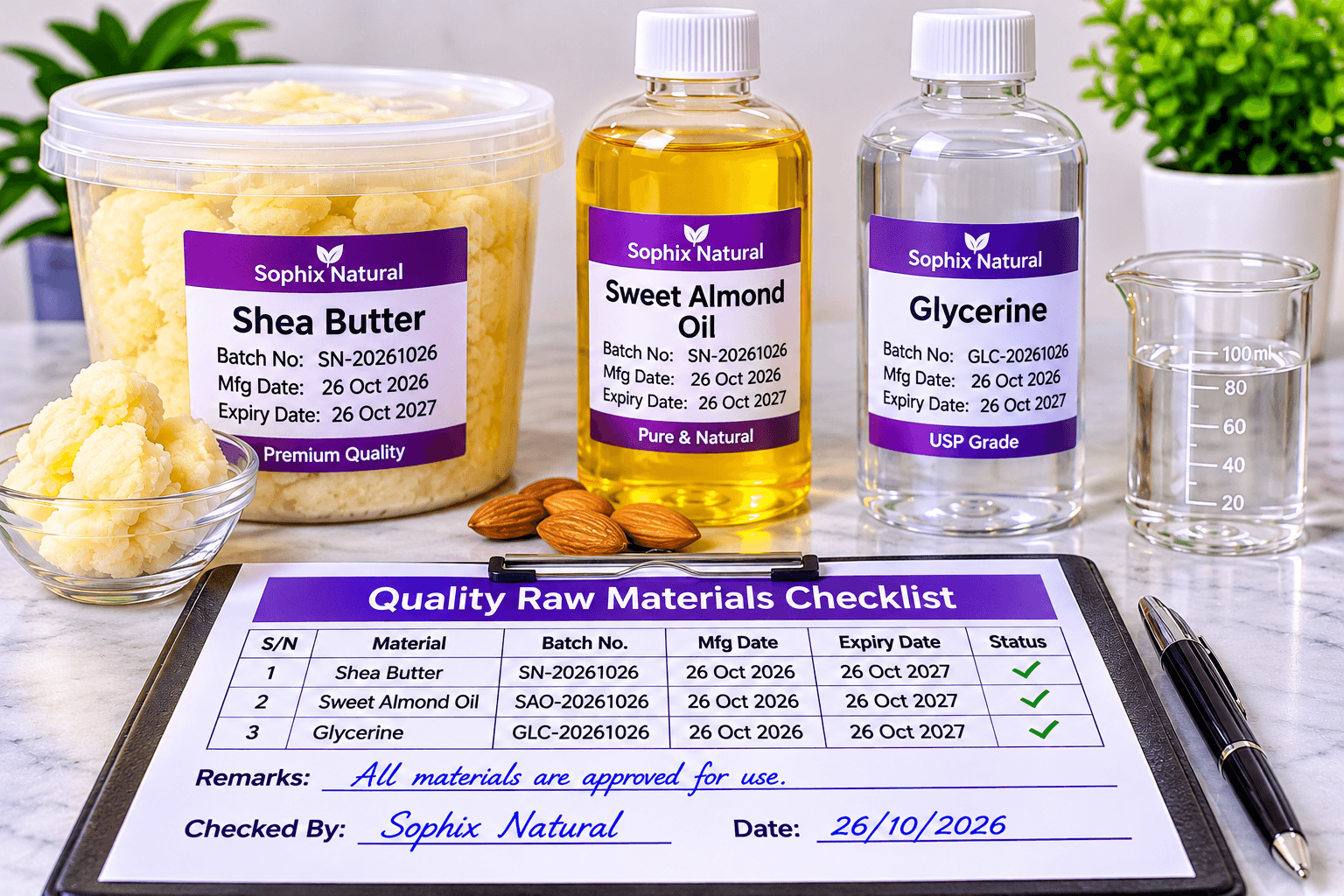
Quality Raw Materials Checklist You Can Use Today
Before your next purchase, run through these questions.
- Does the container show the INCI name, batch number, and date?
- Can the supplier provide documentation such as a COA or specification where relevant?
- Does it smell, look, and feel the way this ingredient should?
- Is it stored and packaged sensibly?
- Can the supplier explain the recommended usage rate?
- Would you be able to trace this batch if a problem appeared?
If you answer “no” to several of these, consider buying elsewhere.
How Quality Shows Up in the Ingredients You Use Most
Every ingredient has its own quality markers. Here are the ones to check for some of the most common raw materials.
Shea Butter
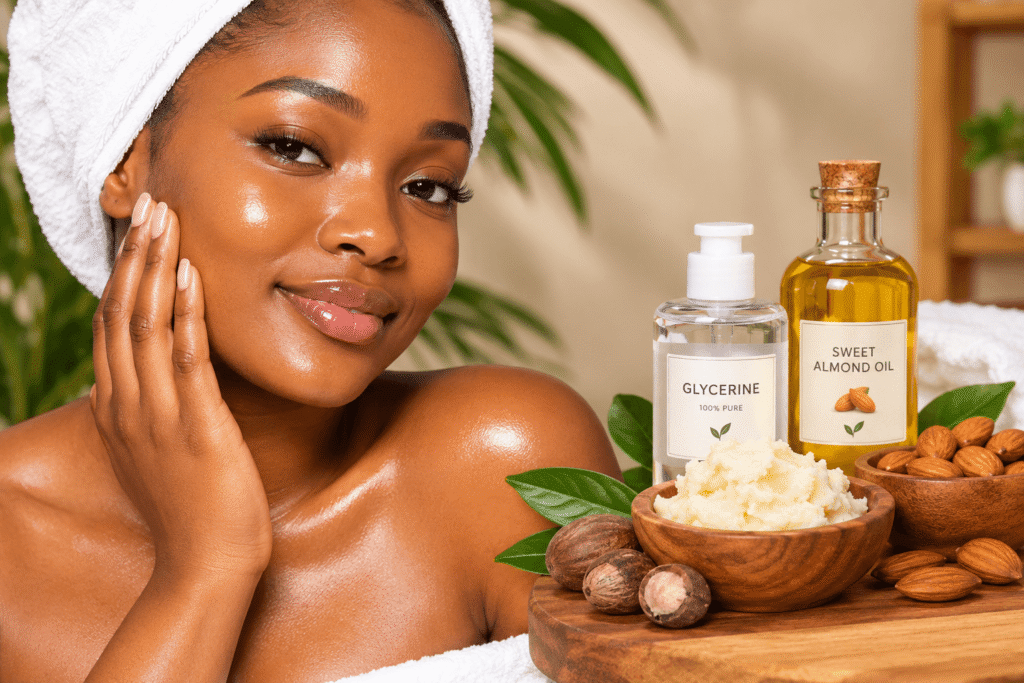
Look for raw, unrefined butter with a creamy colour and a mild, nutty scent. Because refining removes some of the vitamins and character, the unrefined grade is usually preferred for skin and hair products. Avoid butter that smells sour or has a gritty, uneven texture unless you know why. Quality Natural Shea Butter should melt smoothly and feel soft on the skin.
Sweet Almond Oil
Cold-pressed, unrefined oil should be clear to pale golden with a light, faintly nutty smell. A heavy or stale odor suggests oxidation. Sweet Almond Oil should be stored in a cool, dark place with the lid closed.
Vegetable Glycerine
Quality glycerine is clear, thick, and nearly odorless, with a slightly sweet taste. Cloudiness or a strange smell is a red flag. Ask for vegetable-derived glycerine specifically if that matters to your brand. Vegetable Glycerine is a staple in lotions, toners, and hair products, so a poor batch affects many formulas.
Coconut Oil
Virgin coconut oil should smell fresh and clean, like coconut. A burnt or rancid smell means a problem. Coconut Oil melts around the temperature of a warm room, so softening in Nigerian heat is normal and does not mean low quality.
Cocamidopropyl Betaine
For cleansers, check that the liquid is clear to slightly hazy and consistent from batch to batch, because thickness and foam depend on it. Cocamidopropyl Betaine is a mild surfactant used in shampoos, body washes, and face washes, so inconsistency here shows up quickly in your product.
Quality Is Also About Safety and Regulation
Choosing quality raw materials is only one part of making safe cosmetics. You also need clean production, accurate labelling, and compliance with the rules that apply in Nigeria.
The Nigerian regulator for cosmetics is NAFDAC. You can find official information on NAFDAC’s website, and you should check what applies to your products before selling widely.
International quality standards can also guide your thinking. For example, the International Organization for Standardization (ISO) publishes standards that many manufacturers use to structure their quality systems. You do not need to be certified to learn from them, but they show what disciplined quality management looks like.
What You Should Expect From Us
At Sophix Natural, we think a supplier should be held to a clear standard. Here is what we aim to give our customers.
- Honest product information.Every product page lists the ingredient by its trade name and, where applicable, its INCI or chemical name (for example, SymWhite® is listed as Phenylethyl Resorcinol), so you know exactly what you are formulating with. Each pack is labelled with the product name and batch information, so you can match what you receive to its documents.
- Documentation with your purchase. Certificates of Analysis (CoA) and Safety Data Sheets (SDS/MSDS) are available for most applicable materials, particularly surfactants, preservatives, emulsifiers, actives and solvents. Technical Data Sheets (TDS) and IFRA certificates are provided where the manufacturer supplies them. These documents are released only to customers who have bought the product, and are not available for public download. All documents come from the original manufacturer or supplier, and batch-specific CoAs are shared only where the manufacturer issues them. If you need a document for NAFDAC registration, manufacturing or quality control, contact us before you order and we will confirm it is available for that product.
- Proper storage and handling. Ingredients are kept in sealed containers at our facility in Berger, Lagos, away from direct sunlight, heat and moisture, and handled according to each manufacturer’s storage guidance until they are packed for delivery.
- Technical support. Use our Ingredient Finder and free guides in the Learning Hub to choose the right ingredient for your formula. For deeper help, you can book a one-on-one session with our in-house cosmetic chemist for formulation advice, INCI list review and cost optimisation.
- A way to raise concerns. If anything you receive does not meet expectations, contact us within 3 working days of delivery on +234 706 1111 838 or admin@sophixnatural.com (Monday to Saturday, 8am to 6pm). Please include your order number, photos of the product and its label, and the batch information, so we can look into it quickly.
Only publish the claims in this section that you can fully support. Specific, true statements build far more trust than big promises.
How to Store Your Raw Materials So They Stay at Their Best
Even the best ingredient can lose quality in your workspace. Follow these habits.
- Keep containers tightly closed. Air speeds up oxidation.
- Store oils and butters away from heat and sunlight. A cool cupboard beats a sunny shelf.
- Use clean, dry spoons. Water or fingers can introduce bacteria and mold.
- Label everything with the date you opened it. This helps you use older stock first.
- Do not decant into unlabelled bottles. Mix-ups cause bad batches and unsafe products.
- Keep powders dry. Moisture causes clumping and spoilage.
Quality Raw Materials and Your Brand
Your customers never see your supplier’s name. They only see your label. Consequently, every ingredient you choose becomes your promise to them.
Brands that last tend to share a few habits. They buy from suppliers who answer questions. They keep records of which batch went into which product. They test small batches before scaling up. They also refuse to cut corners on preservatives, hygiene, and labelling.
If you are building a skincare or haircare business, treat quality as part of your brand story. A short, honest line on your packaging about how you choose ingredients can be a real selling point.
What Quality Cannot Do
Good ingredients do not guarantee a good product. You still need a tested formula, correct preservation, clean production, and sensible storage. Likewise, quality does not mean “natural” automatically, and natural ingredients still need proper handling. Finally, no ingredient works as a miracle fix, so keep claims realistic.
Your Quality Action Plan for November
First, check every ingredient you currently own for smell, colour, and label information.
Second, throw away anything that smells rancid, looks contaminated, or has no way to identify it.
Third, write down your supplier’s answers to the checklist questions above.
Fourth, start labelling every container with the batch number and the date you opened it.
Finally, run small test batches before scaling any recipe, and keep records.
Ready to build your next batch on a solid foundation? Explore these ingredients:
- Natural Shea Butter: a staple for creams, balms, and body butters
- Sweet Almond Oil: a light oil for skin and hair
- Vegetable Glycerine: a humectant for toners, lotions, and hair products
- Coconut Oil: a versatile oil for body care and hair treatments
What do you look for when you judge the quality of a raw material? Share your checklist in the comments below, and let’s raise the standard together this World Quality Month.