
Glass skin African women can achieve is a real goal, and it does not require a 10-step Korean routine or imported products that cost a month’s salary. Still, most glass skin content online shows pale, porcelain-looking skin. As a result, many Nigerian women wonder whether the trend was ever meant for them.
Here is the honest answer. Glass skin is not a skin colour. It describes skin that is smooth, evenly toned, deeply hydrated, and reflective enough to look dewy. Melanin-rich skin can look stunning with that finish. In fact, deep skin tones often show the glow beautifully when the surface is smooth and well hydrated.
At Sophix Natural, we supply cosmetic raw materials to formulators and skincare lovers across Nigeria. Today, I will explain what glass skin really means for African skin, what is realistic, and how to build a simple routine with ingredients you can find locally.
Let’s get into it.
What Is Glass Skin, Really?
Glass skin comes from Korean skincare culture. It describes skin so clear and hydrated that it looks almost translucent and reflects light.
Dermatologically, that look comes from four things working together:
- A smooth surface. Skin with little flaking or texture reflects light evenly.
- Deep hydration. Well-hydrated skin looks plump and bouncy.
- Even tone. Fewer dark marks and less redness make the skin look uniform.
- A healthy barrier. Calm, undamaged skin glows naturally.
Notice that none of these depend on being fair. Therefore, you do not need to chase a colour. You need to improve texture, hydration, tone, and barrier health.
Glass Skin African Women Can Achieve: What Is Realistic?
Realistic expectations protect you from disappointment and wasted money.
What you can achieve:
- Smoother, softer texture
- A natural, healthy glow
- Reduced dryness and ashiness
- Gradually fading dark spots
- Skin that looks fresh and hydrated
What is not realistic:
- Poreless skin. Pores are normal on everyone.
- A glossy, filtered look in every light.
- Overnight results. Skin renews itself roughly every 28 days, so real change takes weeks.
- Lightening your natural skin colour. That is not the goal, and chasing it often damages the skin.
Your goal is the best version of your own skin. Consequently, think of glass skin as “healthy, hydrated, even-toned skin” rather than a specific look.
Why Glass Skin African Skin Needs a Different Approach
Standard glass skin routines assume skin that reacts differently from ours. Melanin-rich skin has a few special needs.
It is prone to dark marks. Any irritation, from a pimple to a harsh scrub, can leave a lasting dark spot. For this reason, gentle products matter more than strong ones.
It can look dull when dry. Dry skin scatters light, so the face can appear ashy or grey. Hydration is therefore the fastest way to bring back radiance.
Sun worsens uneven tone. UV exposure triggers more melanin, which deepens spots. As a result, sunscreen is part of every glass skin routine, even though you may have been told otherwise.
According to the American Academy of Dermatology, people with skin of colour benefit from daily sun protection to prevent dark spots from worsening.
Harmattan and humidity both stress the skin. Dry winds pull moisture out, while heat and sweat encourage over-washing. Your routine should adapt to the season.
The Glass Skin African Routine: 6 Simple Steps
You do not need ten steps. Six simple ones, done consistently, will do more than a shelf full of products used randomly.
Step 1: Cleanse Gently
Harsh cleansing is the fastest way to ruin the glow. Choose a mild, low-foaming cleanser, and wash with lukewarm water for 30 to 60 seconds. Then pat dry instead of rubbing.
If you formulate your own products, Cocamidopropyl Betaine is a mild coconut-derived cleanser often used in gentle face washes. You can find it in our shop as Cocamidopropyl Betaine.
Step 2: Hydrate With Humectants
Humectants pull water into the skin, and hydration is the heart of glass skin.
Vegetable Glycerine is affordable, gentle, and effective for every skin type. Research indexed on PubMed supports glycerin’s role in improving skin hydration.
How to use it safely: Mix one part glycerine with three parts water or rose water. Apply the mixture to slightly damp skin. Never use pure glycerine on your face, because in very dry weather it can pull moisture out of the skin instead of into it.
Step 3: Layer Light Hydration
Korean routines layer thin products rather than one thick one. You can copy the idea with simple items. Spray a hydrating mist, press in diluted glycerine, and repeat once if your skin feels thirsty. Thin layers absorb better than one heavy layer.
Step 4: Seal With a Light Oil or Cream
Hydration needs a seal, or it evaporates. A few drops of Sweet Almond Oil pressed into damp skin works well for most facial skin types. It is light, rich in vitamin E, and rarely clogs pores.
For very dry skin or the neck and body, Natural Shea Butter gives richer cushioning. Use only a small amount on the face, because it is heavy.
Step 5: Treat Dark Spots Gently
Even tone is a big part of the glass skin look. However, patience matters more than strength here.
Niacinamide and alpha arbutin are gentle, well-studied options for fading dark spots over 8 to 12 weeks. Avoid mercury, steroids, and unregulated “fast whitening” creams. They thin the skin and can cause permanent damage. If you have stubborn pigmentation, see a dermatologist.
For a deeper look at brightening ingredients, read our guide to the natural raw materials that fade dark spots on the Sophix Natural blog.
Step 6: Protect With Sunscreen
Sunscreen is the step that protects every other step. Choose a broad-spectrum SPF 30 or higher, and apply it every morning. Reapply if you spend time outdoors. Without it, dark spots return and the glow fades.
Glass Skin African Routine: Morning and Evening
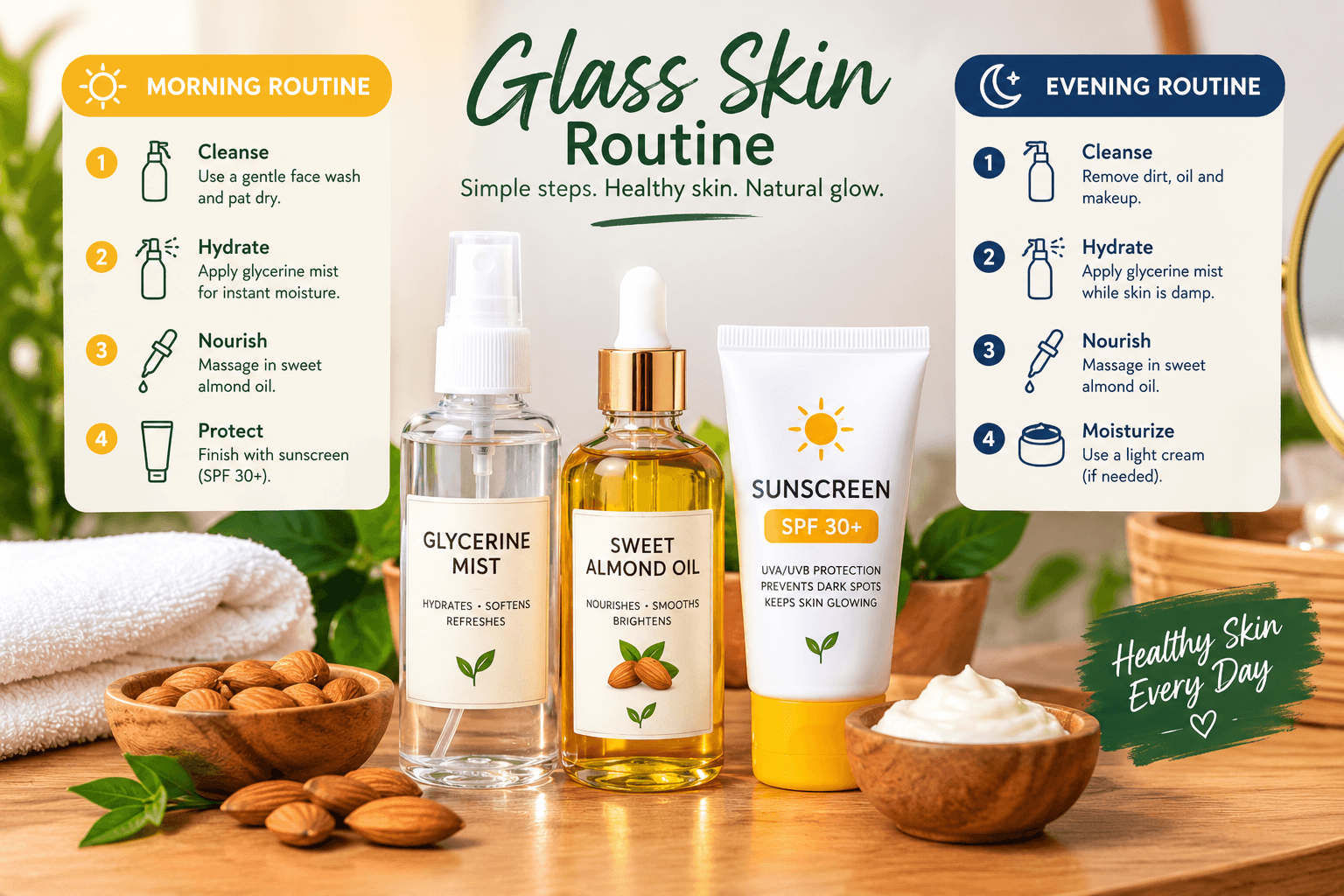
Morning:
- Rinse with lukewarm water or use a gentle cleanser.
- Apply diluted glycerine to damp skin.
- Press in two or three drops of sweet almond oil, or a light moisturizer.
- Finish with SPF 30 or higher.
Evening:
- Cleanse to remove sunscreen and dirt.
- Apply diluted glycerine to damp skin.
- Add your spot treatment if you use one.
- Seal with sweet almond oil or a small amount of shea butter.
Once or twice a week: Exfoliate very gently if your skin tolerates it. Over-exfoliating is the most common reason glass skin attempts fail, so when in doubt, do less.
A Simple DIY Glow Face Mist
This mist gives instant hydration and a dewy finish, and it takes five minutes to make.
Ingredients:
- Distilled water: 90ml
- Rose water: 10ml
- Vegetable glycerine: 1 teaspoon
- Preservative at the supplier’s recommended rate
Method:
- Sanitize a spray bottle with 70% isopropyl alcohol and let it dry.
- Combine the water, rose water, and glycerine.
- Add the preservative and shake well.
- Spray onto clean skin before your oil or cream.
Because this mist contains water, it needs a preservative to stay safe. Make small batches and store them in a cool place.
Glass Skin African Skin Types: Adjust Your Routine
Dry skin: Add a second layer of diluted glycerine and finish with a few drops of oil. Skip foaming cleansers.
Oily skin: Use glycerine and a light moisturizer, and skip heavy butters on the face. Oily skin can still be dehydrated, so do not skip hydration.
Acne-prone skin: Keep the routine minimal and avoid coconut oil on the face. Sweet almond oil in very small amounts is usually better tolerated.
Sensitive skin: Skip fragrance and essential oils. Introduce one new product at a time, waiting a week between each.
Lifestyle Habits That Support the Glow
Skincare products only do part of the work. Several habits make a visible difference.
Drink enough water. Hydration from within supports hydration on the surface.
Sleep well. Skin repairs itself at night, so poor sleep shows up as dullness.
Eat for your skin. Healthy fats, vegetables, fruit, and enough protein supply the nutrients skin needs.
Change your pillowcase weekly. Dirty fabric transfers oil and bacteria onto your face.
Do not pick pimples. Picking is one of the biggest causes of lasting dark marks on melanin-rich skin.
Common Mistakes When Chasing Glass Skin
Using too many products at once. Too many actives overwhelm the barrier and cause irritation.
Over-exfoliating. A scrubbed, shiny face is not glass skin. It is often a damaged barrier.
Skipping sunscreen. This single mistake undoes weeks of progress.
Copying routines made for other skin types. Adjust products to your own skin and climate.
Expecting results in a week. Real change takes 6 to 12 weeks of steady care.
Using bleaching creams. They may lighten quickly, but they thin the skin and often cause long-term damage.
What Glass Skin Cannot Do
Honesty builds trust, so here are the limits. A routine cannot erase deep scars or change your natural skin colour. It also cannot replace medical care for acne, eczema, or melasma. Furthermore, results vary with genetics, hormones, and lifestyle.
If your skin is painful, worsening, or developing stubborn patches, see a dermatologist.
Realistic Timeline
Weeks 1 to 2: Skin feels more hydrated and less tight. Ashiness reduces.
Weeks 3 to 4: Texture looks smoother. Skin has a softer, fresher glow.
Weeks 6 to 8: Tone looks more even, and new dark marks appear less often.
Weeks 10 to 12: Visible improvement in glow, texture, and spots, as long as you stay consistent and wear sunscreen.
Your Action Plan for This Week
First, simplify your routine to the six steps above.
Second, swap harsh cleansers for a gentle one and use lukewarm water.
Third, add diluted glycerine and a light oil to damp skin morning and night.
Fourth, commit to daily sunscreen without exception.
Finally, take a photo today and another every two weeks, because gradual change is hard to notice in the mirror.
Ready to start? Get your ingredients:
- Vegetable Glycerine: your hydration base
- Sweet Almond Oil: a light seal for glowing skin
- Natural Shea Butter: rich moisture for dry areas
- Coconut Oil: a body moisturizer for smooth skin from head to toe
Do you believe glass skin African women can achieve is realistic? Share your routine and your questions in the comments below.